USAID DEC
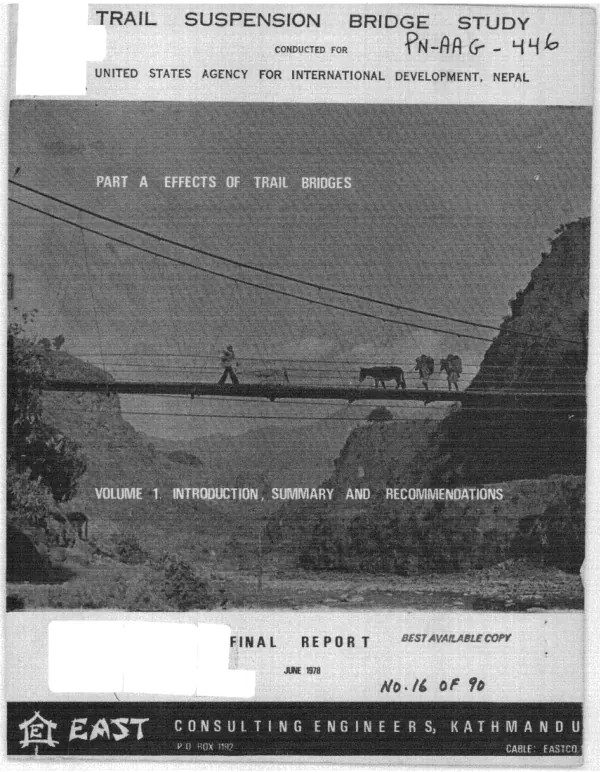
TRAIL SUSPENSION BRIDGE STUDY. PART A : EFFECTS OF TRAIL BRIDGES; VOL. I : INTRODUCTION, SUMMARY AND RECOMMENDATIONS
Sign inUSAID. MISSION TO NEPAL
TRAIL SUSPENSION BRIDGE STUDY. PART A : EFFECTS OF TRAIL BRIDGES; VOL. I : INTRODUCTION, SUMMARY AND RECOMMENDATIONS
This volume presents an overview of an extensive study to develop a set of criteria for the selection of trail suspension bridge sites in Nepal.
1970
Sign in to readA free account is required to download.
Abstract
The study report as a whole is divided into three parts with seven total volumes, of which this is the first. The four remaining volumes in Part A contain case histories of thirteen trail bridges constructed under former USAID projects between 1956 and 1975; the volume comprising Part B discusses the study of traditional suspended bridges built with local initiative and technology in the District of Baglung; and the one volume of Part C presents an annotated bibliography and general information on trail bridges and trails in Nepal. The present volume first sets out the study"s objectives and methodology, the latter relying heavily on opinion polls of local penchayat people and government officials, school teachers, porters, traders, and common rural folk. A general discussion of trail bridge construction in Nepal and of the socioeconomic background of the rural hills people precedes the report summary and recommendations. Among the social benefits in these rural areas, trail bridges have enhanced the process of social interaction among women; expanded the scope of marriage beyond the immediate village; facilitated increased patronage of schools, health facilities, and religious activities; and increased safety in travel. In the economic sphere, the main effects have been to help bring about considerable changes in traditional agriculture and to facilitate trade. Trail bridges have also aided the growth of social service centers and increased village access to institutional programs/benefits. The one negative effect found was the displacement in two cases of professional ferrymen. Based on a review of past bridge site selection, bridge maintenance and choices of technology, a selection process for future bridge projects is recommended which would: reflect the national needs as well as local priorities, make optimum use of government resources and mobilize a maximum amount of local resources, and provide maximum direct (crossing) and indirect (center for socioeconomic activities) benefits. An implementation proposal involving changes in present institutional structure, bridge and trail classification, new arrangements for maintenance, and other items, as well as seven appendices and numerous tables, figures, and pictures are also included.
Related documents
Documents in this collection
 1970
1970USAID DEC
TRAIL SUSPENSION BRIDGE STUDY. PART A : EFFECTS OF TRAIL BRIDGES; VOL. IV : CASE HISTORY, ANALYSIS AND FINDINGS ON BRIDGES STUDIED IN FAR WESTERN DEVELOPMENT REGION
Open record 1970
1970USAID DEC