USAID. MISSION TO NEPAL
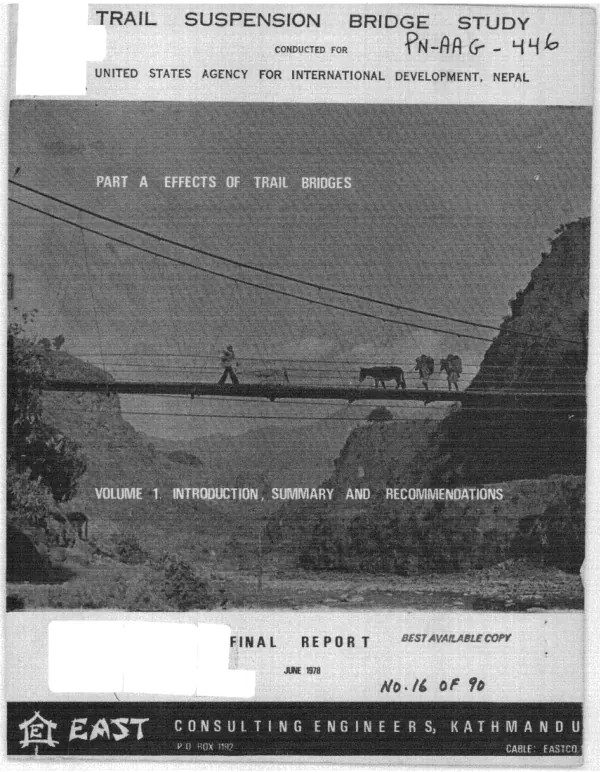
TRAIL SUSPENSION BRIDGE STUDY. PART B : BAGLUNG DISTRICT BRIDGE CONSTRUCTION STUDY
This is the sixth volume of an extensive final report describing a study to develop a set of criteria for the selection of trail suspension bridge sites in Nepal.
1970
Sign in to readA free account is required to download.
Abstract
The study as a whole was a reaction to the confusion, lack of integration with other development projects, and lack of thought to the social and political aspects of development which have characterized earlier USAID suspension bridge projects in Nepal. These efforts have not proven entirely successful and, on occasion, have even resulted in the misplacement of bridges, with the inevitable consequences of minimal benefits. This volume contains an examination of traditional suspended bridges built with local initiative and technology in the District of Baglung. Forty such bridges were completed and commissioned for use during the period 1975-1978. At the time of the study, this was the only instance of such a large-scale, organized bridge-building effort undertaken with local initiative and government participation in Nepal, and as such had created widespread interest throughout the country and in foreign agencies like USAID, the United Nations Development Program, the German Embassy, and others. This Baglung District study utilized the case study approach and was based primarily on a review of relevant Nepalese government documents, inspections of bridge locations, and interviews with government officials, panchayat workers, school teachers and local people. The study report is divided into sections containing an introduction and purpose statement, methodology, case history in brief, the socioeconomic background of the district, technology and project background, analysis, and a summary and recommendations. The major conclusion is that this type of local initiative and participation should be encouraged and supported by the Government, which should immediately initiate this type of program on an experimental basis in other neighboring districts.
Related documents
Documents in this collection
 1970
1970USAID DEC
TRAIL SUSPENSION BRIDGE STUDY. PART A : EFFECTS OF TRAIL BRIDGES; VOL. IV : CASE HISTORY, ANALYSIS AND FINDINGS ON BRIDGES STUDIED IN FAR WESTERN DEVELOPMENT REGION
Open record 1970
1970USAID DEC