USAID DEC
TRAIL SUSPENSION BRIDGE STUDY. PART A : EFFECTS OF TRAIL BRIDGES; VOL. IV : CASE HISTORY, ANALYSIS AND FINDINGS ON BRIDGES STUDIED IN FAR WESTERN DEVELOPMENT REGION
Sign inUSAID. MISSION TO NEPAL
TRAIL SUSPENSION BRIDGE STUDY. PART A : EFFECTS OF TRAIL BRIDGES; VOL. IV : CASE HISTORY, ANALYSIS AND FINDINGS ON BRIDGES STUDIED IN FAR WESTERN DEVELOPMENT REGION
This is the fourth volume of an extensive final report describing a study to develop a set of criteria for the selection of trail suspension bridge sites in Nepal.
1970
Sign in to readA free account is required to download.

Abstract
The study as a whole was a reaction to the confusion, lack of integration with other development projects, and lack of thought to the social and political aspects of development which have characterized earlier USAID suspension bridge projects in Nepal. These efforts have not proven entirely successful and, on occasion, have even resulted in the misplacement of bridges, with the inevitable consequences of minimal benefits. This volume contains case studies of former USAID trail bridge projects in the Far Western Development Region of Nepal, including the Bhingri, Sanfebagar, and Malumela bridges. The volume is divided into three sections, one for each case study. Each contains an area description and history (including the bridge location history and selection process); analysis and findings of the socio-anthropological, institutional, and economic impact studies, as well as those of the engineering investigations; and illustrative photographs. The trail bridges have, inter alia, enhanced the process of social interaction among women; expanded the scope of marriage beyond the immediate village; facilitated increased patronage of schools, health facilities and religious activities; increased safety in travel; helped bring about considerable changes in traditional agriculture; facilitated trade and cottage industry production; and aided the growth of social service centers and/or increased village access to institutional programs/benefits. Faulty project decision making processes were cited as the major problem in these past efforts. Although these bridges have been useful, it is not clear, from the national point of view, that they should have been given priority over other bridges which needed to be built in other areas of the Kingdom. The study recommendations, which are found in Part A, Volume I (PN-AAG-446), center around the need for and suggested forms of a selection process for future bridge projects. A list of abbreviations used in preparing the report and a glossary are appended.
Related documents
Documents in this collection
 1970
1970USAID DEC
TRAIL SUSPENSION BRIDGE STUDY. PART A : EFFECTS OF TRAIL BRIDGES; VOL. V : CASE HISTORY, ANALYSIS AND FINDINGS ON BRIDGES STUDIED IN EASTERN DEVELOPMENT REGION
Open record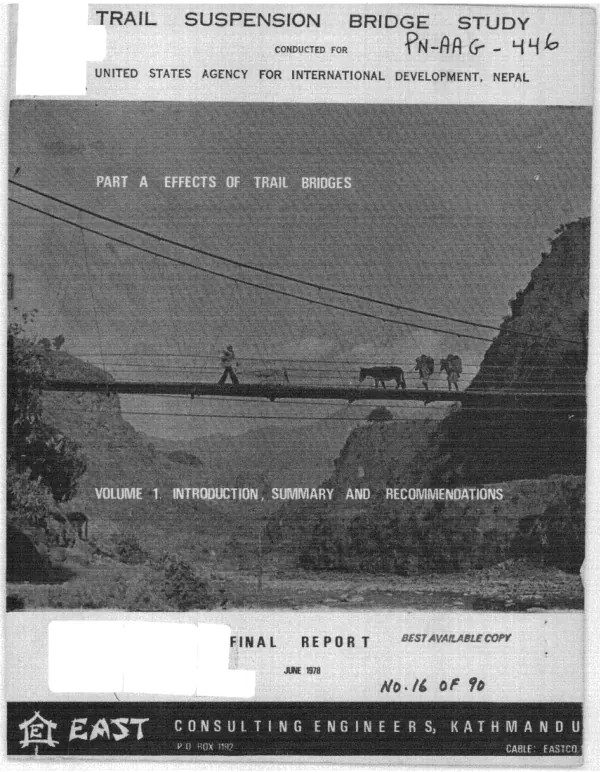 1970
1970USAID DEC