USAID. MISSION TO BOLIVIA
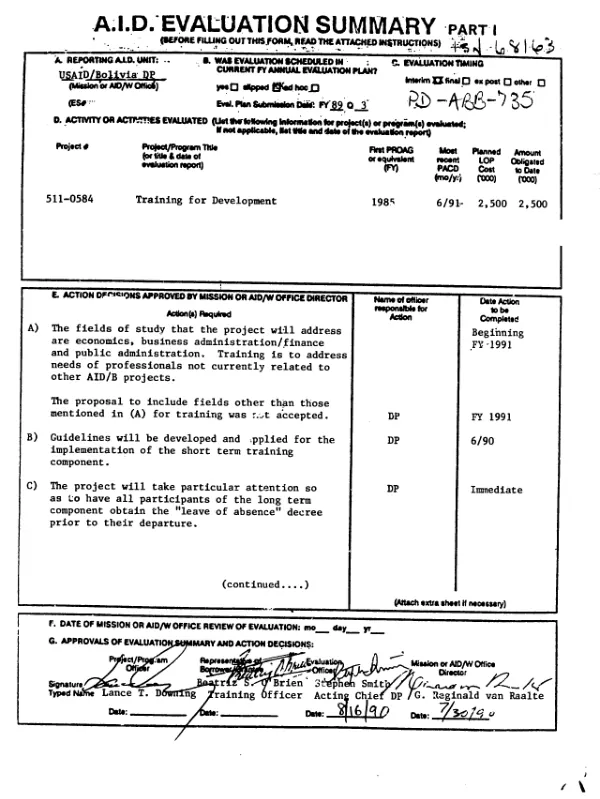
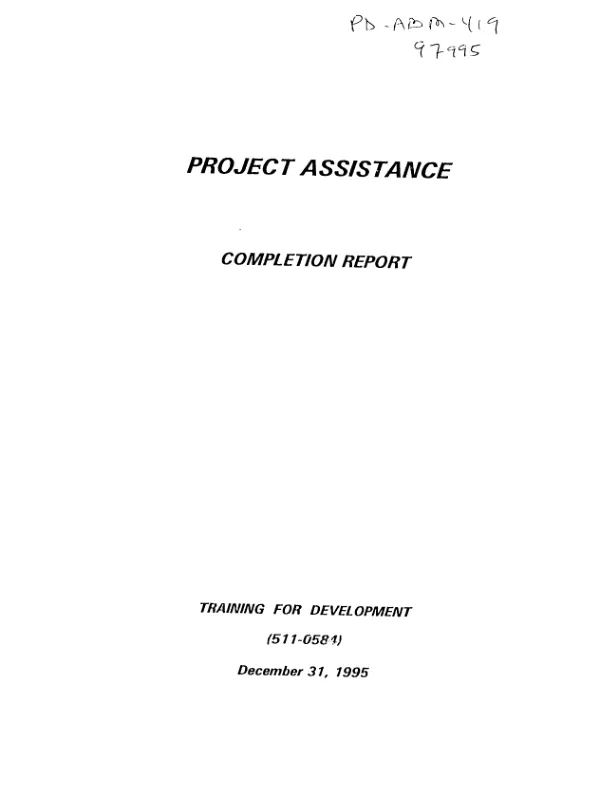
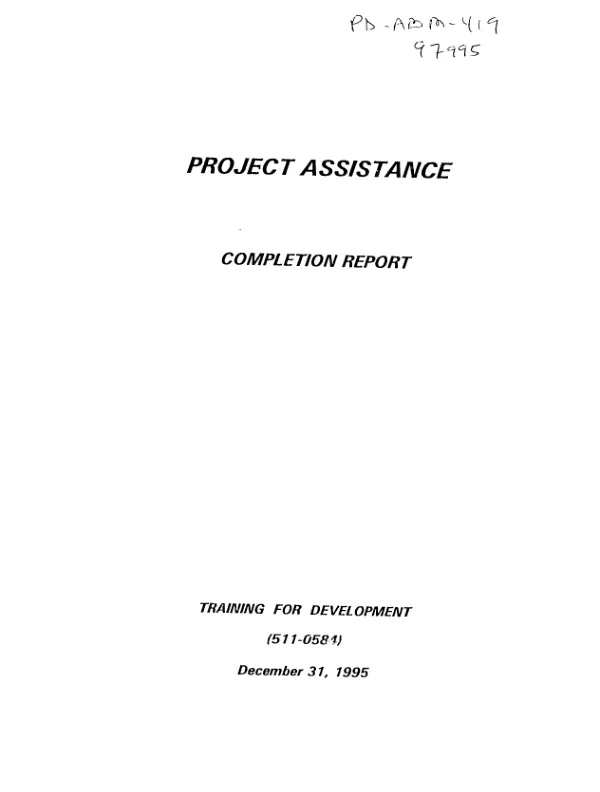
Training for development (TFD)
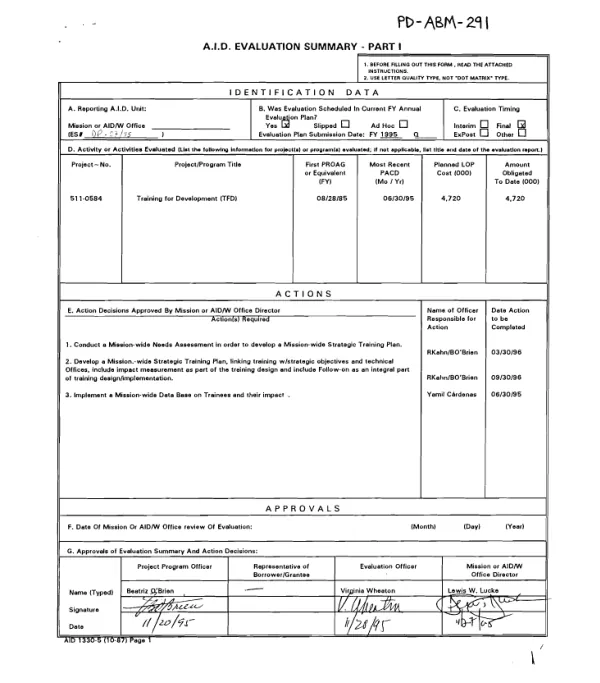
Summarizes final evaluation (PD-ABL-678) of a project (8/85-6/95) to provide U.S.
1995
Sign in to readA free account is required to download.
Abstract
and third-country training to potential Bolivian leaders in key development sectors. Overall, the project was a success. A total of 633 persons were trained vs. a target of only 443 trainees. Of these, 172 received short-term training, 63 long-term training, 60 democracy awareness training, and 338 in-country training funded with local currency. The training had a strong impact on trainees" professional development. All the long-term, 81% of the short-term, and 71% of in-country trainees believed that the training was useful or very useful in improving professional capacity; some 85% of long-term, 72% of short-term, and 80% of in-country trainees believed that it increased their technical knowledge; 92% of long-term, 82% of short-term, and 87% of in-country trainees gained new ways to apply this knowledge; and 82% of long-term, 75% of short-term, and 77% of in-country trainees stated that they have been able to directly use training in their current work. Trainees are replicating their training in a number of formal settings: 91% of long-term, 100% of short-term, and 83% of in-country trainees said that they had shared their training. This is supported by the fact that 92% of long-term participants, 86% of short-term, and 81% of in-country trainees believed that the training was useful or very useful in improving leadership capacity, an essential ingredient in successful replication. Lessons learned include the following. (1) Human resource development projects should not be a separate sectoral activity but a development tool which supports the efforts of the technical offices. (2) Impact measurement should be a part of training design. (3) A Mission-wide database on trainees and their impacts should be implemented. (4) Targets for more equitable distribution of trainees by sex and by region should be determined by the objectives of the particular training and by the demographic realities of Bolivia. (5) Follow-on programs enhance technical and academic training and dramatically expand and increase the multiplier effects of trainees and should be an integral part of training design and implementation. (6) The Mission"s overall training resources can become more efficient and effective by combining efforts for economies of scale in time and labor.
Related documents