ENCOMPASS, LLC
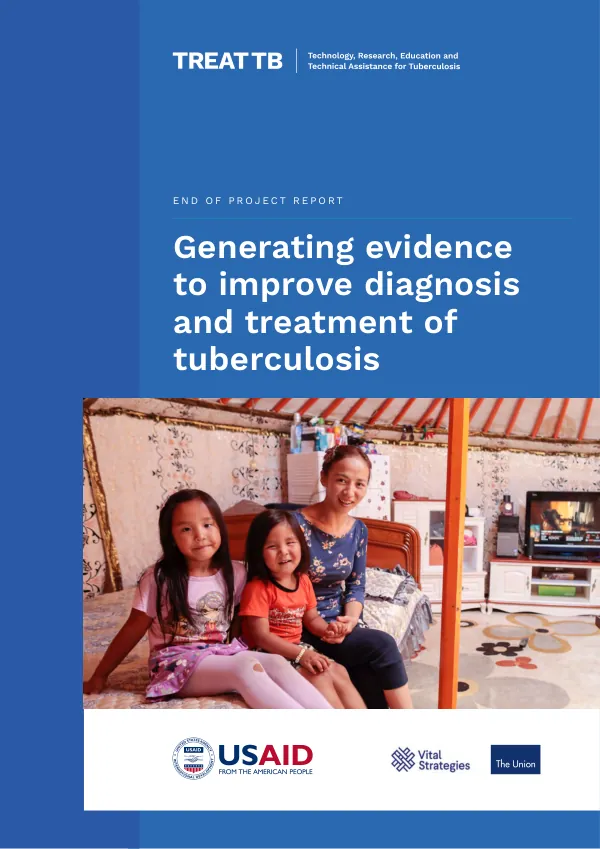
TREAT TB: End of Project Report
The STREAM clinical trial is a large-scale, multi-country clinical trial that examined the effectiveness of a standardized treatment regimen for patients with multidrug-resistant tuberculosis (MDR-TB).
2021 · 49 pages
Sign in to readA free account is required to download.
Abstract
The trial was conducted in eight countries, including India, Malawi, the Philippines, and South Africa, and involved over 1,000 patients with MDR-TB. The trial aimed to evaluate the safety and efficacy of a shorter treatment regimen for MDR-TB, which consisted of a combination of bedaquiline, linezolid, and high-dose isoniazid. The trial was designed to compare the outcomes of patients receiving the standardized treatment regimen with those receiving the standard treatment regimen for MDR-TB. The primary endpoint of the trial was the proportion of patients who achieved culture conversion at 6 months, which is a key indicator of treatment success. Secondary endpoints included the proportion of patients who achieved sputum smear conversion, the proportion of patients who experienced adverse events, and the proportion of patients who died. The trial results showed that the standardized treatment regimen was associated with a higher rate of culture conversion at 6 months compared to the standard treatment regimen. Specifically, 73% of patients receiving the standardized treatment regimen achieved culture conversion at 6 months, compared to 55% of patients receiving the standard treatment regimen. The trial also showed that the standardized treatment regimen was associated with a lower rate of adverse events, including liver toxicity and peripheral neuropathy. The STREAM clinical trial has had a significant impact on the treatment of MDR-TB. The trial's findings have informed global guidelines for the treatment of MDR-TB, and have led to the adoption of the standardized treatment regimen in several countries. The trial has also highlighted the importance of community engagement and participation in clinical trials, and has demonstrated the feasibility of conducting large-scale clinical trials in low- and middle-income countries. The trial's results have been disseminated widely, including in the New England Journal of Medicine and the Bulletin of the World Health Organization. The trial's findings have also been shared with national TB programs and other stakeholders, and have informed the development of new treatment guidelines and policies for MDR-TB. In addition to the STREAM clinical trial, TREAT TB has also conducted targeted operational research and provided technical assistance to national TB programs. The project has trained over 170 health professionals to conduct operational research independently, and has developed a robust program of community engagement as part of the STREAM clinical trial. The project has also made lessons learned from STREAM widely available to the global community to improve future research. TREAT TB's approach has been to build capacity where it works to ensure sustainable impact, and to collaborate closely with affected communities to ensure they benefit directly from the project. Since its launch, TREAT TB has informed global, regional, and country TB control efforts, generating important new knowledge and sharing its findings widely. USAID's support of TREAT TB has been instrumental in catalyzing the introduction of better diagnostics and treatments for TB and MDR-TB. The project's key achievements include contributing critical evidence for major global decisions about the treatment of MDR-TB, disseminating STREAM Stage 1 results in the New England Journal of Medicine and the Bulletin of the World Health Organization, supporting the Philippines' scale up of a shorter MDR-TB regimen, training more than 170 health professionals to conduct operational research independently, and making lessons learned from STREAM widely available to the global community to improve future research. TREAT TB's activities have been conducted in collaboration with a range of partners, including national TB programs, research institutions, and community-based organizations. The project has also received support from a range of donors, including USAID, the United Kingdom Medical Research Council, and the United Kingdom Department for International Development. The project's findings have been disseminated widely, including in peer-reviewed journals, conference proceedings, and policy briefs. The project's results have also been shared with national TB programs and other stakeholders, and have informed the development of new treatment guidelines and policies for MDR-TB. In conclusion, the STREAM clinical trial and TREAT TB's other activities have made significant contributions to the treatment of MDR-TB. The trial's findings have informed global guidelines for the treatment of MDR-TB, and have led to the adoption of the standardized treatment regimen in several countries. The project's approach has been to build capacity where it works to ensure sustainable impact, and to collaborate closely with affected communities to ensure they benefit directly from the project.
Related documents