USAID-FUNDED MATERNAL AND CHILD HEALTH INTEGRATED PROGRAM
Treatment of Uncomplicated Malaria Among Women of Reproductive Age
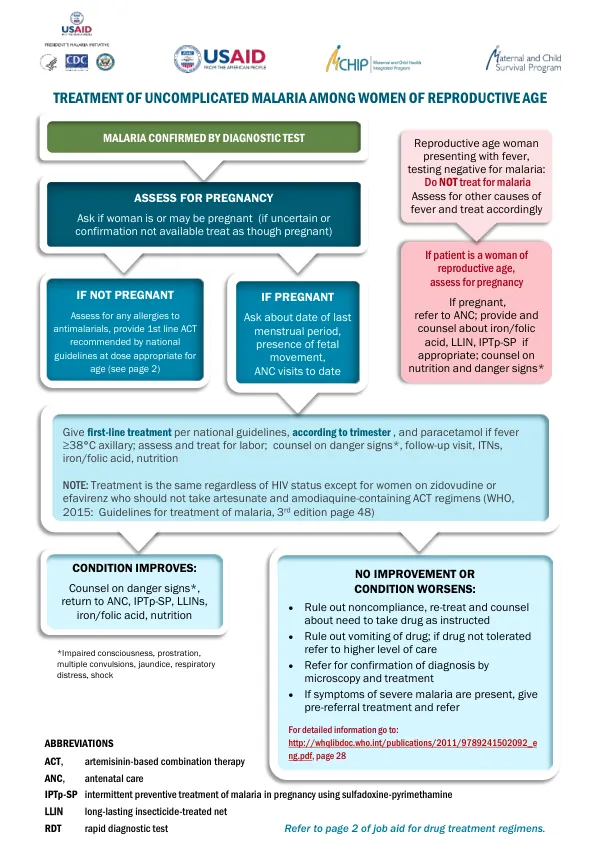
Treatment of uncomplicated malaria among women of reproductive age involves assessing for pregnancy and providing appropriate care.
2015 · 2 pages
Sign in to readA free account is required to download.
Abstract
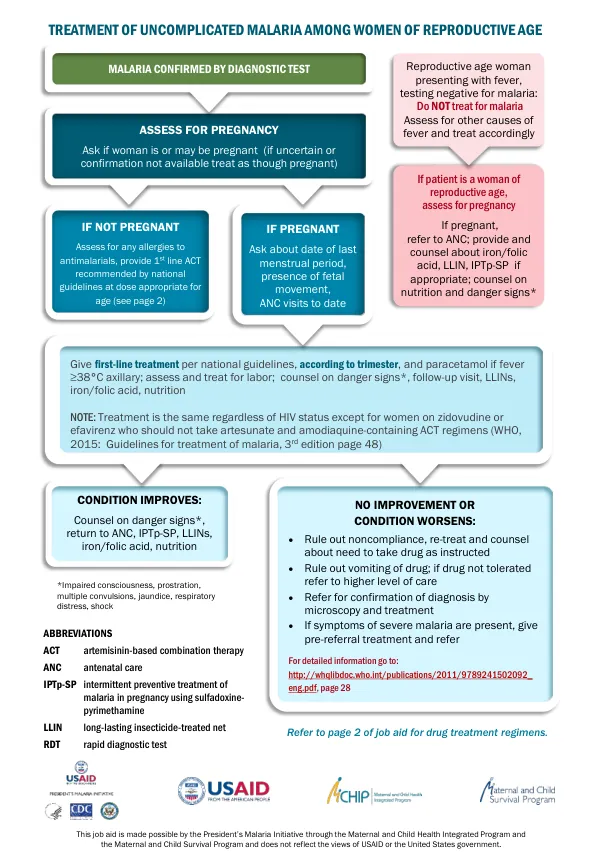
Women presenting with fever are tested for malaria using a rapid diagnostic test (RDT). If the test is positive, treatment is initiated according to national guidelines, taking into account the trimester of pregnancy and the availability of first-line and second-line drugs. For women in the first trimester, oral quinine salt is administered at a dose of 10 mg/kg every 8 hours for 7 days, with clindamycin added if available. Artemisinin-based combination therapy (ACT) is indicated only if quinine plus clindamycin is not available or if treatment fails. For women in the second and third trimesters, or non-pregnant adults, ACT is the preferred treatment, with options including artemether/lumefantrine and artesunate/amodiaquine. Severe malaria is characterized by clinical features such as impaired consciousness, prostration, multiple convulsions, and respiratory distress, as well as laboratory findings such as hypoglycemia and severe normocytic anemia. Treatment for severe malaria involves stabilization and pre-referral treatment, with parenteral artesunate as the first-line drug. If artesunate is unavailable, intramuscular artemether or parenteral quinine may be used. Women with severe malaria are treated with a loading dose of parenteral artesunate, followed by a maintenance dose. If artesunate is unavailable, intramuscular artemether or parenteral quinine is used. Treatment is continued until artesunate is obtained. In addition to antimalarial treatment, women with severe malaria receive supportive care, including treatment of shock, convulsions, and fever. The job aid emphasizes the importance of assessing for pregnancy and providing appropriate care. Women with uncomplicated malaria are treated according to national guidelines, while those with severe malaria receive stabilization and pre-referral treatment. The job aid also highlights the need for careful management of severe malaria, including treatment of shock and convulsions. The treatment of uncomplicated malaria among women of reproductive age is complex and requires careful consideration of the trimester of pregnancy and the availability of first-line and second-line drugs. Women with severe malaria require immediate treatment and supportive care to prevent complications and improve outcomes. The job aid provides a useful guide for healthcare providers managing malaria in this population. Assessment for pregnancy is a critical component of malaria treatment, as pregnant women require special consideration due to the risks of malaria to both mother and fetus. Women presenting with fever are tested for malaria using a rapid diagnostic test, and treatment is initiated according to national guidelines. The job aid emphasizes the importance of assessing for pregnancy and providing appropriate care. The treatment of uncomplicated malaria among women of reproductive age involves a range of antimalarial drugs, including oral quinine salt, artemether/lumefantrine, and artesunate/amodiaquine. The choice of drug depends on the trimester of pregnancy and the availability of first-line and second-line drugs. Women with severe malaria receive stabilization and pre-referral treatment, with parenteral artesunate as the first-line drug. The job aid highlights the need for careful management of severe malaria, including treatment of shock and convulsions. Women with severe malaria require immediate treatment and supportive care to prevent complications and improve outcomes. The job aid provides a useful guide for healthcare providers managing malaria in this population.
Related documents