FHI360
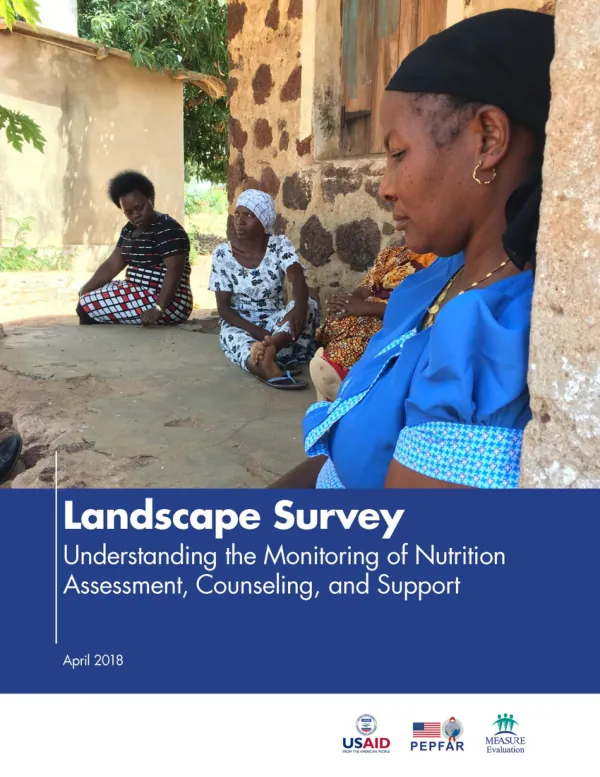
Understanding the Monitoring of Nutrition Assessment, Counseling, and Support
The Nutrition Assessment, Counseling, and Support (NACS) framework is a systems approach for integrating nutrition in routine health service delivery at the facility and community levels.
2018 · 33 pages
Sign in to readA free account is required to download.
Abstract
In the context of HIV, NACS can be an effective way to track health in adolescent girls before they experience pregnancy, in young women most vulnerable to HIV infection, and in mother-baby pairs in antenatal and postnatal care. Although NACS is associated with HIV and a food-by-prescription model, the framework also addresses identifying malnutrition for all—regardless of age, gender, or HIV status—and creates a platform for linking nutritional health with other services, thereby contributing to overall health system strengthening. The NACS framework is designed to be integrated into the HIV care cascade and the maternal, newborn, and child health continuum. This integration enables the tracking of health outcomes and the provision of targeted interventions to address malnutrition and other health issues. The framework is also adaptable to different country contexts and can be tailored to meet the specific needs of each country. A landscape analysis was conducted in 12 of 16 priority countries to assess the implementation of NACS and identify best practices. The analysis revealed that NACS is being implemented in various forms across the countries, with some countries having more comprehensive systems in place than others. The analysis also identified key challenges and opportunities for improving NACS implementation. The NACS framework relies on a range of data sources, including health management information systems (HMIS), surveys, and other data collection tools. The data are used to track health outcomes, monitor progress, and inform decision-making at different levels of the health system. However, the analysis revealed that there are challenges in collecting and using data for NACS, including limited capacity and resources, inadequate data systems, and lack of standardization. The study identified several key findings, including the importance of integrating NACS into the HIV care cascade and the maternal, newborn, and child health continuum. The analysis also highlighted the need for strengthening data systems and improving data use at different levels of the health system. Additionally, the study emphasized the importance of addressing the social determinants of health and promoting community-based interventions to address malnutrition and other health issues. The NACS framework has several strengths, including its ability to integrate nutrition into routine health service delivery and its adaptability to different country contexts. However, the framework also faces several challenges, including limited capacity and resources, inadequate data systems, and lack of standardization. To address these challenges, the study recommends strengthening data systems, improving data use, and promoting community-based interventions to address malnutrition and other health issues. The study concludes that the NACS framework has the potential to contribute to health system strengthening and improve health outcomes, particularly in the context of HIV. However, further research and analysis are needed to fully understand the impact of NACS and to identify best practices for implementation.