ACDI/VOCA
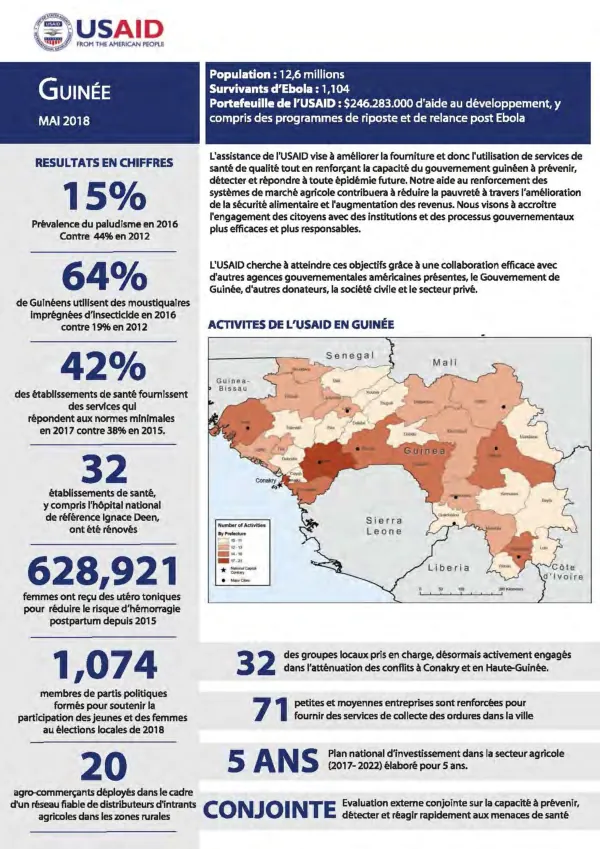
USAID ACTIVITIES IN GUINEA
The agricultural development initiative in Guinea began in 2018 with funding from USAID's Food Security Program.
2018 · 2 pages
Sign in to readA free account is required to download.
Abstract
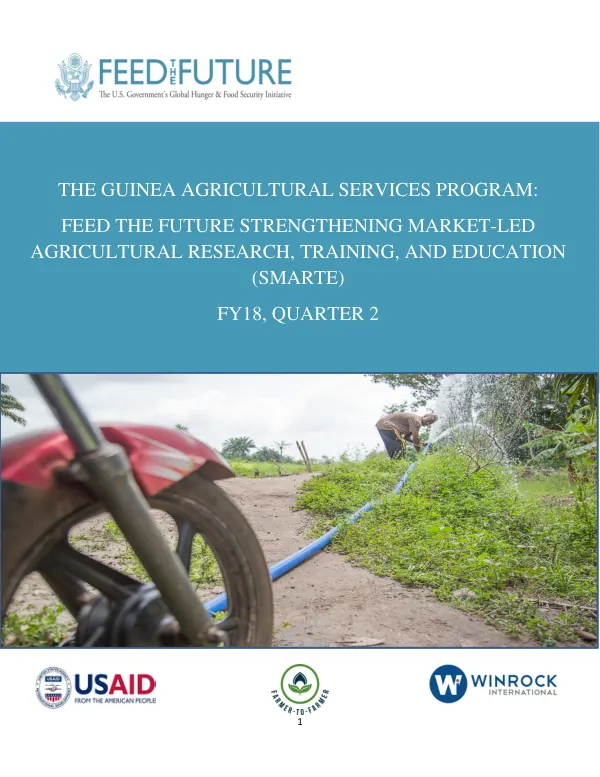
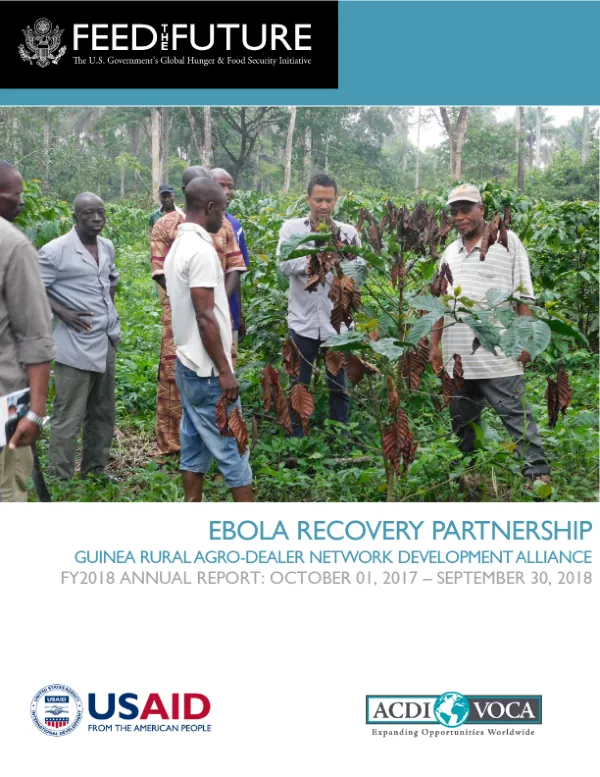
Initial assessments conducted in various regions identified soil degradation and limited market access as primary challenges. Crop yields averaged 15% below regional benchmarks in 2016, compared to 44% in 2012. The prevalence of malaria in 2016 was 15%, down from 44% in 2012. Implementation focused on several key interventions, including the development of a national investment plan for the agricultural sector (2017-2022). The plan aimed to improve the availability and use of quality health services, while strengthening the government's capacity to prevent, detect, and respond to future epidemics. USAID's assistance also targeted the improvement of food security and the increase of household incomes through the development of the agricultural market. The USAID activities in Guinea included the Feed the Future: Africa Lead II program, which aimed to improve agricultural policies and enforcement of capacities. The program also focused on the development of value chains and projects such as Cultivating N-Frontiers in Agriculture. Additionally, USAID supported the development of a rural agro-input distribution network and the introduction of new technologies to improve horticultural production and reduce post-harvest losses in Guinea. The geographic focus of USAID's activities in Guinea included the regions of Kindia, Mamou, and Faranah. The activities were implemented over various timeframes, including 2013-2018, 2016-2021, and 2017-2019. The programs aimed to improve the availability and use of quality health services, while strengthening the government's capacity to prevent, detect, and respond to future epidemics. USAID's assistance also targeted the improvement of food security and the increase of household incomes through the development of the agricultural market. The implementation of USAID's activities in Guinea involved the strengthening of local groups, the reinforcement of small and medium-sized enterprises, and the development of a rural agro-input distribution network. The programs also focused on the introduction of new technologies to improve horticultural production and reduce post-harvest losses in Guinea. The geographic focus of USAID's activities in Guinea included the regions of Kindia, Mamou, and Faranah. The activities were implemented over various timeframes, including 2013-2018, 2016-2021, and 2017-2019.
Related documents