TETRA TECH
USAID Cambodia Greening Prey Lang Chicken Raising Manual
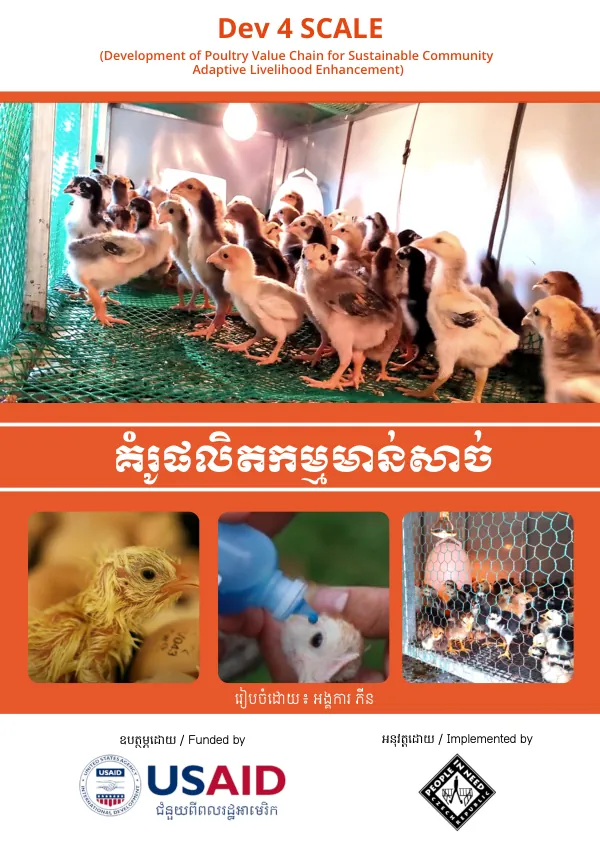
The Development of Poultry Value Chain for Sustainable Community Adaptive Livelihood Enhancement (Dev 4 SCALE) project aims to improve the livelihoods of rural communities in Cambodia through the development of a sustainable poultry value chain.
19 pages
Sign in to readA free account is required to download.
Abstract
The project focuses on the production of high-quality chicken feed, breeding, and vaccination to enhance the health and productivity of chickens. The project involves the development of a model for chicken breeding, which includes the selection of healthy and disease-free chicks, vaccination, and proper nutrition. The model also emphasizes the importance of proper housing and management practices to ensure the health and well-being of the chickens. The project aims to increase the productivity and profitability of small-scale chicken farmers, thereby improving their livelihoods and contributing to the overall development of the rural community. The project also focuses on the development of a high-quality chicken feed that meets the nutritional needs of the chickens. The feed is formulated to provide the necessary nutrients for optimal growth and health, and is designed to be easily digestible and palatable for the chickens. The project aims to increase the availability of high-quality chicken feed in the market, thereby improving the productivity and profitability of chicken farmers. In addition to the development of chicken feed and breeding, the project also focuses on the vaccination of chickens to prevent diseases. The project aims to increase the availability of vaccines and improve the vaccination practices among chicken farmers, thereby reducing the incidence of diseases and improving the overall health and productivity of the chickens. The project also emphasizes the importance of proper housing and management practices to ensure the health and well-being of the chickens. The project provides training and support to chicken farmers on proper housing and management practices, including the construction of chicken coops, the provision of adequate ventilation and lighting, and the proper handling and care of the chickens. The project aims to increase the productivity and profitability of small-scale chicken farmers, thereby improving their livelihoods and contributing to the overall development of the rural community. The project also aims to improve the availability of high-quality chicken feed and vaccines in the market, thereby reducing the incidence of diseases and improving the overall health and productivity of the chickens. The project is implemented by a team of experts who provide training and support to chicken farmers on proper breeding, vaccination, and management practices. The project also involves the establishment of a network of chicken farmers who share knowledge and best practices, thereby improving the overall productivity and profitability of the chicken farming sector. The project has several key components, including the development of a model for chicken breeding, the formulation of high-quality chicken feed, the vaccination of chickens, and the provision of training and support to chicken farmers on proper housing and management practices. The project also involves the establishment of a network of chicken farmers who share knowledge and best practices, thereby improving the overall productivity and profitability of the chicken farming sector. The project is implemented in several provinces in Cambodia, including Battambang, Kampong Cham, and Kampong Thom. The project involves the establishment of a network of chicken farmers who share knowledge and best practices, thereby improving the overall productivity and profitability of the chicken farming sector. The project has several key outcomes, including the development of a model for chicken breeding, the formulation of high-quality chicken feed, the vaccination of chickens, and the provision of training and support to chicken farmers on proper housing and management practices. The project also aims to increase the productivity and profitability of small-scale chicken farmers, thereby improving their livelihoods and contributing to the overall development of the rural community.
Related documents