USAID DEC
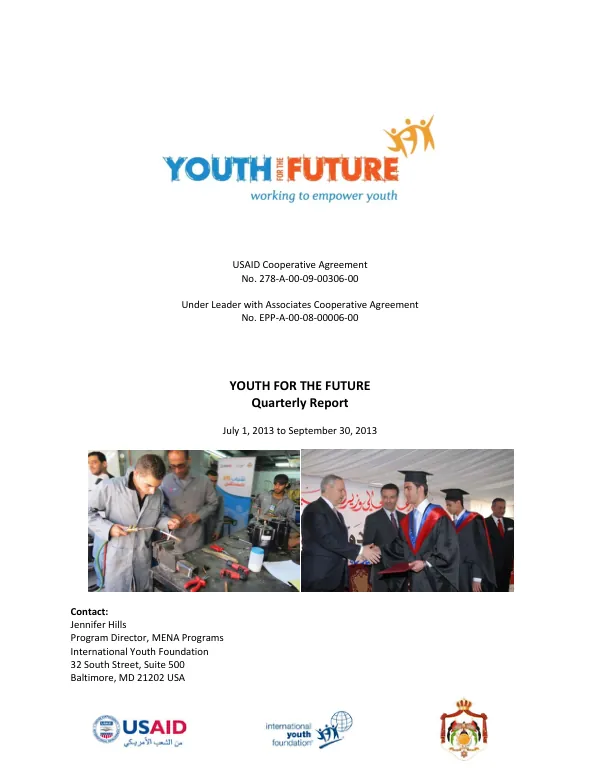
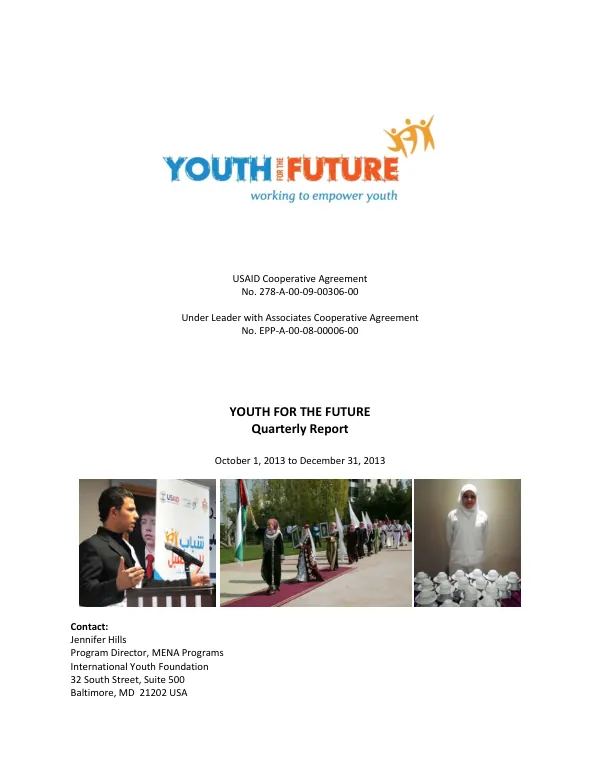
USAID Cooperative Agreement No. 278-A-00-09-00306-00: Youth for the Future Quarterly Report October 1, 2013 to December 31, 2013
Sign inINTERNATIONAL YOUTH FOUNDATION
USAID Cooperative Agreement No. 278-A-00-09-00306-00: Youth for the Future Quarterly Report October 1, 2013 to December 31, 2013
Youth for the Future's (Y4F) sixth and final year began in earnest in 2013 with a focus on continuing sustainability efforts through policy and public sector work, and continued training and job placement of youth to meet the program's targets.
2013 · 17 pages
Sign in to readA free account is required to download.
Abstract
The program received a No Cost Extension from USAID in January 2014, allowing it to continue implementing its Year 6 work plan through December 2014 with a realigned budget of $30.3 million. National Level Activities included the start of VTC Co-Training in PTS, where staff at the VTCs began co-training with PTS trainers in life skills programming. Despite some challenges, the program was well received and is making steady headway in the Centers. Y4F also achieved one of its major policy goals with the approval and publication of Daycare Instructions in the MOSD official Gazette, which will make it easier for employers to form daycares in their work sites, paving the way for increased female participation in the labor force. Community Level Activities focused on institutionalizing the relationships that have been formed between CBOs and public sector partners and trainers to continue to outreach and refer youth to best practice programs in the local communities. Community Youth Committees were formalized in Irbid and Zarqa, providing the legal backing and a framework to encourage the continued implementation of youth strategies and sustainability of Y4F's models in two of the most densely populated and vulnerable communities of Jordan. Y4F also launched its communications campaign to outreach to youth and raise awareness about the program's core messages with youth, parents, employers, and the public sector. Cross-Cutting Components included enhanced quality assurance processes, amended M&E Plans, and outreach campaigns. Monitoring and Evaluation staff implemented new quality assurance procedures for data collection and storage, and incorporated modified targets for Year 6 and removed certain indicators at the request of USAID. Three focus group discussions were conducted to verify the findings on the satisfaction of community members in Y4F targeted communities, and a plan of corrective actions to address some of the concerns of community members has been developed. Communications efforts included the launch of an outreach campaign to promote the program and continue youth outreach efforts across Jordan. The campaign included street signs, radio advertising, and print advertising, which were tracked to determine their effectiveness. The results showed that 35% of interested youth were responding to street banners, 30% of interested youth were responding to radio ads, and 26% of interested youth were responding to newspaper ads. Based on these metrics, Y4F determined that print ads had the smallest reach and will no longer be used as an awareness tool. The program faced some implementation and procurement delays related to public sector sustainability activities and youth training and job placement efforts due to the uncertainty of the program's end date. However, with the No Cost Extension, Y4F is confident that it will be able to make up for these delays and meet its Year 6 targets by the end of the program.