ANALYSIS, INFORMATION MANAGEMENT AND COMMUNICATION ACTIVITY PROJECT
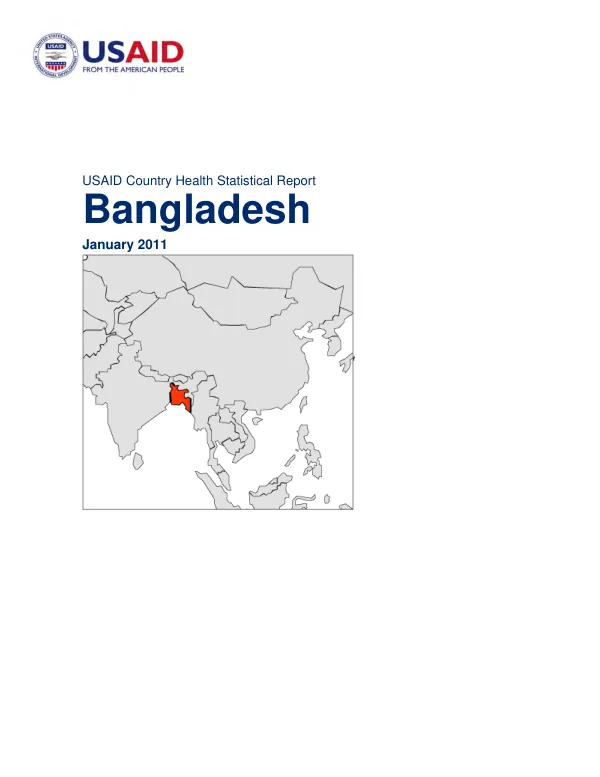
USAID Country Health Statistical Report Bangladesh January 2011
The population of Bangladesh is approximately 156,118,464 as of 2010.
2011 · 21 pages
Sign in to readA free account is required to download.
Abstract
The country's population growth rate is 1.6% per annum, with 25% of the population residing in urban areas. The total fertility rate is 2.7 children per woman, with a crude birth rate of 23.8 per 1,000 people and a crude death rate of 5.8 per 1,000 people. Bangladesh has a relatively low life expectancy at birth, with an average of 69.4 years. The country's socioeconomic indicators reveal a significant gap in health expenditure as a percentage of GDP, with a mere 3.4% allocation in 2003. The country has a shortage of physicians, with only 0.3 per 1,000 people. Adult literacy rates are also low, with 41.1% of the population able to read and write. The country's family planning indicators show a contraceptive prevalence rate of 55.8% among married women, with a total fertility rate of 2.7 children per woman. However, there is a significant unmet need for family planning, with 17.9% of rural women and 14.5% of urban women requiring access to modern contraceptive methods. Maternal health indicators reveal a high maternal mortality ratio of 570 per 100,000 live births, with only 60.3% of women receiving antenatal care. The country also has a low rate of assisted delivery by a health professional, with only 17.9% of births attended by a skilled birth attendant. Child survival indicators show a high infant mortality rate of 57.8 per 1,000 live births, with a significant gap in vaccination coverage. The country has a low rate of exclusive breastfeeding, with only 57.8% of children under four months exclusively breastfed. Stunting and underweight rates are also high, with 43.2% and 41% of children respectively affected. Vaccination coverage is relatively low, with a DPT3 vaccination rate of 91.1% among children. The country also has a low rate of measles vaccination, with only 83.1% of children vaccinated. Improved sanitation and hygiene practices are also lacking, with data not available on the prevalence of these practices. HIV/AIDS prevention indicators reveal a lack of data on HIV prevalence among adults aged 15-49 years. However, the country has made efforts to increase access to antiretroviral therapy, with a significant increase in the number of people receiving treatment.
Related documents