ANALYSIS, INFORMATION MANAGEMENT AND COMMUNICATION ACTIVITY PROJECT
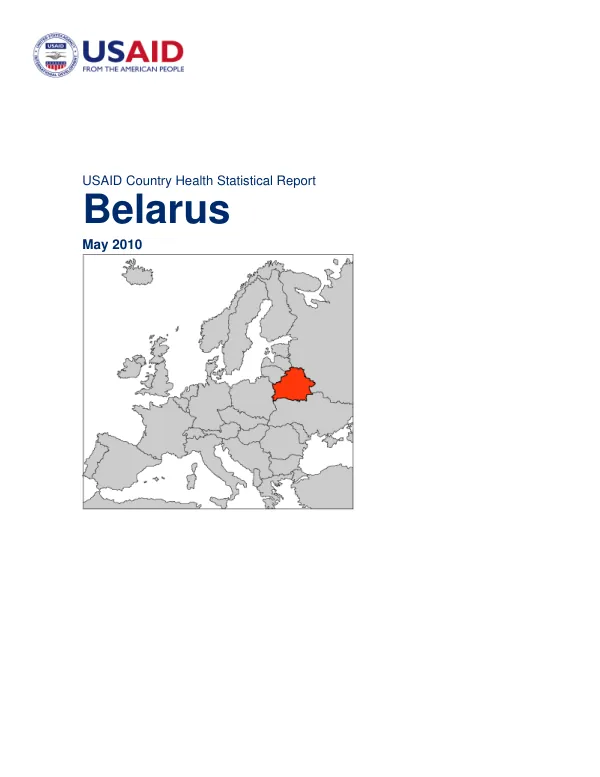
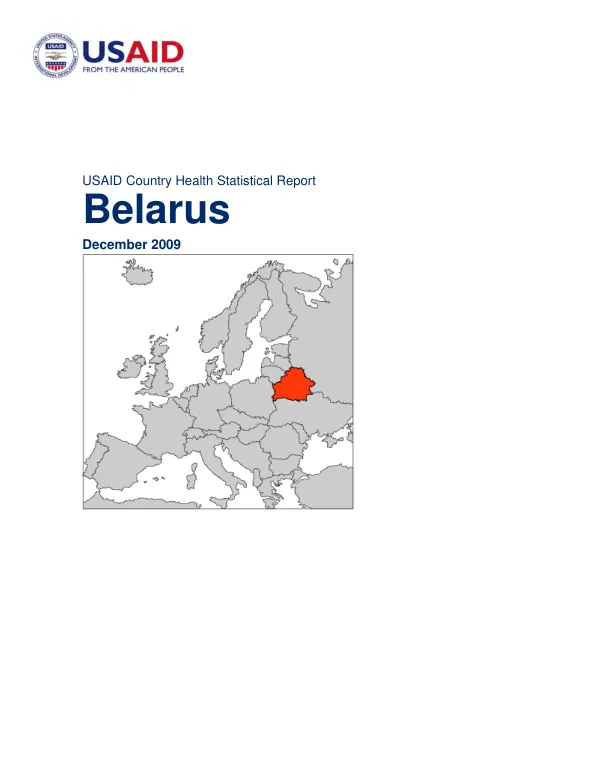
USAID Country Health Statistical Report for Belarus
The total population of Belarus is 9,648,533 as of 2009.
2009 · 21 pages
Sign in to readA free account is required to download.
Abstract
The population growth rate is less than 0.01% in 2009. Approximately 71% of the population resides in urban areas. The number of women aged 15-19 is 313,121, and the number of women aged 15-49 is 2,554,392 in 2009. The life expectancy at birth is 70.6 years, and the crude birth rate is 9.7 per 1,000 people in 2009. The crude death rate is 13.9 per 1,000 people, and the number of live births is 93,687 in 2009. The GNI per capita (PPP) is $7,890 in 2005. Health expenditure as a percentage of GDP is 6.4% in 2003. The number of physicians per 1,000 people is 4.6 in 1997-2004. The adult literacy rate is 99.6% in 2004, with 99.6% for females and 99.8% for males. The gross enrollment ratio for primary school is 95.9% in 2006, and the gender parity index for net enrollment ratio is 0.98 in 2006. The total fertility rate is 1.2 in 2009. Contraceptive prevalence rate for all methods is 72.6% in 2005. The maternal mortality ratio is 18 per 100,000 live births in 2005. The infant mortality rate is 6.4 per 1,000 live births in 2009. The under-5 mortality rate is 8.8 per 1,000 live births in 2006. The DPT3 vaccination rate is 97% in 2008. The measles vaccination rate is 99% in 2008. The polio vaccination rate is 98% in 2008. The estimated number of people living with HIV is 13,000 in 2007. The estimated number of people living with HIV among women aged 15 and above is 3,900 in 2007. The estimated number of people living with HIV among children aged 0-14 is not available. The TB estimated number of cases is 5,910 in 2007. The TB case detection rate is 40% in 2006. The TB (DOTS) treatment success rate is 70% in 2006. The malaria cases per 100,000 people are not available. The DOTS coverage is 100% in 2007. The HIV-infected with active TB is 3.5% in 2007.
Related documents