ANALYSIS, INFORMATION MANAGEMENT AND COMMUNICATION ACTIVITY PROJECT
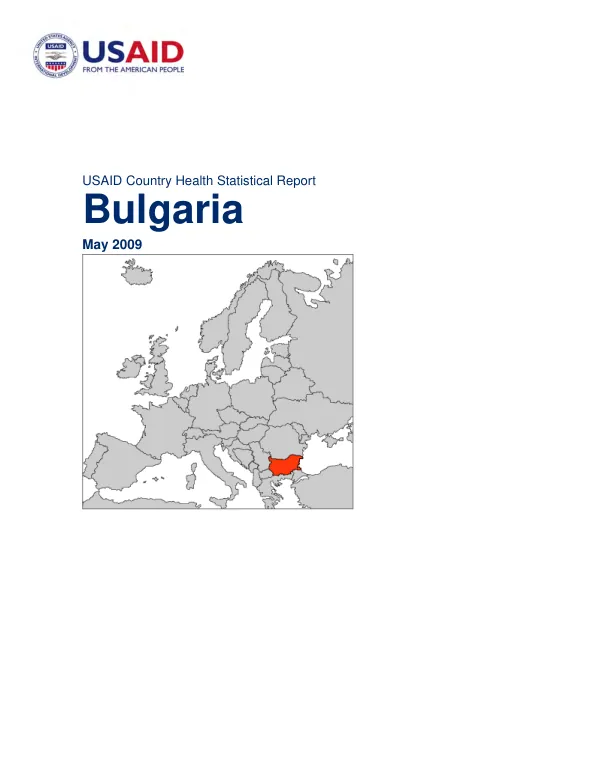
USAID Country Health Statistical Report for Bulgaria
The total population of Bulgaria as of 2009 is 7,204,687.
2009 · 20 pages
Sign in to readA free account is required to download.
Abstract
The population growth rate is less than 0.01 percent. Approximately 70 percent of the population resides in urban areas. The number of women aged 15-19 is 195,656, and the number of women aged 15-49 is 1,704,537. The life expectancy at birth is 73.1 years. The crude birth rate is 9.5 per 1,000 people, and the crude death rate is 14.3 per 1,000 people. The number of live births in 2009 is 68,517. The healthy life expectancy for females is 67 years, and for males, it is 63 years. The population under the age of 15 accounts for 13.8 percent of the total population. The GNI per capita (PPP) is $8,630, and health expenditure as a percentage of GDP is 7.5 percent. The number of physicians per 1,000 people is 3.6. The adult literacy rate is 98.2 percent, with 98.1 percent of females and 99.2 percent of males being literate. The gross enrollment ratio for primary school is 100.3 percent, and the gender parity index for net enrollment ratio is 0.99. Access to improved water sources is 100 percent in both rural and urban areas. The population living below $1 a day is 2 percent, and the human development index is 0.82. The total fertility rate is 1.4, and the infant mortality rate is 17.9 per 1,000 live births. The under-5 mortality rate is 22.8 per 1,000 live births. The maternal mortality ratio is 11 per 100,000 live births. The DPT3 vaccination rate is 95 percent, and the measles vaccination rate is 96 percent. The polio vaccination rate is 95 percent. The estimated number of people living with HIV is not available. The HIV prevalence proportion among adults aged 15-49 is also not available. The number of males and females reporting condom use with their last non-regular partner is not available. The number of TB cases is 3,101, and the TB case detection rate is 94 percent. The TB treatment success rate is 86 percent. The population of Bulgaria is projected to decrease in the coming years. The number of males and females in different age groups is shown in Table 1.1. The population is expected to decline from 7,204,687 in 2009 to 6,444,000 in 2020. The number of males is expected to decrease from 3,555,000 in 2000 to 3,144,000 in 2020, while the number of females is expected to decrease from 3,649,687 in 2000 to 3,300,000 in 2020. The population of Bulgaria is aging, with the proportion of people aged 65 and above expected to increase from 14.1 percent in 2009 to 23.1 percent in 2020. The population of people aged 0-14 is expected to decrease from 13.8 percent in 2009 to 11.4 percent in 2020. The population of people aged 15-64 is expected to decrease from 71.9 percent in 2009 to 65.5 percent in 2020. The population of Bulgaria is expected to experience a decline in the coming years due to a low fertility rate and an aging population. The government and healthcare providers will need to address the challenges posed by an aging population, including providing adequate healthcare services and social support to the elderly.
Related documents