ANALYSIS, INFORMATION MANAGEMENT AND COMMUNICATION ACTIVITY PROJECT
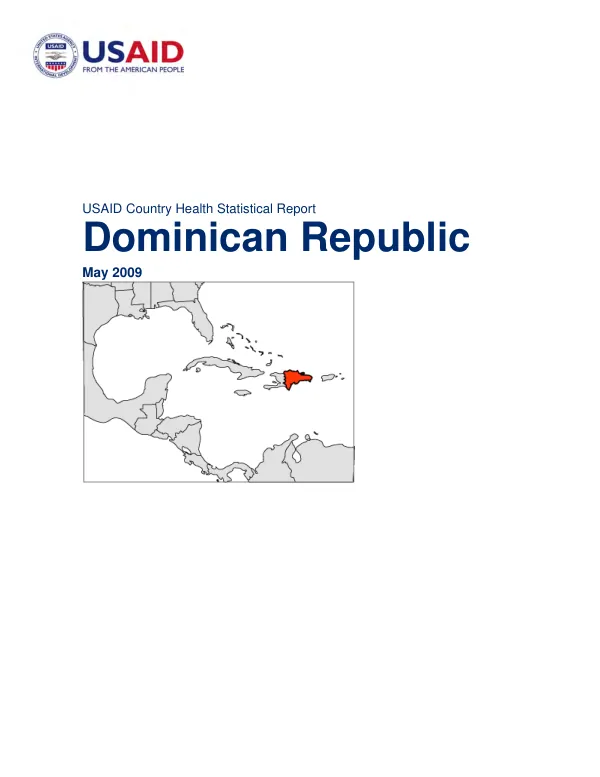
USAID Country Health Statistical Report for the Dominican Republic
The Dominican Republic has a total population of 9,650,054 as of 2009.
2009 · 20 pages
Sign in to readA free account is required to download.
Abstract
The population growth rate is 1.5% per year, with 60% of the population residing in urban areas. The country has a relatively high life expectancy at birth, with an average of 73.7 years. The crude birth rate is 22.4 per 1,000 people, while the crude death rate is 5.3 per 1,000 people. The country's socioeconomic indicators show a relatively high GNI per capita of $7,150 in 2005. The health expenditure as a percentage of GDP is 7%, and there are 1.9 physicians per 1,000 people. The adult literacy rate is 87%, with a similar rate for both men and women. The gross enrollment ratio for primary school is 98.2%, and the gender parity index for net enrollment ratio is 1.3. In terms of family planning indicators, the total fertility rate is 2.8, with a contraceptive prevalence rate of 51.9% among all women and 70% among married women. The median age of sexual debut among women is 18.1 years, and the mean ideal family size is 3. The unmet need for family planning is 11.2% in rural areas and 11.5% in urban areas. Maternal health indicators show a high maternal mortality ratio of 150 per 100,000 live births, with 97.5% of women receiving antenatal care and 97.8% receiving assisted delivery by a health professional. The equity in skilled attendance at delivery is 0.96, indicating a relatively high level of access to skilled birth attendants. Child survival indicators show a high infant mortality rate of 26 per 1,000 live births, with 70% of children under 5 receiving care for acute respiratory infection and 63.6% receiving oral rehydration therapy. The under-5 mortality rate is 35.8 per 1,000 live births, and the neonatal mortality rate is 23 per 1,000 live births. Nutrition indicators show a relatively low rate of exclusive breastfeeding, with 11.7% of children under 4 months and 7.8% of children under 6 months receiving exclusive breastfeeding. The stunting rate is 9.8%, and the underweight rate is 4.6%. The wasted rate is 8.1%. Vaccination coverage is relatively high, with 74.3% of children receiving the DPT3 vaccine, 79% receiving the measles vaccine, and 63.8% receiving the polio vaccine. The equity in DPT3 coverage is 0.78, indicating a relatively high level of access to vaccination services. Improved sanitation and hygiene practices are reported by 70% of households.