ANALYSIS, INFORMATION MANAGEMENT AND COMMUNICATION ACTIVITY PROJECT
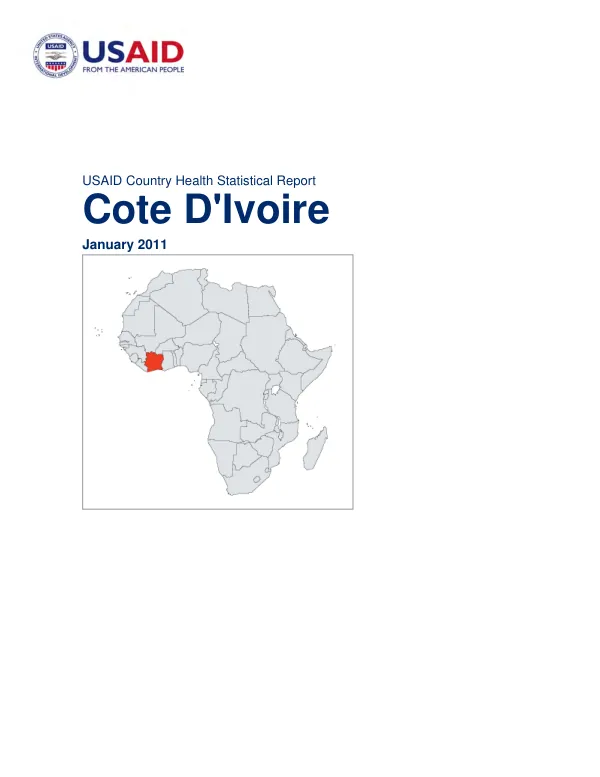
USAID Country Health Statistical Report Cote D'Ivoire January 2011
The population of Cote d'Ivoire is approximately 21,058,798 as of 2010.
2011 · 21 pages
Sign in to readA free account is required to download.
Abstract
The country has a population growth rate of 2.1% and a percent urban population of 45%. The population is predominantly rural, with 38% of women aged 15-49 residing in rural areas. The total fertility rate is 4.3 children per woman, with a mean ideal family size of 5.4 children. The country has a relatively low life expectancy at birth of 56.2 years, with a crude birth rate of 31.5 per 1,000 people and a crude death rate of 10.4 per 1,000 people. The number of live births is approximately 662,931, with a maternal mortality ratio of 810 per 100,000 live births. In terms of socioeconomic indicators, the country has a GNI per capita of $1,490, with a health expenditure as a percentage of GDP of 3.6%. The country has a relatively low adult literacy rate of 48.7%, with a higher adult literacy rate of 60.2% among males and 37.4% among females. The country has a relatively high infant mortality rate of 66.4 per 1,000 live births, with an under-5 mortality rate of 133.7 per 1,000 live births. The country has a relatively low vaccination coverage, with a DPT3 vaccination rate of 60.9% among children under 5. In terms of HIV/AIDS prevention indicators, the country has an estimated HIV prevalence proportion of 3.9% among adults aged 15-49 years, with an estimated number of people living with HIV of 480,000. The country has a relatively low condom use rate, with 44.3% of males and 34.6% of females reporting condom use with their last non-regular partner. The country has a relatively high tuberculosis (TB) prevalence rate, with an estimated TB incidence rate of 240 per 100,000 people. The country has a relatively low malaria prevalence rate, with an estimated malaria incidence rate of 10 per 1,000 people. Overall, the country faces significant health challenges, including high infant and under-5 mortality rates, low vaccination coverage, and a high TB prevalence rate.
Related documents