ECODIT, INC.
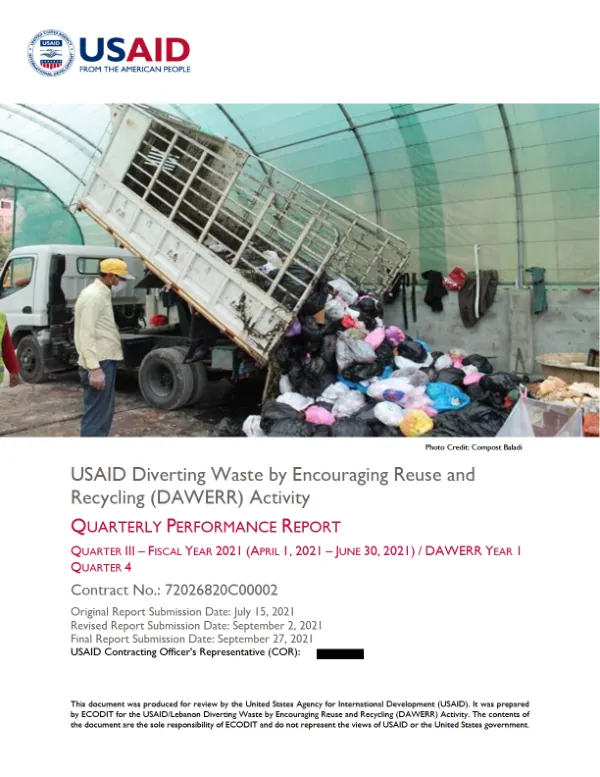
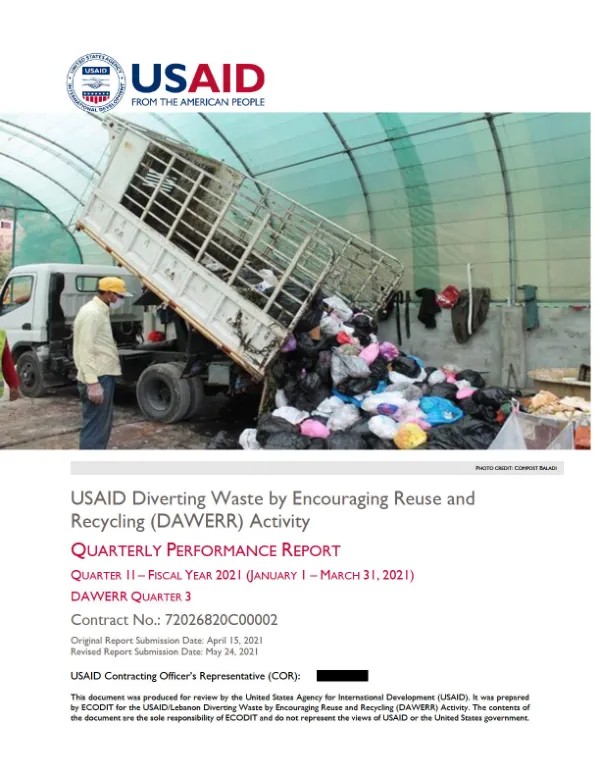
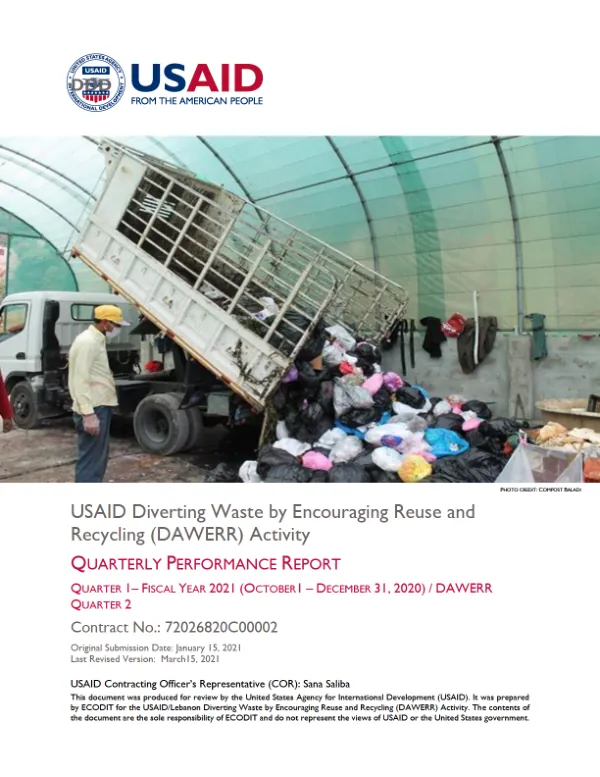
USAID DAWERR: Q1 FY2021/ Q2 Y1 – QUARTERLY PERFORMANCE REPORT
The USAID Diverting Waste by Encouraging Reuse and Recycling (DAWERR) Activity was awarded to ECODIT on June 30, 2020, to establish sustainable and replicable integrated solid waste diversion and valorization solutions in rural areas of Lebanon.
2021 · 31 pages
Sign in to readA free account is required to download.
Abstract
The Activity aligns with USAID/Lebanon's desire to introduce financially sustainable solutions that increase the reuse, recycling, and monetization of solid waste to reduce the amount of solid waste that goes to landfills. The Activity's period of performance is August 1, 2020 to July 31, 2025. The Activity's geographic focus is on rural areas of Lebanon, with a specific emphasis on the Bekaa Valley and Mount Lebanon regions. The target beneficiaries of the Activity include local municipalities, community-based organizations, and small and medium-sized enterprises (SMEs) involved in the solid waste management sector. The Activity's overall approach is centered on establishing a sustainable and replicable model for integrated solid waste diversion and valorization, with a focus on increasing the reuse, recycling, and monetization of solid waste. The Activity's progress in Year 1 is described in the Quarterly Performance Report, which covers the period from October 1, 2020 to December 31, 2020 (Quarter [Q] 1 Fiscal Year [FY] 2021/DAWERR Q2). The report highlights the progress made on various activities, including the development of a solid waste management plan for the Bekaa Valley region, the establishment of a network of community-based organizations involved in solid waste management, and the provision of technical assistance to SMEs involved in the sector. The report also highlights the challenges faced by the Activity, including the COVID-19 pandemic, which has impacted the implementation of some activities. Despite these challenges, the Activity has made significant progress in establishing a sustainable and replicable model for integrated solid waste diversion and valorization in rural areas of Lebanon. The Activity's progress is measured against the approved Work Plan for Year 1, which outlines the specific objectives and deliverables for the period. The report provides an update on the progress made towards these objectives, including the development of a solid waste management plan for the Bekaa Valley region, the establishment of a network of community-based organizations involved in solid waste management, and the provision of technical assistance to SMEs involved in the sector. The report also highlights the importance of collaboration and coordination with various stakeholders, including local municipalities, community-based organizations, and SMEs involved in the solid waste management sector. The Activity has established a strong partnership with these stakeholders, which has facilitated the implementation of the Activity's objectives and deliverables. The Activity's progress is also measured against the results framework, which outlines the specific indicators and targets for the Activity. The report provides an update on the progress made towards these indicators and targets, including the development of a solid waste management plan for the Bekaa Valley region, the establishment of a network of community-based organizations involved in solid waste management, and the provision of technical assistance to SMEs involved in the sector. Overall, the Quarterly Performance Report provides an update on the progress made by the USAID DAWERR Activity in establishing a sustainable and replicable model for integrated solid waste diversion and valorization in rural areas of Lebanon. The report highlights the challenges faced by the Activity, including the COVID-19 pandemic, and the importance of collaboration and coordination with various stakeholders.
Related documents