AMERICAN RED CROSS
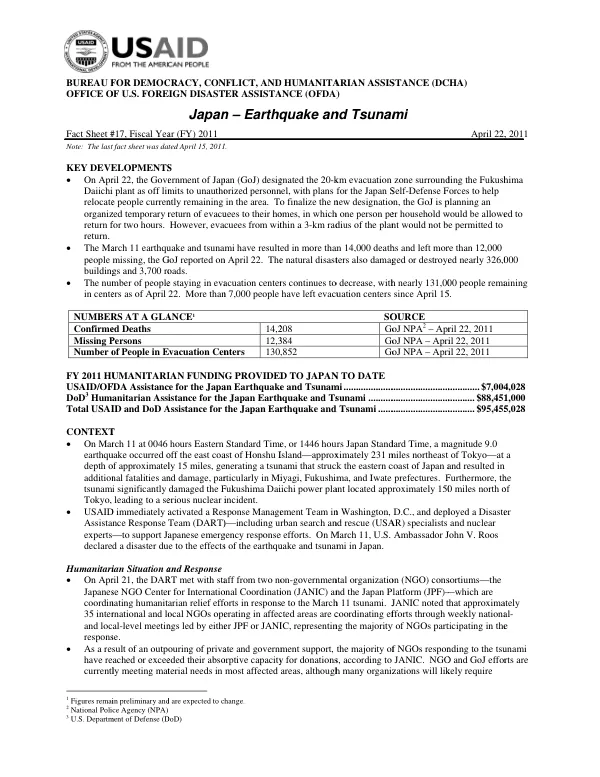
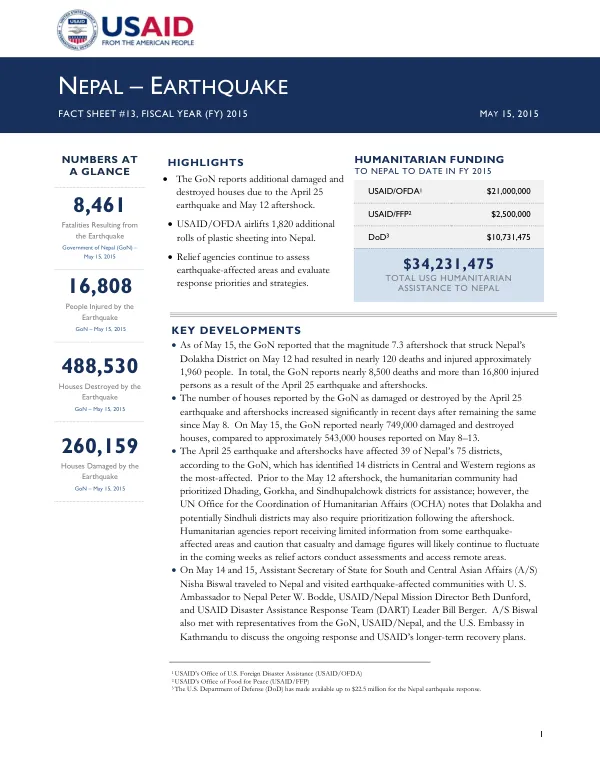
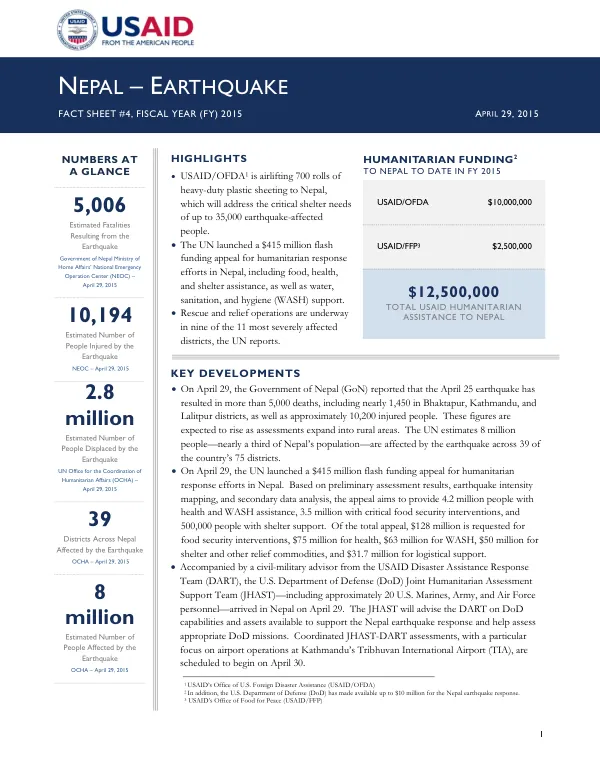
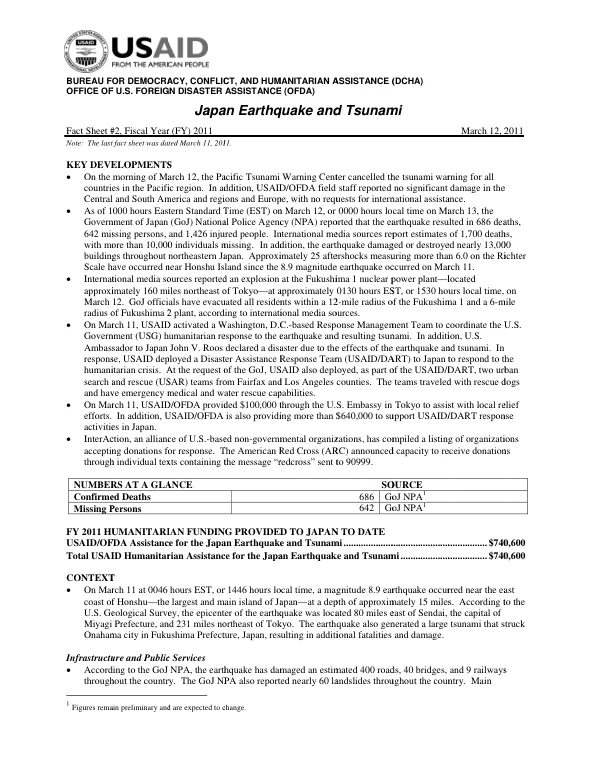
USAID-DCHA Japan Earthquake and Tsunami Fact Sheet #2L
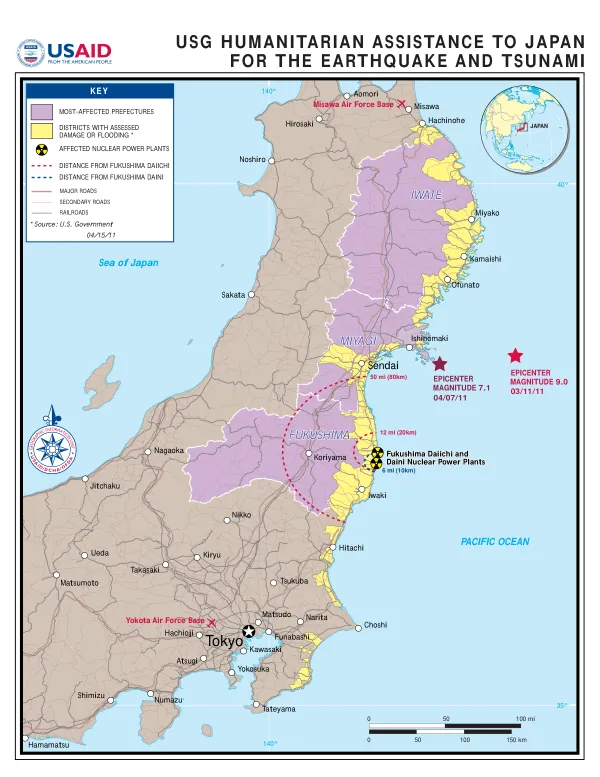
The Japan Earthquake and Tsunami occurred on March 11, 2011, with the epicenter located approximately 80 miles east of the Oshika Peninsula in Miyagi Prefecture.
2011 · 2 pages
Sign in to readA free account is required to download.
Abstract
The earthquake had a magnitude of 8.9 on the Richter scale, making it one of the largest in recorded history. The earthquake also triggered a massive tsunami that affected several coastal regions in northeastern Japan, including Miyagi, Iwate, and Fukushima prefectures. The tsunami caused widespread destruction and loss of life, with estimated national fatalities exceeding 15,000 and approximately 13,000 people missing. The disaster also resulted in significant damage to infrastructure, including roads, bridges, and buildings. The Tokyo Electric Power Company reported that 450,000 households in Tochigi, Chiba, and Ibaraki prefectures were without electrical power. In response to the disaster, the Government of Japan (GoJ) established an Emergency Response Team and mobilized thousands of Japanese military personnel to conduct rescue efforts. The U.N. Office for the Coordination of Humanitarian Affairs (OCHA) reported that the GoJ had also established emergency evacuation centers throughout Japan, which continued to shelter approximately 215,000 people as of March 12. Urban Search and Rescue (USAR) teams from Fairfax and Los Angeles counties were scheduled to arrive in Japan on March 13 to conduct search and rescue activities in affected areas. The U.N. and international media sources reported that teams from the Republic of Korea, Singapore, Australia, and New Zealand would assist in search and rescue efforts in the coming days, with additional teams from at least 40 countries standing by to provide personnel, equipment, and rescue dogs, if requested by the GoJ. As of March 12, approximately 62 national disaster response teams, including more than 400 doctors, nurses, and administrative support personnel, were conducting assessments and providing medical care in affected areas. The Japanese Red Cross Society (JRCS) was providing medical care, psychological support, and emergency relief supplies to the centers. USAID provided humanitarian assistance to Japan, with a total of $740,600 allocated for emergency relief support and USAR team support costs. The U.S. Embassy in Tokyo received $100,000 for emergency relief support, while USAID/DART support costs totaled $640,600. The most effective way to assist relief efforts was by making cash contributions to humanitarian organizations conducting relief operations, as recommended by USAID.
Related documents