GOVERNMENT OF INDONESIA
Nepal – Earthquake Fact Sheet #2, Fiscal Year (FY) 2015
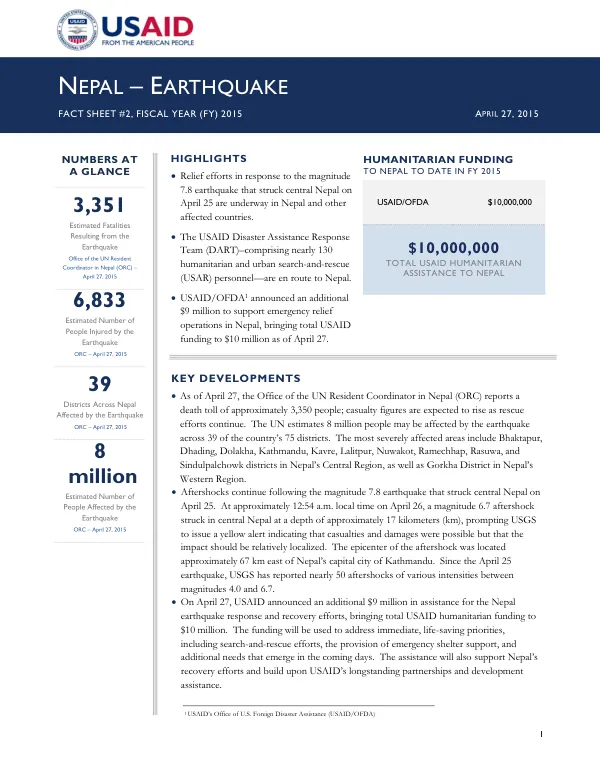
The Office of the UN Resident Coordinator in Nepal reports a death toll of approximately 3,350 people as of April 27, with casualty figures expected to rise as rescue efforts continue.
2015 · 5 pages
Sign in to readA free account is required to download.
Abstract
The UN estimates 8 million people may be affected by the earthquake across 39 of the country's 75 districts. The most severely affected areas include Bhaktapur, Dhading, Dolakha, Kathmandu, Kavre, Lalitpur, Nuwakot, Ramechhap, Rasuwa, and Sindulpalchowk districts in Nepal's Central Region, as well as Gorkha District in Nepal's Western Region. Aftershocks continue following the magnitude 7.8 earthquake that struck central Nepal on April 25. A magnitude 6.7 aftershock struck in central Nepal at a depth of approximately 17 kilometers on April 26, prompting USGS to issue a yellow alert indicating that casualties and damages were possible but that the impact should be relatively localized. The epicenter of the aftershock was located approximately 67 km east of Nepal's capital city of Kathmandu. Since the April 25 earthquake, USGS has reported nearly 50 aftershocks of various intensities between magnitudes 4.0 and 6.7. The Government of Nepal has identified 16 open spaces around Kathmandu to serve as displacement sites for earthquake-affected populations that have lost their homes. The Government of Nepal has requested assistance from relief organizations to supply the sites. Many Nepalese in affected areas continue to sleep outdoors given the continued aftershocks, and most need tents and other shelter supplies. The Food Security Cluster estimates that approximately 1.4 million people may require food assistance, including 750,000 people residing in rural housing near the epicenter. The earthquake has disrupted preparations for the next planting season, which may affect Nepal's food security situation in the coming months. The Nepal Humanitarian Country Team has established coordination hubs in Kathmandu at the Government of Nepal's National Emergency Operation Center, the UN office, and the humanitarian staging area at Tribhuvan International Airport. UNDAC staff have also established a reception and departure center at the airport for the coordination of USAR teams and other humanitarian assistance. The UN has activated its humanitarian cluster system and reports plans to launch an emergency flash appeal to support humanitarian relief efforts in Nepal. With support from the UN World Health Organization, the Government of Nepal has activated a Health Emergency Operations Center to support coordination efforts.
Related documents