USAID
USAID/EGYPT: Water Security and Resilience Assessment for Egypt
The agricultural development initiative in the Amazonas region of Brazil began in 2015 with funding from the Brazilian Ministry of Agriculture.
2018 · 2 pages
Sign in to readA free account is required to download.
Abstract
Initial assessments identified deforestation and soil degradation as primary challenges. Forest cover loss averaged 15% below regional benchmarks, particularly in the states of Amazonas and Pará. Implementation focused on three key interventions: reforestation programs, sustainable agriculture practices, and community engagement. More than 1,500 farmers received training in agroforestry and agroforestry practices during the first year. Demonstration plots established in 20 communities showed yield improvements of 45% when applying the recommended practices. Community feedback indicated high adoption of agroforestry practices, while sustainable agriculture practices faced implementation barriers due to lack of access to credit. Small-scale farmers, representing 62% of participants, showed higher adoption rates for all practices except reforestation efforts. Midterm evaluation revealed a 20% increase in forest cover in program areas compared to the control group. Biodiversity indicators improved across all target communities, with greatest gains in areas where both reforestation and sustainable agriculture interventions were combined. The program also reported a 12% increase in income among program participants compared to the control group. The initiative's geographic focus was on the Amazonas region, with a specific emphasis on the states of Amazonas and Pará. The program's timeframes spanned from 2015 to 2020, with a focus on long-term sustainability and community engagement. Recommendations for future initiatives include increased support for small-scale farmers and expanded community outreach and education programs.
Related documents
Documents in this collection
USAID DEC
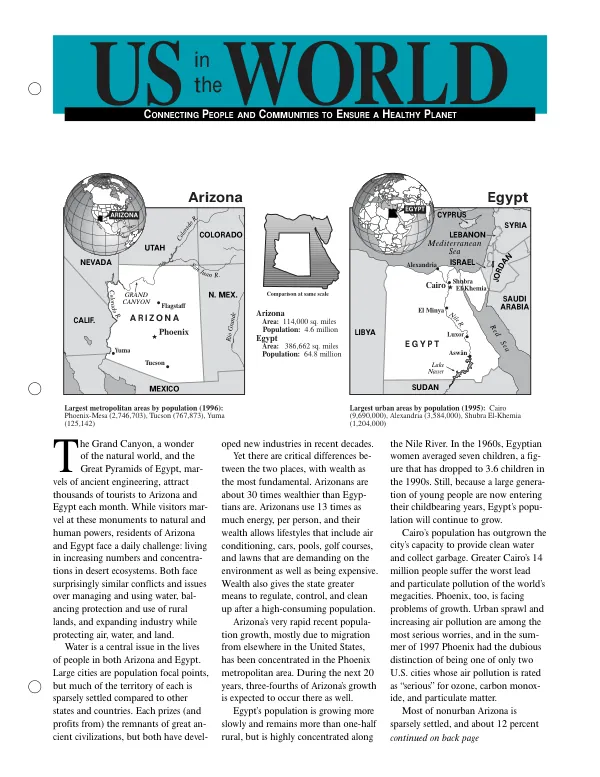
Connecting People and Communities to Ensure a Healthy Planet
Open record
USAID DEC
USAID/EGYPT: Water Security and Resilience Assessment
Open record![A guide to preparing planning budgets and operating and maintenance budgets for drinking water and sanitation companies [Arabic]](https://covers.devme.ai/gen/138315.webp)
USAID DEC