USAID
USAID/ENGINE Case Studies (Amhara)
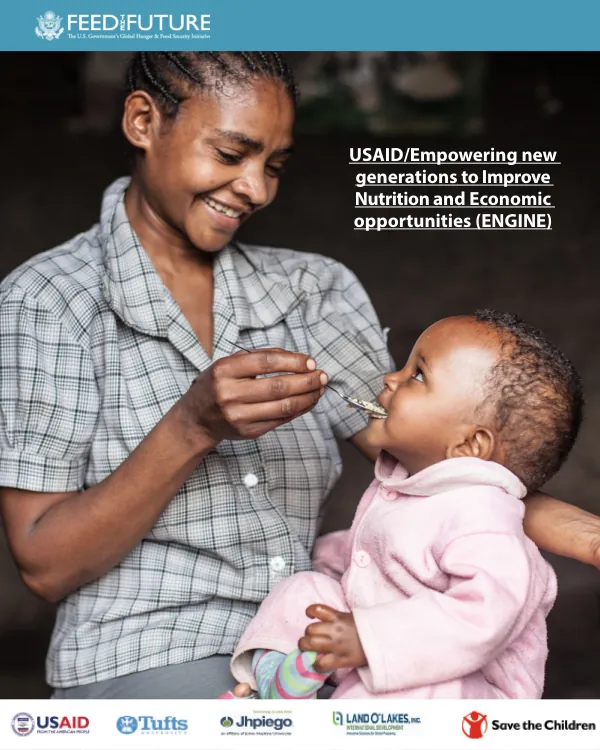
In Amhara, USAID/ENGINE implemented a program to empower new generations to improve nutrition and economic opportunities.
2016 · 27 pages
Sign in to readA free account is required to download.
Abstract
The program focused on Water, Sanitation, and Hygiene (WaSH) initiatives, including the construction of tippy taps and latrines. Tsegaye Delele, a 30-year-old mother of two, was a beneficiary of the program. She received 17 chickens, which provided her family with a steady source of eggs and income. Tsegaye also participated in a saving group that implemented WaSH activities, including the production and sale of latrine slabs and water filters. The program also supported the Yetnore Health Center in Dejen woreda, Amhara, in improving the quality of care for patients. The health center received training on Continuous Quality Improvement (CQI) and formed a committee to monitor the quality of services. The committee consisted of 10 members of staff who regularly attended health posts to carry out experience sharing meetings. The committee analyzed sample documentation of clients to ensure adequate quality of service had been delivered. Clients were then interviewed to further analyze the quality of care. After this, a 3-step process was taken on poor-performing areas. The program also provided training to Health Extension Workers (HEWs) in the Dejen woreda. The HEWs, including Ayale Mekonen, Emebet Demelash, and Shitaw Antenegus, provided care to 9,300 patients. They received extensive training on nutrition counseling and cooking demonstrations. The training enabled the HEWs to engage mothers and their husbands in nutrition activities, leading to improved nutrition knowledge and practices. Tirualem Damte, a 28-year-old mother of two, was a beneficiary of the program. She received training on nutrition and WaSH practices, which improved her family's diet and health.