BANK FOR WEST AFRICAN DEVELOPMENT
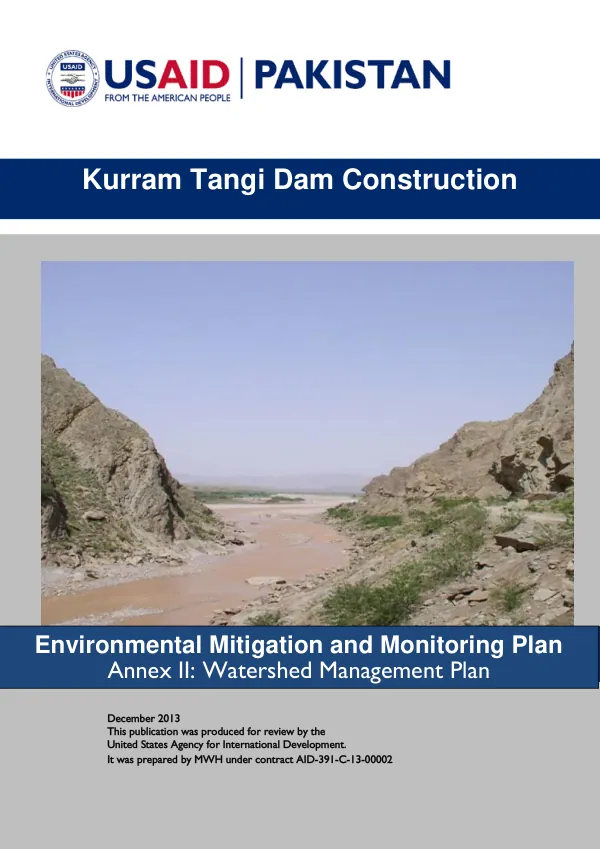
USAID Environmental Assessment of Kurram Tangi Dam Construction
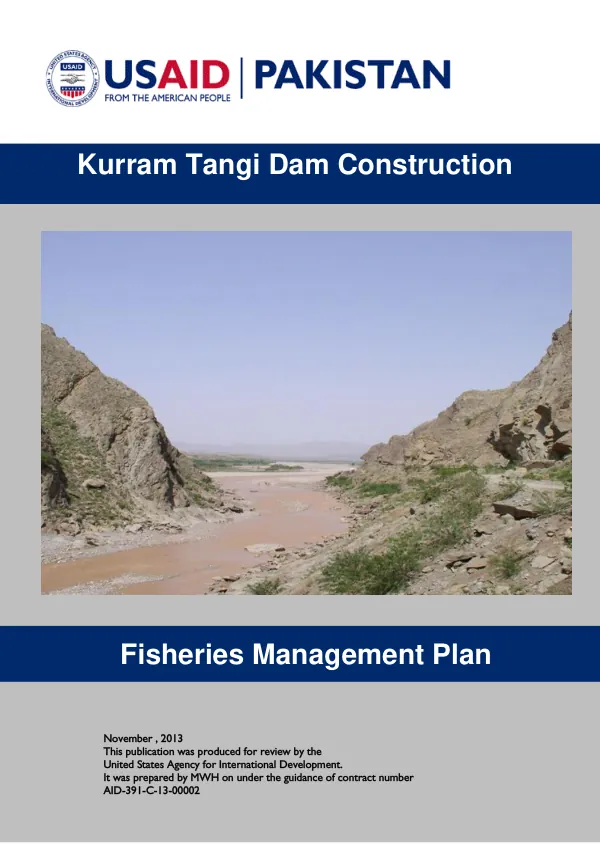
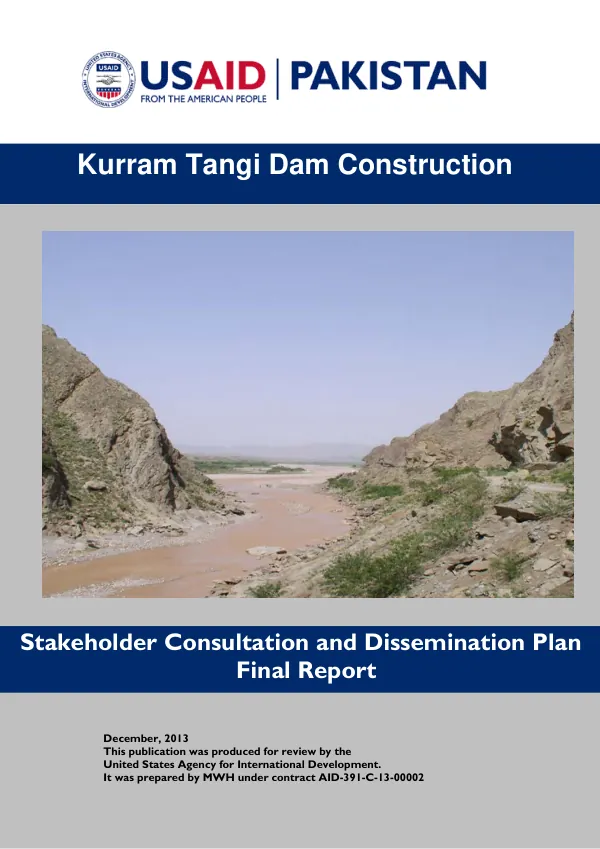
The Kurram Tangi Dam Construction Watershed Management Plan was prepared by MWH Americas, Inc.
2013 · 60 pages
Sign in to readA free account is required to download.
Abstract
for the United States Agency for International Development (USAID) in December 2013. The plan is part of a comprehensive suite of documents submitted to USAID under Contract AID-391-C-13-00002 for the Kurram Tangi Multipurpose Dam Project (KTMDP). The KTMDP aims to develop a hydropower project in the Federally Administered Tribal Areas (FATA) of Pakistan. The watershed management plan focuses on the Kaitu and Kurram watersheds, which are critical components of the KTMDP. The plan assesses the hydrology, geology, topography, landforms, soils, and vegetation of the watersheds, as well as the land-use patterns and area of influence. The assessment identifies natural and anthropogenic erosion, transboundary issues, and sedimentation as key concerns. The plan outlines measures to mitigate these impacts, including structural and non-structural measures. Structural measures include the construction of dams, canals, and other infrastructure, while non-structural measures focus on community involvement, education, and outreach. The plan also emphasizes the importance of community participation and involvement in the watershed management process. The KTMDP is a complex project that involves multiple stakeholders, including the government of Pakistan, the Water and Power Development Authority (WAPDA), and the local communities. The watershed management plan provides a framework for managing the watersheds and mitigating the impacts of the project on the environment and local communities. The plan is based on a comprehensive review of existing literature and data, including reports from the Asian Development Bank (ADB), the United States Army Corps of Engineers (USACE), and the National Engineering Services Pakistan (NESPAK). The plan also incorporates input from local stakeholders, including the Divisional Forest Officer (DFO) and the Male Community Organization (MCO). The watershed management plan is an essential component of the KTMDP, as it provides a framework for managing the watersheds and mitigating the impacts of the project on the environment and local communities. The plan will be used to inform decision-making and ensure that the project is implemented in a sustainable and environmentally responsible manner. The plan is organized into eight chapters, including an executive summary, introduction, project description, administrative and legal framework, baseline information, assessment of impacts, measures, and conclusions and recommendations. The plan includes several tables and figures, including Table 2-1, which provides characteristics of the Kurram Tangi Dam and reservoir, and Table 4-1, which shows the distribution of Kaitu watershed areas in Pakistan and Afghanistan. Overall, the Kurram Tangi Dam Construction Watershed Management Plan provides a comprehensive framework for managing the watersheds and mitigating the impacts of the KTMDP on the environment and local communities. The plan will be an essential tool for ensuring the long-term sustainability of the project and protecting the environment and local communities.
Related documents