RTI INTERNATIONAL
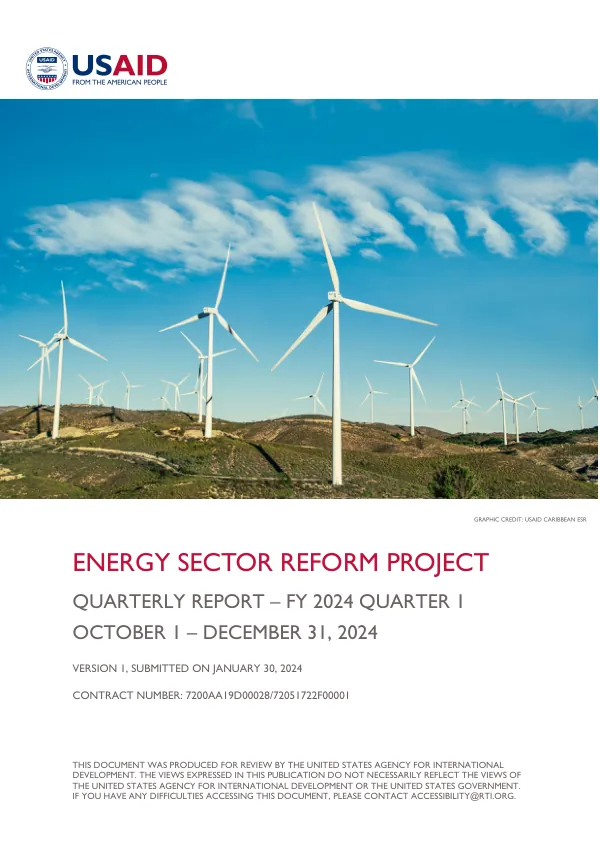
USAID ESR FY24Q1 Report
The Energy Sector Reform Project aims to provide technical assistance for energy reform to utilities, ministries, and regulators in identified host countries.
2024 · 35 pages
Sign in to readA free account is required to download.
Abstract
The project's purpose is to develop policies, laws, regulations, tools, and processes for the design and operation of more resilient and modern energy systems. The project's scope includes the development of policies and regulations to support the integration of renewable energy sources, improve energy efficiency, and enhance energy security. The project's three main tasks are: 1. Task 1: Task 1 focuses on improving the performance and reach of energy utilities. This includes the development of policies and regulations to support the integration of renewable energy sources, improve energy efficiency, and enhance energy security. 2. Task 2: Task 2 aims to accelerate private sector investment in modern energy systems. This includes the development of policies and regulations to support the growth of the renewable energy sector, improve energy efficiency, and enhance energy security. 3. Task 3: Task 3 focuses on enhancing the energy sector's resilience through regional collaboration. This includes the development of policies and regulations to support the integration of renewable energy sources, improve energy efficiency, and enhance energy security. The project's implementation progress is monitored through a set of indicators, including the development of policies and regulations, the growth of the renewable energy sector, and the improvement of energy efficiency. The project's administration and management are overseen by the project team, which includes a project manager, a deputy chief of party, and a team of technical experts. The project's budget for the quarter was $X, which was allocated to various activities, including the development of policies and regulations, the growth of the renewable energy sector, and the improvement of energy efficiency. The project's next quarter activities and milestones include the development of new policies and regulations, the growth of the renewable energy sector, and the improvement of energy efficiency. The project's cross-cutting themes include education and training, private sector engagement, self-reliance, local entities, and gender equality. The project's implementation status, challenges, and risks are monitored and reported on a regular basis. The project's staff includes a project manager, a deputy chief of party, and a team of technical experts. The project's subcontractors include various local and international organizations that provide technical assistance and support to the project. The project's travel schedule includes trips to various countries in the region to support the project's activities. The project's next quarter activities and milestones include the development of new policies and regulations, the growth of the renewable energy sector, and the improvement of energy efficiency. The project's cross-cutting themes include education and training, private sector engagement, self-reliance, local entities, and gender equality. The project's implementation status, challenges, and risks are monitored and reported on a regular basis.