USAID DEC
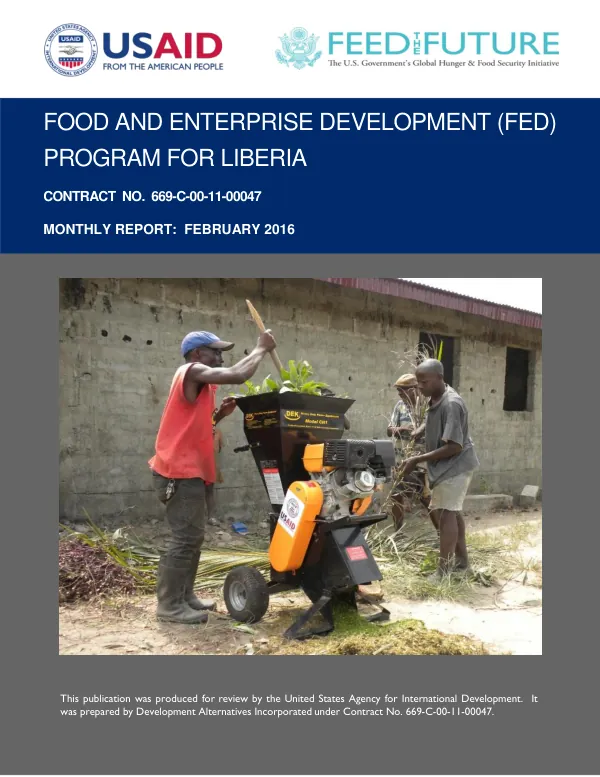
USAID Food and Enterprise Development Program for Liberia February 2016 Monthly Report
Sign inUSAID
USAID Food and Enterprise Development Program for Liberia February 2016 Monthly Report
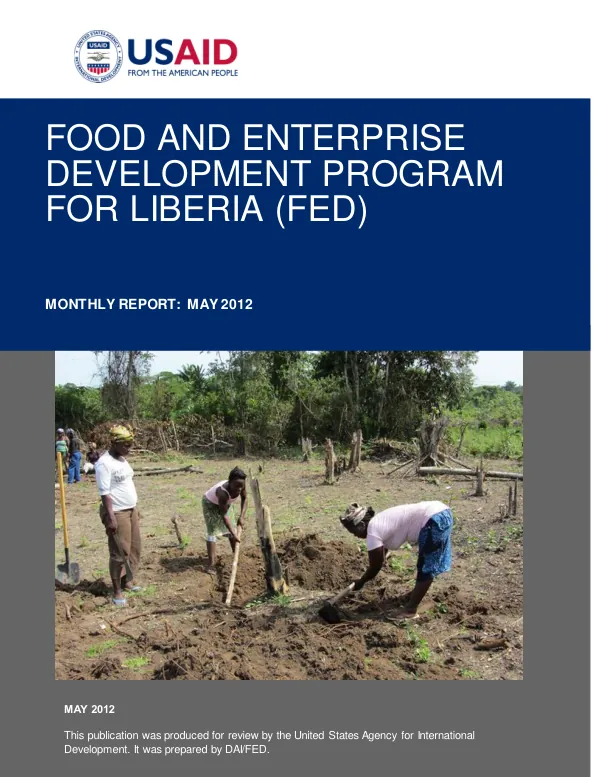
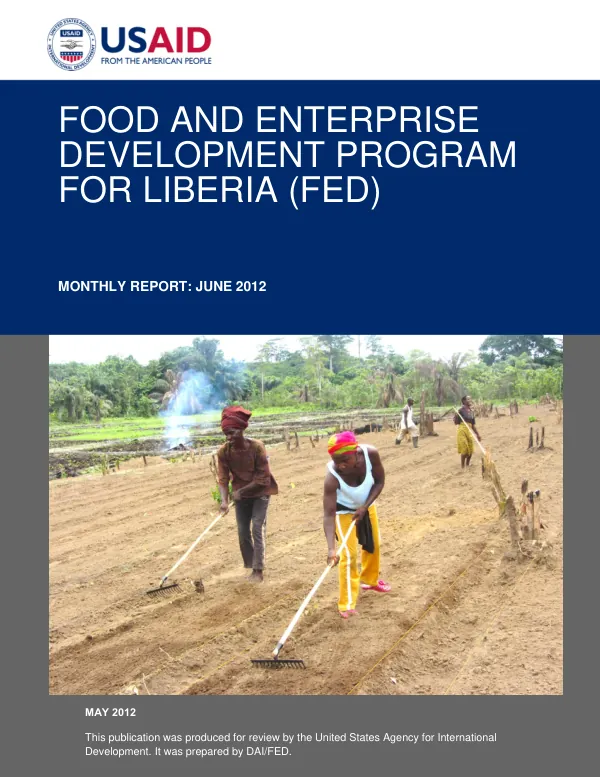
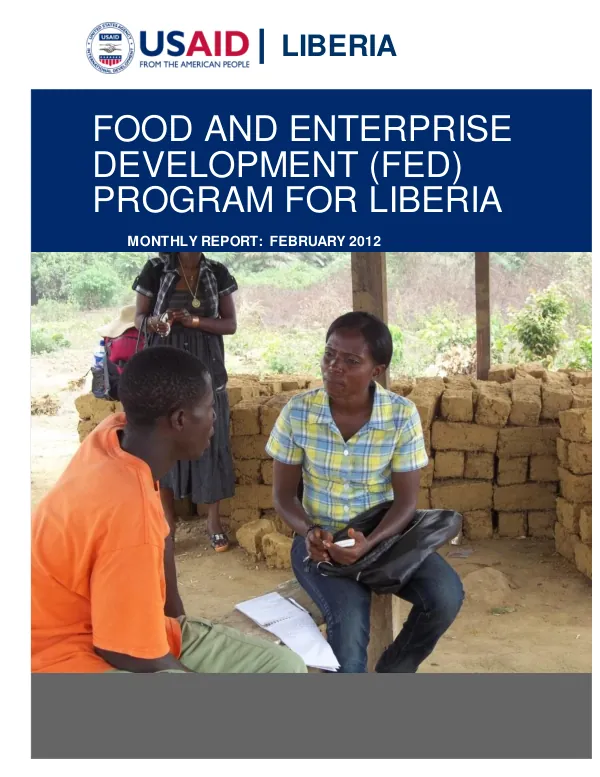
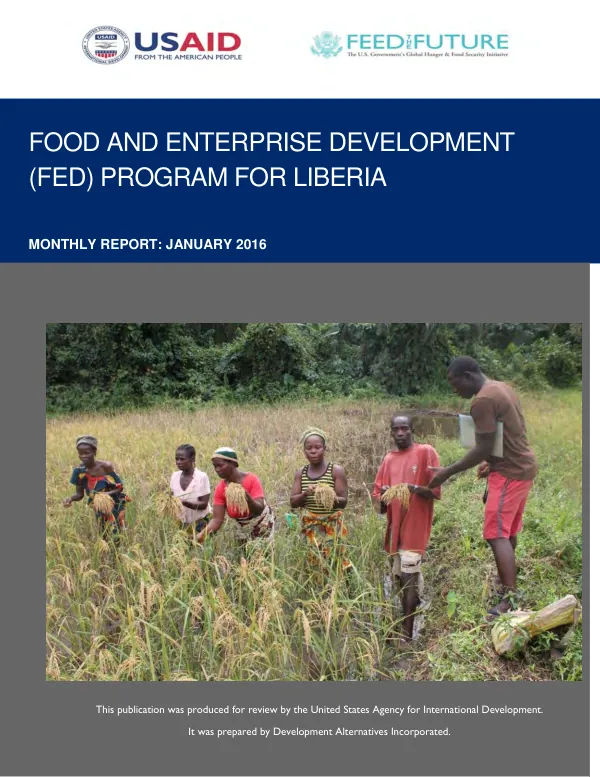
The USAID Food and Enterprise Development (FED) Program for Liberia is a flagship Feed the Future (FtF) Initiative, a USAID-funded development program launched in September 2011.
2016 · 24 pages
Sign in to readA free account is required to download.
Abstract
The program aims to increase agricultural productivity and profitability, stimulate private sector growth and investment, and build local technical and managerial human resource capability. The program focuses on four main components: increasing agricultural productivity and profitability, stimulating private sector growth and investment, building local technical and managerial human resource capability, and monitoring and evaluation. Component One aims to increase agricultural productivity and profitability through four tasks: increasing productivity and profitability of the rice value chain, increasing productivity and profitability of the cassava value chain, increasing productivity and profitability of the horticulture value chain, and increasing productivity and profitability of the goat value chain. Task 1A, Increasing Productivity and Profitability of the Rice Value Chain, involves improving access to improved seed and good planting material, promoting organic fertilizer mix and efficient use of inorganic fertilizer, and providing agricultural extension support. Task 1B, Increasing Productivity and Profitability of the Cassava Value Chain, focuses on improving access to improved seed and good planting material, promoting organic fertilizer mix and efficient use of inorganic fertilizer, and providing agricultural extension support. Task 1C, Increasing Productivity and Profitability of the Horticulture Value Chain, involves improving access to improved seed and good planting material, promoting organic fertilizer mix and efficient use of inorganic fertilizer, and providing agricultural extension support. Task 1D, Increasing Productivity and Profitability of the Goat Value Chain, focuses on improving access to improved seed and good planting material, promoting organic fertilizer mix and efficient use of inorganic fertilizer, and providing agricultural extension support. Component Two, Stimulate Private Sector Growth and Investment, aims to create a policy enabling environment for private sector growth. Task 2, Policy Enabling Environment for Private Sector Growth, involves improving access to finance, access to business development support services and enterprise service centers, and promoting public-private partnerships to benefit Feed the Future objectives. Subtask 2.1, Access to Finance, focuses on improving access to financial services for farmers and agribusinesses. Subtask 2.2, Access to Business Development Support Services and Enterprise Service Centers, involves providing business development support services and promoting enterprise service centers. Subtask 2.3, Women Participation in Agribusiness, aims to increase women's participation in agribusiness. Component Three, Build Local Technical and Managerial Human Resource Capability, aims to build the capacity of local technical and managerial human resources. Activity 3.1, Roll out the National Diploma in Agriculture in all Four Centers of Excellence (CoEs), involves rolling out the National Diploma in Agriculture program in all four Centers of Excellence. Task 4.2, Monitoring & Evaluation, involves monitoring and evaluating the program's progress and impact. The program has made significant progress in its first five years, with notable achievements in increasing agricultural productivity and profitability, stimulating private sector growth and investment, and building local technical and managerial human resource capability. The program has also established partnerships with various stakeholders, including government institutions, private sector companies, and local organizations. The program's geographic focus is Liberia, with a specific emphasis on the agricultural sector. The program's timeframes are from September 2011 to September 2016, with a possible extension to September 2021. The program's recommendations include continuing to support the development of the agricultural sector, promoting private sector growth and investment, and building local technical and managerial human resource capability.