USAID DEC
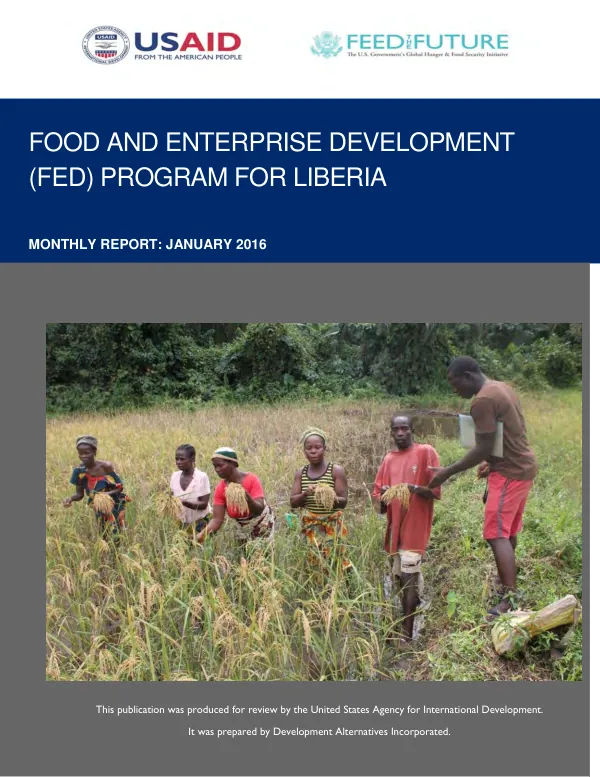
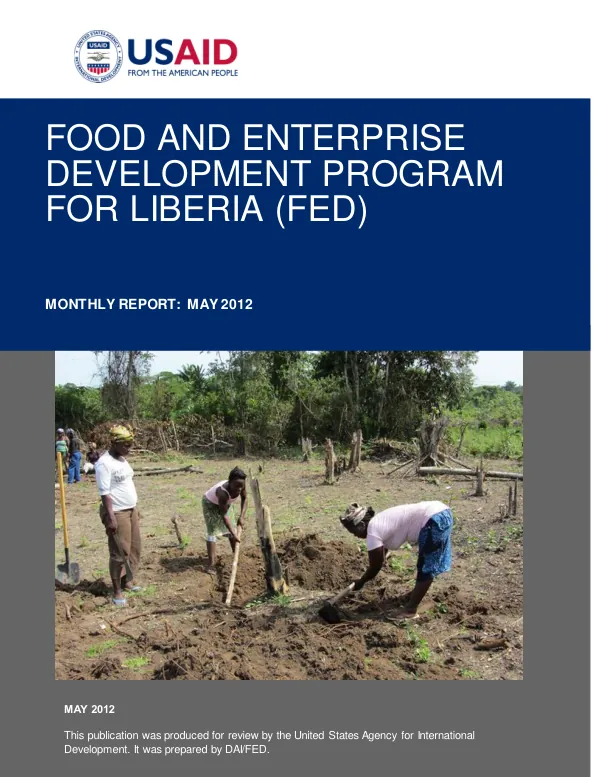
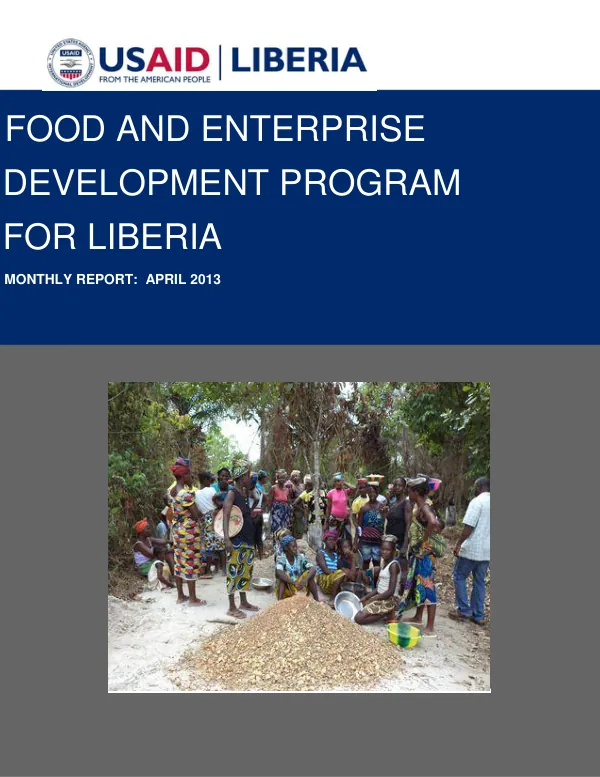
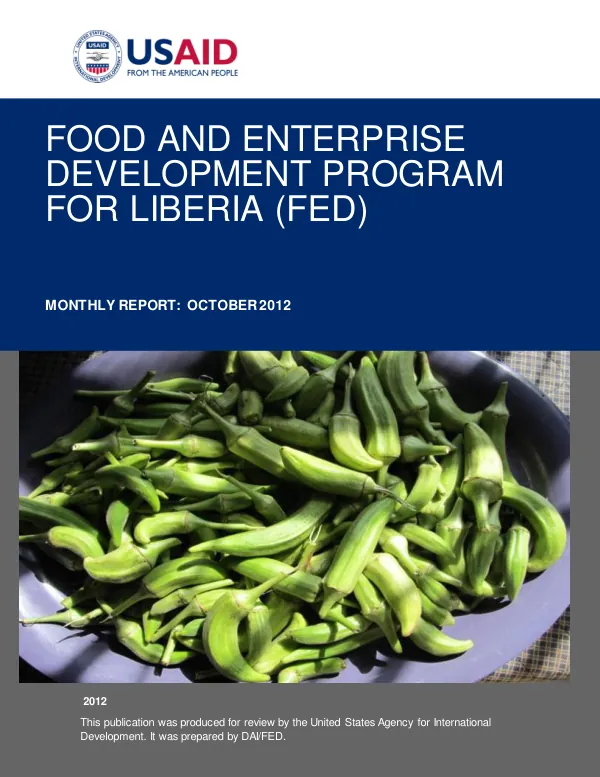
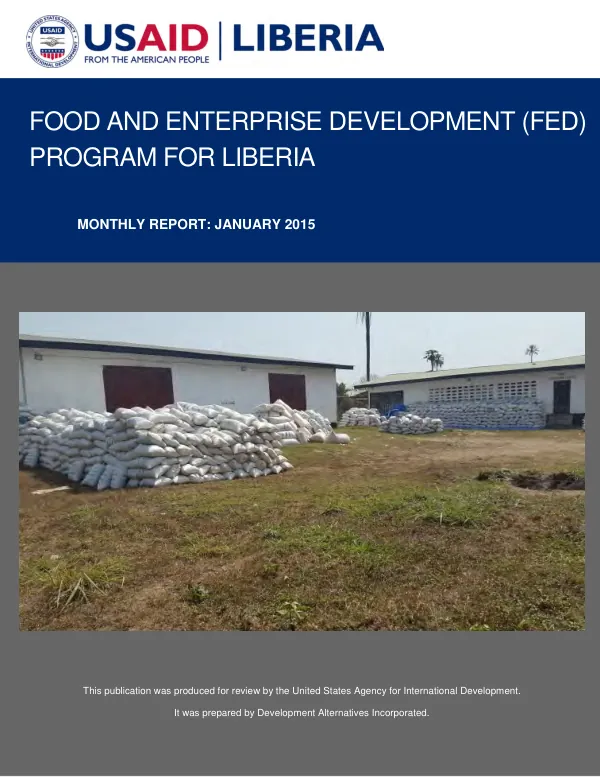
USAID Food and Enterprise Development Program for Liberia Monthly Report, January 2015
Sign inDEVELOPMENT ALTERNATIVES, INC./FINNET
USAID Food and Enterprise Development Program for Liberia Monthly Report, January 2015
The Food and Enterprise Development Program for Liberia, a USAID-funded initiative, aims to increase agricultural productivity and profitability, stimulate private sector growth, and build local technical and managerial human resource capability.
2015 · 48 pages
Sign in to readA free account is required to download.
Abstract
The program is implemented by Development Alternatives Incorporated (DAI) and focuses on four main components. Component One: Increase Agricultural Productivity and Profitability, involves several tasks aimed at improving the productivity and profitability of various agricultural value chains, including rice, cassava, horticulture, and goat farming. Task 1A focuses on increasing the productivity and profitability of the rice value chain, with a target of 20% increase in rice yields. Task 1B aims to increase the productivity and profitability of the cassava value chain, with a target of 15% increase in cassava yields. Implementation of these tasks involves several sub-tasks, including the development of a MoA data collection system, improved access to agricultural inputs, agricultural extension support, and youth in agribusiness. Sub-task 1.5 aims to improve human nutrition by promoting the consumption of nutrient-rich foods. Component Two: Stimulate Private Sector Growth and Investment, focuses on creating an enabling policy environment for private sector growth. Task 2 involves the development of a business development support (BDS) services and enterprise service centers, which will provide training and technical assistance to small and medium-sized enterprises (SMEs). Component Three: Build Local Technical and Managerial Human Resource Capability, involves the development of existing vocational centers into centers of excellence in vocational agriculture education. Task 3 aims to improve the quality of vocational training in agriculture, with a focus on developing skills in areas such as crop production, animal husbandry, and post-harvest handling. Component Four: Cross-Cutting Activities, involves several tasks aimed at supporting the overall program implementation. Task 4.1 focuses on communications and knowledge management, while Task 4.2 involves environmental compliance. Task 4.3 is responsible for monitoring and evaluation, and Task 4.4 manages the market development fund. The program has made significant progress in its first year, with several achievements reported. In the rice value chain, FY14 rice crop sales reached 20,000 metric tons, with an average price of $250 per metric ton. In the cassava value chain, FY15 upland commercial sites harvests reached 10,000 metric tons, with an average price of $150 per metric ton. The program has also recruited over 2,000 farmers in the upland and lowland rice value chains, with a target of 5,000 farmers by the end of the program. The program has also made significant progress in its cross-cutting activities, with several achievements reported. The market development fund has been established, with a total commitment of $1 million. The program has also established a monitoring and evaluation system, which will track progress against program targets. Overall, the Food and Enterprise Development Program for Liberia has made significant progress in its first year, with several achievements reported. The program is on track to meet its targets, and is expected to make a significant impact on the Liberian agricultural sector.