DAI
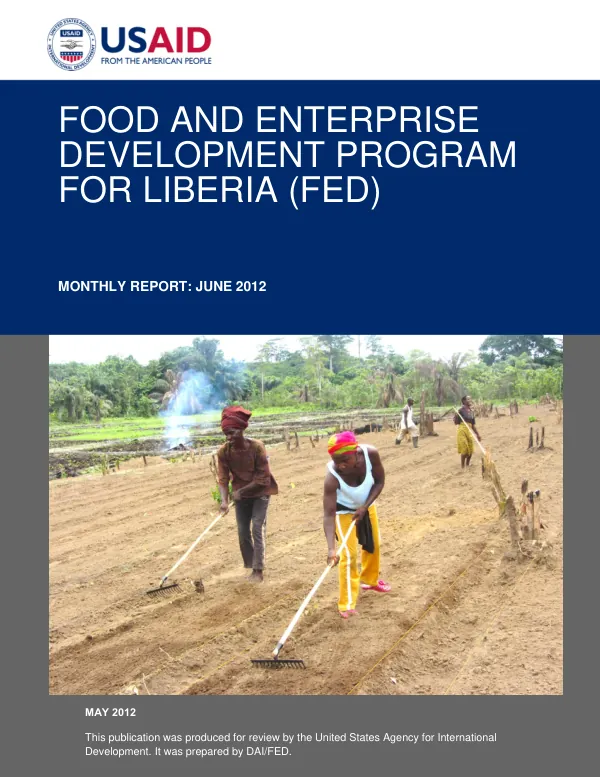
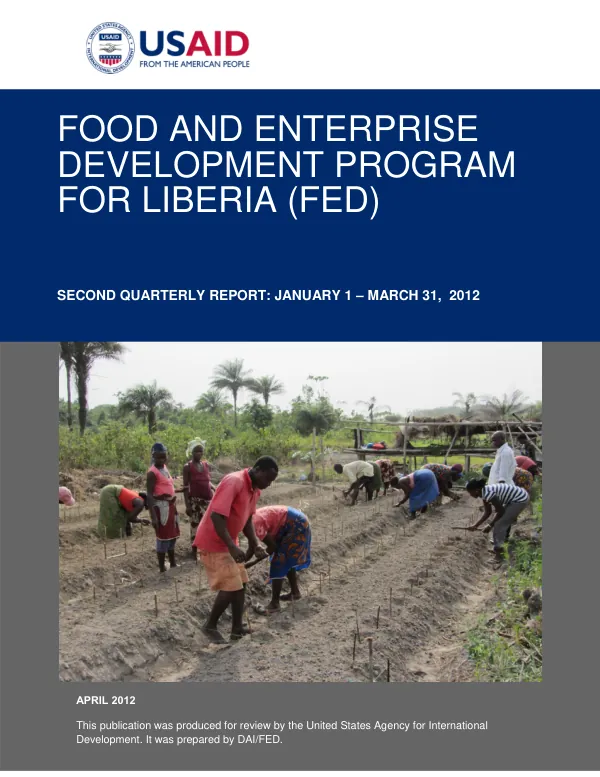
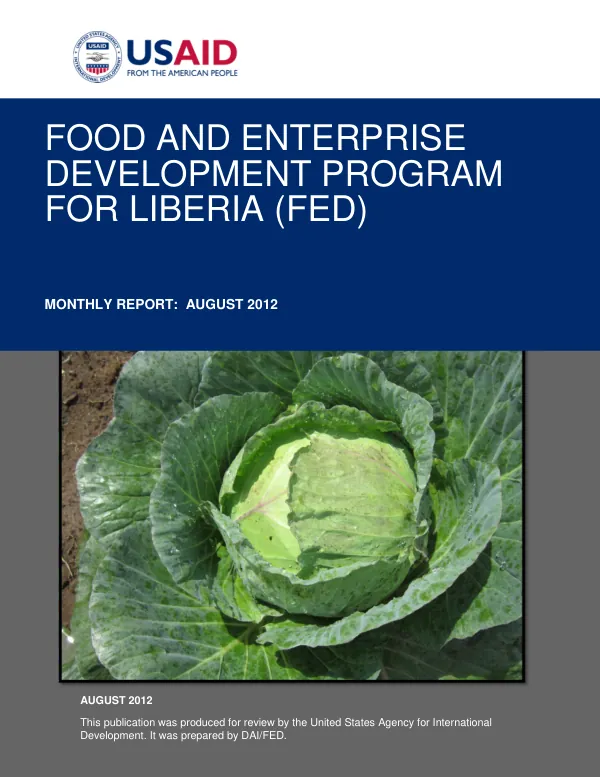
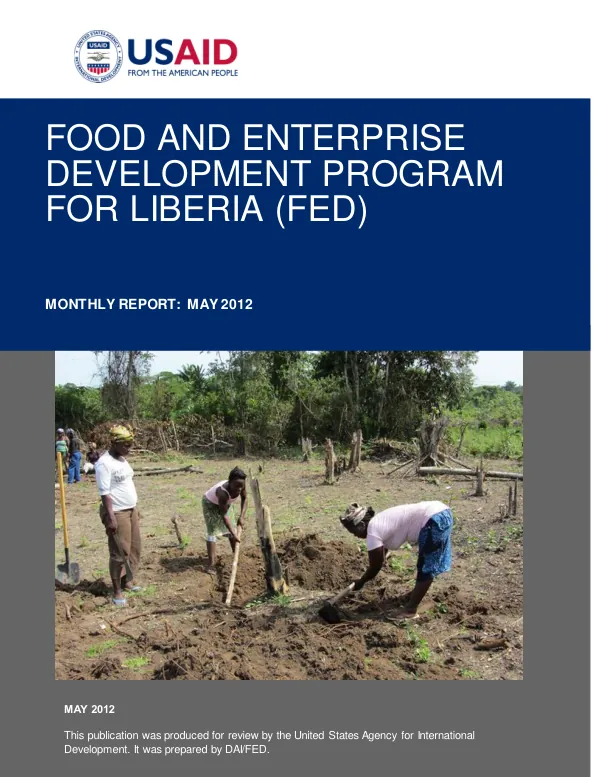
Food and Enterprise Development (FED) Program for Liberia Monthly Report May 2012
The Food and Enterprise Development (FED) Program for Liberia is a USAID-funded initiative aimed at improving agricultural productivity, stimulating private enterprise, and building local human capacity.
2012 · 36 pages
Sign in to readA free account is required to download.
Abstract
The program is implemented by DAI and focuses on increasing the income and food security of rural households in Liberia. Component One: Increased Agricultural Productivity is a key component of the FED program. Task 1.3 focuses on improving access to quality agro-inputs, with a meeting held at the Central Agricultural Research Institute (CARI) to discuss action points. The meeting resulted in the identification of areas for improvement in the input supply system, including the need for better quality seeds and fertilizers. Activity 1.3b involves testing and introducing new technologies, including lowland rice and cassava production/processing activities. A major finding from this activity is the potential for increased crop yields and improved profitability for farmers. Proposed action points include the procurement of equipment and tools for farmer training and the identification of rice production and processing equipment. Task 1.5 focuses on increasing the production and profitability of quality rice, with staff recruitment and rice producer group identification being key activities. Improved rice production training is also being provided to farmers, with a focus on increasing yields and reducing costs. Preliminary identification of rice production and processing equipment has also been completed. Task 1.6 focuses on increasing the production and profitability of quality cassava, while Task 1.7 involves peri-urban vegetable production. Capacity building and commercial linkages are key activities in this task, with a focus on improving the skills and knowledge of farmers and connecting them to markets. Component Two: Stimulate Private Enterprise is another key component of the FED program. Activity 2.3.A.i involves profiling commercial buyers, while Activity 2.3.A.ii.e focuses on targeted technical support. Task 2.1 involves enabling the policy environment for private sector growth, while Task 2.2 focuses on access to finance. Component Three: Build Local Human Capacity is also a key component of the FED program. Task 3.1 involves creating centers of excellence, with training being conducted in various areas, including business management skills and lowland rice and upland vegetable farming. Monitoring and evaluation are also key activities in this component, with a baseline survey being completed to assess the impact of the program. The Market Development Fund and training activities continue to develop and expand, with new partners being identified across the value chains. The FED IT Department has successfully set up two new systems, including a database management system and a financial management system. Overall, the FED program is making progress in its efforts to improve agricultural productivity, stimulate private enterprise, and build local human capacity in Liberia.