USAID
USAID-Funded Economic Governance II Project – Monetary Policy & Central Bank
The USAID-Funded Economic Governance II Project aims to enhance the Central Bank of Iraq's capacity in monetary policy and central banking.
2009 · 40 pages
Sign in to readA free account is required to download.
Abstract
A key component of this project is the prevention and combating of money laundering. Money laundering is defined as the method of hiding, mixing, and disguising the proceeds of criminal activities, including terrorist activities, through legally operating institutions, primarily banks, for the purpose of obscuring the origins of the proceeds. Money laundering is a tool used by individuals involved in various illicit activities, including drug trafficking, organized crime, tax evasion, political bribery and corruption, and terrorism. The scale of money laundering is significant, with an estimated US$500 billion to US$1.5 trillion laundered through banks each year, representing 2% to 5% of the world's economic output. Banks provide a conduit for illicit money to flow, making them a critical component in the fight against money laundering. The money laundering process involves three stages: placement, layering, and integration. Placement involves the disposal of cash proceeds from illegal activities into the financial system in a manner that avoids detection. This can be achieved by depositing large amounts of money in small batches. Layering involves hiding the true character of the illegal cash proceeds through a series of transactions to erase the audit trail. This can be accomplished by transferring money to off-shore banking centers with strict secrecy laws, bearer bonds, shell-holding companies, or accounts held in the name of nominees. Integration is the final stage, where the successfully laundered money is integrated into the financial system without the legal authorities' knowledge and/or detection. Money laundering can have significant economic effects on a country, including negatively impacting its economic structure, political structure, and social structure. The economic effects of money laundering can lead to a country's economic instability, corruption, and social unrest. The Central Bank of Iraq, with the support of the USAID-Funded Economic Governance II Project, is working to prevent and combat money laundering, ensuring the integrity of the country's financial system and promoting economic stability.
Related documents
Documents in this collection

USAID DEC
Training Guidelines for Welding in Iraq
Open record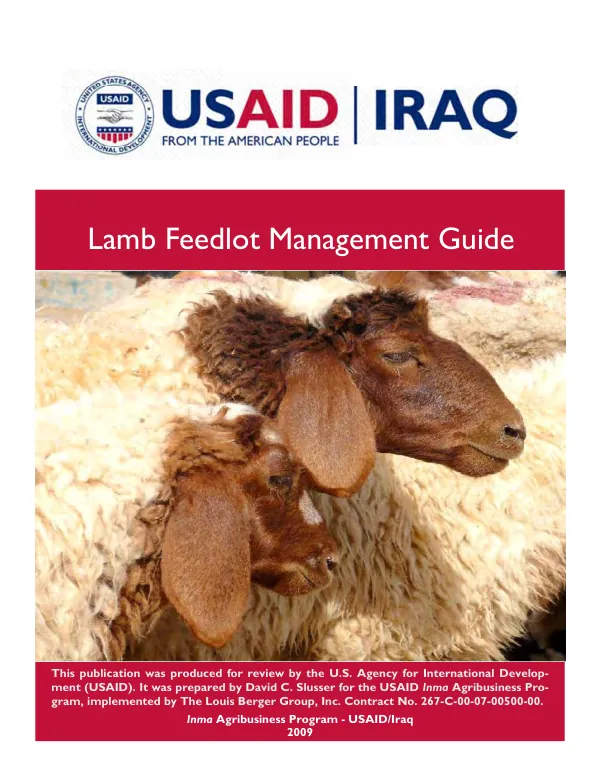 2009
2009USAID DEC
Lamb Feedlot Management Guide
Open record
USAID DEC