USAID DEC
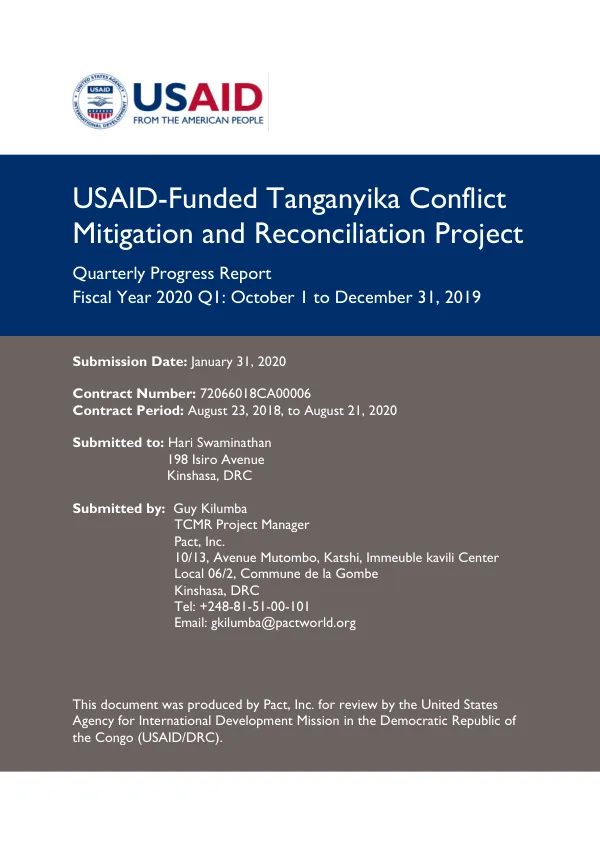
USAID-Funded Tanganyika Conflict Mitigation and Reconciliation Project Quarterly Progress Report FY20 Q1
Sign inPACT
USAID-Funded Tanganyika Conflict Mitigation and Reconciliation Project Quarterly Progress Report FY20 Q1
The Tanganyika Conflict Mitigation and Reconciliation Project aims to reduce the incidence of conflict between the Batwa and Baluba people of the Democratic Republic of the Congo.
2020 · 16 pages
Sign in to readA free account is required to download.
Abstract
To achieve this goal, the project seeks to strengthen peace and reconciliation efforts in the Nyunzu, Kalemie, Manono, and Kabalo communities by increasing cooperation and co-existence between the Batwa and Baluba peoples, strengthening conflict mitigation mechanisms and resolution processes for peacebuilding, and improving livelihoods through social cohesion and collaboration. In the first quarter of the second and final year of implementation, the project team continued strong implementation of community-based activities through local sub-recipients, CJDP Kalemie, CJDP Nyunzu, CJDP Kabalo, and CJDP Manono. The project prioritized the main activities set out in the approved Year 2 workplan, particularly initiating income-generating activities (IGAs) with 650 beneficiaries and developing the environmental mitigation and monitoring plan (EMMP). Preliminary activities were conducted with the communities via a rapid community needs assessment and an EMMP to identify relevant IGAs to ensure feasibility and profitability and to consider budgetary and environmental concerns. The project also facilitated intercommunity dialogues and communications, particularly door-to-door sensitization and public events, at the community level to persuade the communities to strengthen their commitment to restoring peace in the region and to foster greater collaboration between the Baluba and Batwa. Conflict preparedness trainings and focus group discussions (FGDs) were also facilitated as part of the project's holistic conflict management and mitigation framework. Additionally, the project continued with media sensitization by producing 24 radio broadcasts that were shared 138 times during the reporting period. The security situation in the area was relatively calm from October to December 2019, but some cases of insecurity were reported. Notably, the security gaps left by the soldiers of the Armed Forces of the Democratic Republic of Congo (FARDC) in certain corners of the province have led to intermittent armed clashes, which have considerably weakened the security situation. Additionally, a network of criminals is currently operating on the Kalemie-Nyunzu axis, robbing people and businesses and sharing the goods and funds they steal with the armed group. Despite the security challenges, the project's implementation and planned activities were not directly affected. The politico-military authorities have played a role in dismantling these criminal networks, and the efforts of the project's staff and stakeholders have contributed positively to calm in the region and ensure the security of people and their property. The project will continue to implement TCMR activities through the sub-recipients until the end of May 2020, drawing on the lessons learned from previous quarters. The project team made some modifications during the reporting period, including the resignation of the Monitoring and Evaluation (M&E) Officer, Mr. Robert Maombi Bushu. The position has been advertised, and the Project Manager has assumed the M&E Officer role and responsibilities in the interim. The process of recruiting the Business Trainer is ongoing, which will train IGA beneficiaries and develop the capacities of agricultural volunteers who will accompany the beneficiaries in their agricultural livelihoods activities. The project's progress is being monitored and evaluated through the approved MEL Plan Indicators, which include the number of beneficiaries, the number of communities reached, and the level of conflict mitigation and resolution. The project will continue to track these indicators and make adjustments as necessary to ensure the project's objectives are met.