MEKONG STRATEGIC PARTNERS
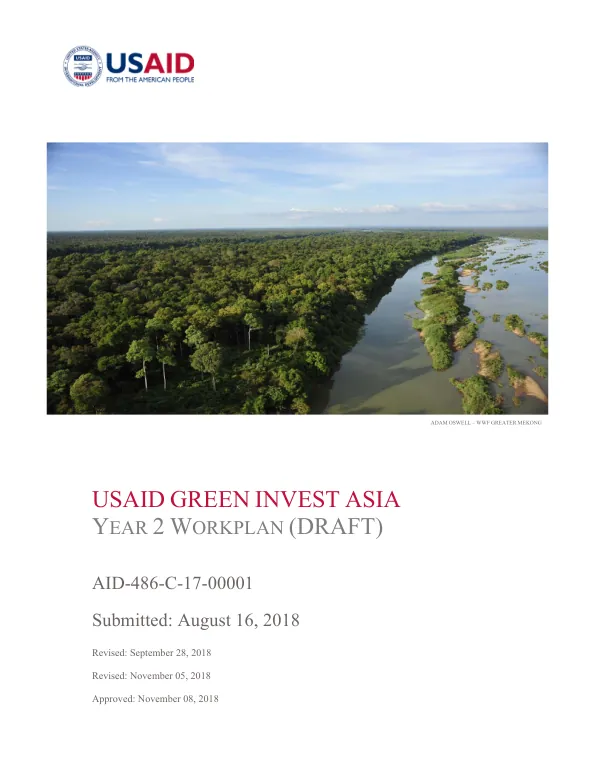
USAID Green Invest Asia MEL Plan Update 2020
The agricultural, forestry, and other land use (AFOLU) sector in Southeast Asia is a significant contributor to greenhouse gas (GHG) emissions, accounting for more than half of the region's total emissions.
73 pages
Sign in to readA free account is required to download.
Abstract
To mitigate the impacts of climate change and associated environmental shocks, the region requires a substantial increase in "green investment," estimated at $3 trillion between 2016 and 2030. Currently, 75 percent of capital flows come from public finance, but this share is expected to drop to about 40 percent by 2030, emphasizing the need for increased private sector contributions. Banks across the Association of Southeast Asian Nations (ASEAN) are adopting sustainability as a core business strategy, recognizing the importance of environmental and social governance (ESG) risks and opportunities within their portfolios. However, the lack of capacity and experience prevents banks from effectively anchoring ESG-related opportunities in finance products that balance environmental stability and profitability. USAID Green Invest Asia aims to catalyze private finance to drive investments in the AFOLU sector toward low-emissions and profitable business models. The Activity supports banks and financial institutions in adopting ESG guidelines and introduces financing mechanisms to mitigate the risk for private sector investment in emerging climate-smart markets and deforestation-free supply chains. Specifically, USAID Green Invest Asia seeks to reduce GHG emissions in countries across Asia by scaling up low-emission land management best practices. The Activity's theory of change and logic model outline the expected outcomes and pathways for achieving these goals. The learning plan and learning questions are designed to measure progress and inform adaptations to the Activity's approach. Measurement tools, methods, and evaluations are essential components of the learning agenda, which includes assessments of learning and adapting. The plan for activity monitoring and evaluation and collaboration outlines the structures, functions, and capabilities required for effective monitoring and evaluation. This includes processing and analyzing performance data, reporting results, and monitoring data quality and flow. The schedule for performance monitoring tasks and the plan for special studies are also critical components of the MEL plan. The MEL budget and indicators, targets, and results are essential for tracking progress and measuring success. The Indicator Tracking Table, Performance Indicator Reference Sheets, and Indicators and Targets annexes provide detailed information on the indicators and targets used to measure the Activity's performance. The Activity's geographic focus is on Southeast Asia, with a specific emphasis on reducing GHG emissions in countries across the region. The timeframes for the Activity are from July 19, 2017, to July 18, 2022. The recommendations and outcomes of the Activity are expected to have a lasting impact on the region's ability to mitigate the effects of climate change and promote sustainable land use practices.