BANYAN GLOBAL
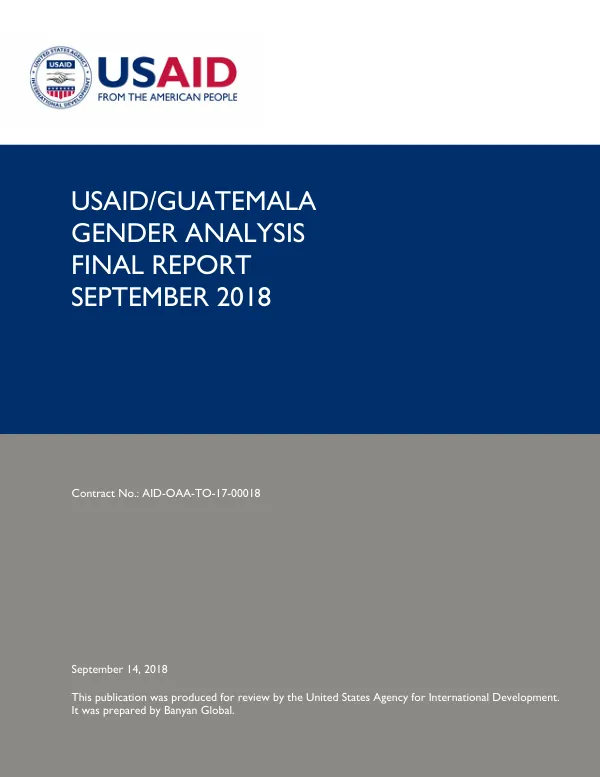
USAID/Guatemala Gender Analysis Final Report
Initial assessments conducted in rural areas identified limited market access and lack of access to credit as primary challenges.
2018 · 147 pages
Sign in to readA free account is required to download.
Abstract
The Guatemalan context is characterized by a predominantly rural population with limited access to education and economic opportunities. The country has a long history of conflict and violence, which has had a lasting impact on the social and economic development of the country. The Guatemalan government has made efforts to promote gender equality and women's rights, but significant challenges remain. The USAID/Guatemala Gender Analysis Report highlights the importance of addressing the root causes of gender inequality in Guatemala, including limited access to education and economic opportunities, as well as the persistence of traditional gender roles and stereotypes. The report emphasizes the need for a comprehensive approach that addresses the social, economic, and cultural factors that contribute to gender inequality. The report presents findings on security and justice, prosperity, governance, and cross-cutting themes. The security and justice findings highlight the high prevalence of gender-based violence (GBV) in Guatemala, as well as the limited access to justice for women and girls who have experienced GBV. The prosperity findings highlight the significant challenges faced by women in Guatemala, including limited access to education and economic opportunities, as well as the persistence of traditional gender roles and stereotypes. The report presents a range of recommendations for addressing the challenges faced by women in Guatemala, including increasing access to education and economic opportunities, promoting gender equality and women's rights, and addressing the root causes of GBV. The report emphasizes the need for a comprehensive approach that addresses the social, economic, and cultural factors that contribute to gender inequality.