BANYAN GLOBAL
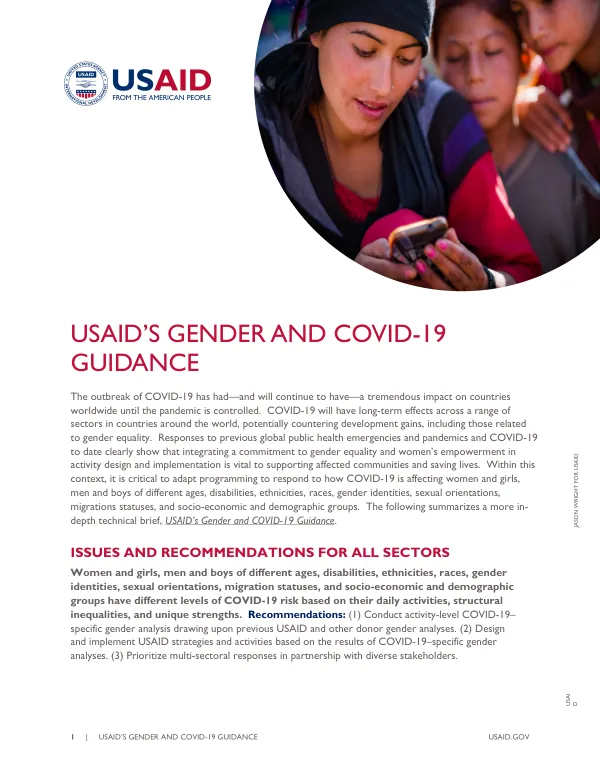
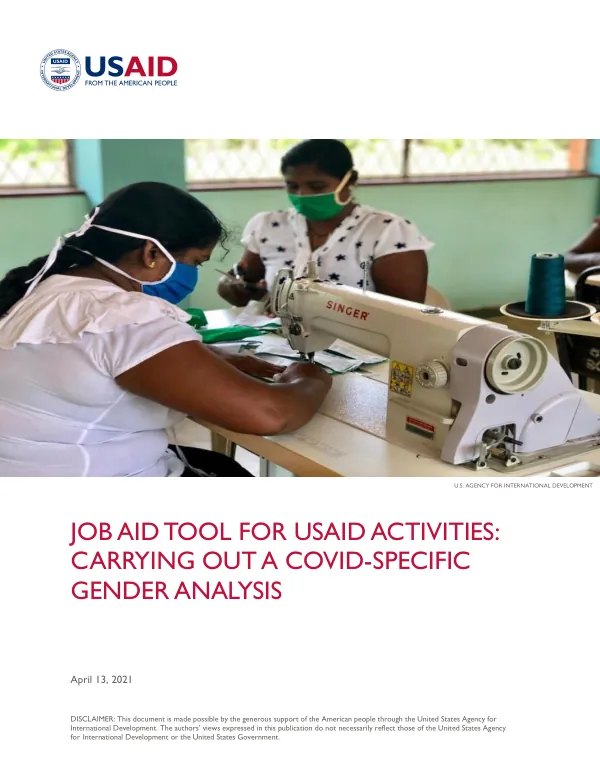
Job Aid Tool for USAID Activities: Carrying Out a COVID-Specific Gender Analysis
The COVID-19 pandemic has had far-reaching impacts across various sectors, including agriculture, food security, and nutrition.
2021 · 81 pages
Sign in to readA free account is required to download.
Abstract
Reduced access to nutritious foods and severe disruptions in food supply chains have been particularly notable. In addition, the pandemic has accelerated democratic backsliding, widened economic inequalities, and exacerbated the global education crisis. The strain on water systems has also been significant. These effects are likely to have long-term consequences, potentially counteracting development gains, including those related to gender equality. For instance, women's vulnerability to food insecurity and malnutrition may increase, while gender poverty gaps may widen. The incidence of gender-based violence may also rise, and the burdens of unpaid work may intensify. Furthermore, frontline workers, who are disproportionately women, may face increased exposure and risk of COVID-19. To address these gender gaps, the United States Agency for International Development (USAID) must consider the potential gendered impacts in its COVID-19 response. A COVID-specific gender analysis (CSGA) is essential to identify key issues and implement recommendations that promote gender equality. This analysis will provide an opportunity for USAID to address these gaps in activities, regardless of where they are in the program cycle, as they respond to COVID-19. USAID's requirements for integrating gender equality and female empowerment are outlined in the Women's Entrepreneurship and Economic Empowerment (WEEE) Act of 2018 and the USAID Automated Directives System (ADS) 205. These requirements emphasize the importance of considering the needs and perspectives of women and girls in all aspects of USAID's work. The COVID-19 pandemic presents a critical opportunity for USAID to apply these requirements and promote gender equality in its response efforts. A CSGA is a critical component of USAID's COVID-19 response. This analysis will help identify the gendered impacts of the pandemic and inform recommendations for addressing these impacts. The analysis will consider the needs and perspectives of women and girls, as well as the broader social and economic context in which they live. By conducting a CSGA, USAID can ensure that its response efforts are effective, efficient, and equitable. The methodology for conducting a CSGA is outlined in the USAID Automated Directives System (ADS) 205. This methodology emphasizes the importance of considering the needs and perspectives of women and girls in all aspects of USAID's work. The CSGA will involve a range of activities, including data collection, analysis, and reporting. The analysis will be conducted in collaboration with stakeholders, including civil society organizations, governments, and other development partners. The CSGA will provide a range of benefits, including improved understanding of the gendered impacts of the pandemic, informed recommendations for addressing these impacts, and enhanced capacity for USAID to integrate gender equality and female empowerment into its work. By conducting a CSGA, USAID can ensure that its response efforts are effective, efficient, and equitable, and that the needs and perspectives of women and girls are taken into account. The CSGA will also provide an opportunity for USAID to apply its requirements for integrating gender equality and female empowerment, as outlined in the WEEE Act of 2018 and the USAID Automated Directives System (ADS) 205. This will help ensure that USAID's response efforts are consistent with its commitment to promoting gender equality and female empowerment. In addition to the benefits mentioned above, the CSGA will also provide an opportunity for USAID to learn from its experiences and improve its capacity for integrating gender equality and female empowerment into its work. This will help ensure that USAID's response efforts are effective, efficient, and equitable, and that the needs and perspectives of women and girls are taken into account. The CSGA will be conducted in collaboration with stakeholders, including civil society organizations, governments, and other development partners. This will help ensure that the analysis is comprehensive and that the needs and perspectives of women and girls are taken into account. The CSGA will also provide an opportunity for USAID to build its capacity for integrating gender equality and female empowerment into its work, and to learn from its experiences. The CSGA will be an important component of USAID's COVID-19 response, and will help ensure that the needs and perspectives of women and girls are taken into account. By conducting a CSGA, USAID can ensure that its response efforts are effective, efficient, and equitable, and that the gendered impacts of the pandemic are addressed.