USAID
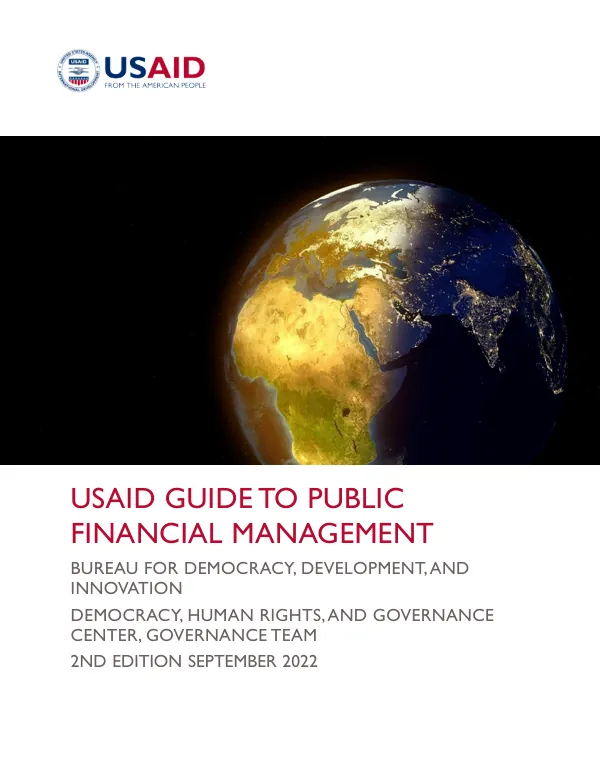
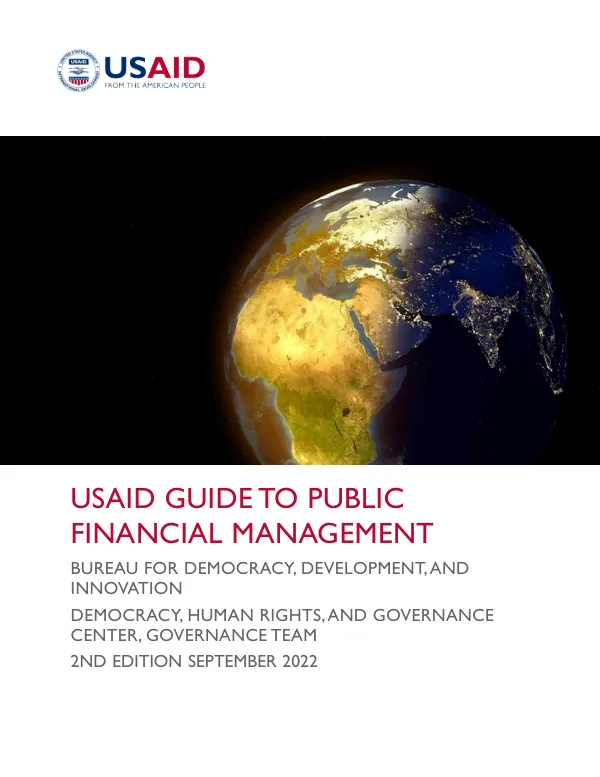
USAID Guide to Public Financial Management
The Public Financial Management (PFM) system is a critical component of a country's fiscal situation and budget process.
2022 · 36 pages
Sign in to readA free account is required to download.
Abstract
It encompasses all the components used by national and subnational governments to mobilize government revenue, allocate public funds, undertake public spending, and account for and report on the use of those funds. A strong PFM system is essential for the effective, transparent, and accountable use of public funds. PFM refers to the set of laws, regulations, systems, and processes used by governments to manage public finances. It includes upstream components such as strategic planning, medium-term expenditure frameworks, and annual budgeting, as well as downstream components like revenue management, budget execution, control, accounting, reporting, monitoring and evaluation, audit, and oversight. The primary objectives of PFM are fiscal discipline, efficiency, and effectiveness. Fiscal discipline is achieved through the ability to control budget totals by setting ceilings on expenditures that are binding at both the aggregate level and on individual ministries, departments, and agencies. This involves establishing a framework for budget planning and execution that ensures transparency, accountability, and predictability. Fiscal discipline is critical for maintaining a stable macroeconomic environment and ensuring that public funds are used efficiently and effectively. Efficiency in PFM refers to the ability to achieve public sector objectives with the minimum use of resources. This involves optimizing the allocation of public funds to achieve the greatest impact and value for money. Efficiency in PFM requires a well-designed budget process that takes into account the needs and priorities of different sectors and programs. Effectiveness in PFM refers to the ability to achieve public sector objectives in a timely and sustainable manner. This involves ensuring that public funds are used to deliver high-quality services and outcomes that meet the needs of citizens. Effectiveness in PFM requires a well-designed monitoring and evaluation system that tracks progress and identifies areas for improvement. The USAID Guide to Public Financial Management provides a comprehensive framework for understanding the key components and best practices of PFM. It covers topics such as budget planning and preparation, budget execution, revenues, treasury operations and cash management, public sector accounting, audit, controls, and evaluation, and PFM at the subnational level. The guide is designed to be a desk reference for USAID field officers and provides practical recommendations for programming and implementation. The guide emphasizes the importance of sequencing PFM reforms to ensure that they are implemented in a logical and coherent manner. This involves conducting PFM assessments to identify areas for reform and developing a sequencing approach that takes into account the country's specific context and needs. The guide also provides good practices in implementing reforms, including the establishment of a PFM reform team, the development of a PFM reform strategy, and the implementation of a PFM reform plan. Overall, the USAID Guide to Public Financial Management provides a comprehensive framework for understanding the key components and best practices of PFM. It is a valuable resource for USAID field officers and other stakeholders who are working to improve PFM systems in developing countries.