INTERNATIONAL FEDERATION OF THE RED CROSS AND THE RED CRESCENT SOCIETIES
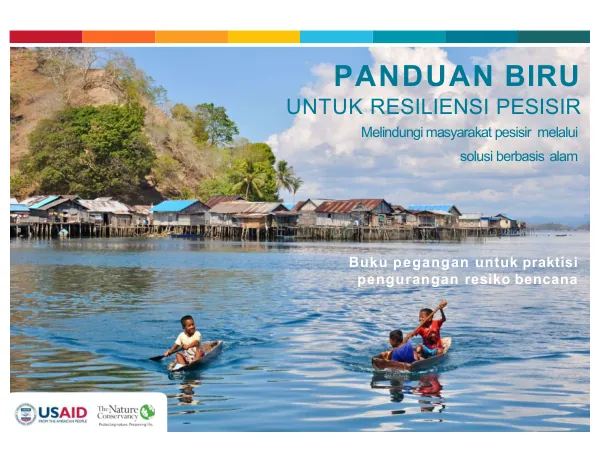
The Blue Guide to Coastal Resilience
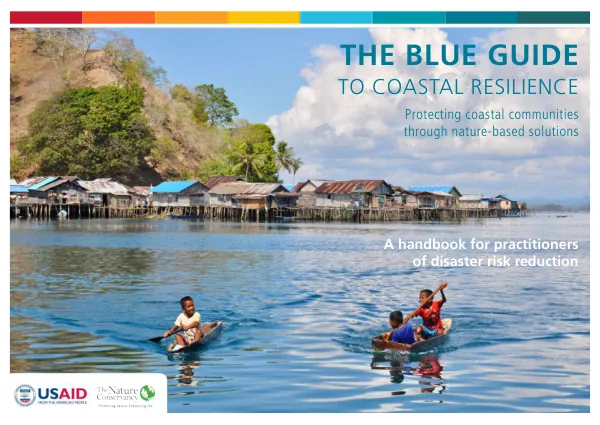
The Blue Guide to Coastal Resilience is a handbook for practitioners of disaster risk reduction that focuses on protecting coastal communities through nature-based solutions.
2021 · 104 pages
Sign in to readA free account is required to download.
Abstract
Its approach is highly participatory, requiring planners to work closely with local stakeholders, including communities and government decision makers, to ensure support and sustainability. The guide includes inspiring case studies that demonstrate how nature-based solutions have simultaneously increased food security, strengthened the social fabric of a community, and delivered economic benefits in locations around the world. Climate-related disasters are increasing in frequency and intensity, with more than 11,000 disasters over the last 50 years attributed to weather-, climate-, and water-related hazards. This has led to 2 million deaths and USD 3.6 trillion in economic losses. The most climate-vulnerable communities are disproportionately affected, with approximately 108 million people requiring help from international humanitarian organizations as a result of storms, floods, droughts, and wildfires in 2018 alone. Nature-based solutions (NbS) focus on using the power of trees to slow water runoff during storms, reduce droughts, and lower temperatures, using wetlands to absorb flood waters, and using mangroves and reefs to protect coasts from erosion, storms, and associated flooding. NbS can also provide multiple other benefits, such as jobs that focus on restoring this natural infrastructure and jobs that support livelihoods connected to agriculture, fishing, and tourism. The Blue Guide to Coastal Resilience provides DRR planners with step-by-step guidance for implementing various NbS in coastal areas, where 600 million people, nearly 10% of the world's population, live under constant threat of storms, flooding, and rising sea levels. The guide integrates all relevant tools and processes into a single source to help conservation and humanitarian DRR planners determine whether and how NbS can be used to harness the protective benefits of coastal ecosystems and reduce the risks of climate-related hazards to vulnerable coastal communities, homes, and other assets. The guide helps DRR planners assess the context, risk, and possible NbS for a specific location, as well as the costs of using them and the conditions that need to be in place to be successful. The guide is divided into eight stages: Ideate & scope, Engage others, Assess context, Identify solutions, Make a plan, Implement & monitor, Analyze & learn, and Share & expand. Each stage provides detailed guidance and tools for implementing NbS in coastal areas. The Blue Guide to Coastal Resilience is a valuable resource for DRR planners, conservationists, and humanitarian organizations working to protect coastal communities from climate-related hazards. Its step-by-step guidance and inspiring case studies demonstrate the potential of nature-based solutions to increase food security, strengthen social fabric, and deliver economic benefits in coastal areas around the world.
Related documents