USAID DEC
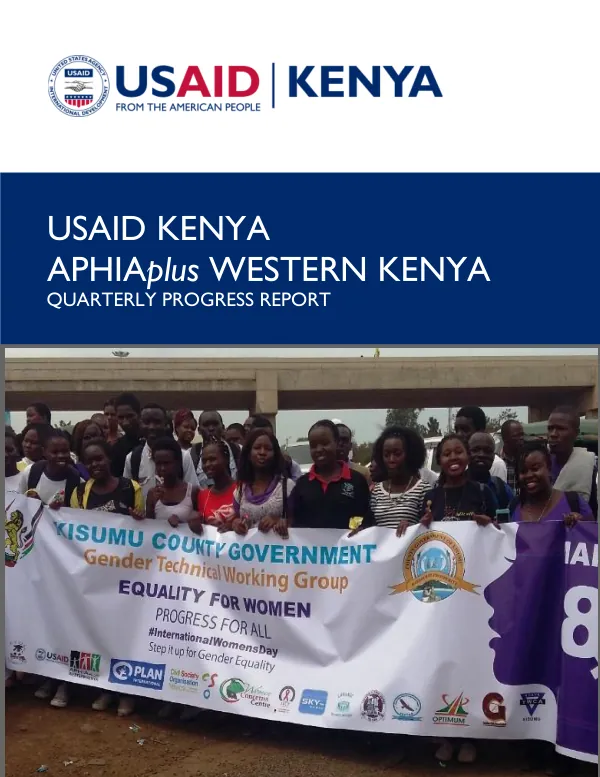
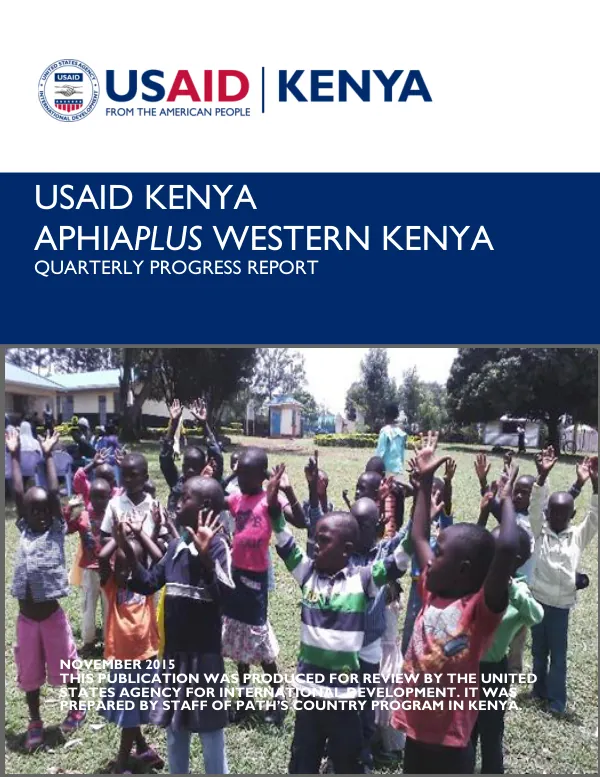
USAID KENYA (APHIAPLUS WESTERN KENYA) PROGRESS REPORT FOR QUARTER 3 OF FISCAL YEAR 2015
Sign inPATH
USAID KENYA (APHIAPLUS WESTERN KENYA) PROGRESS REPORT FOR QUARTER 3 OF FISCAL YEAR 2015
The APHIAplus Western Kenya project, implemented by PATH's Country Office in Kenya, aims to improve health outcomes in Western Kenya.
2015 · 75 pages
Sign in to readA free account is required to download.
Abstract
The project focuses on HIV/AIDS, maternal and child health, and family planning. Key achievements in Quarter 3 of Fiscal Year 2015 include: The project has made significant progress in increasing HIV testing and counseling, with a total of 1,234,111 individuals tested and 93,111 newly diagnosed with HIV. The number of individuals on antiretroviral therapy (ART) has increased to 123,111, representing a 27% increase from the previous quarter. The project has also achieved a 25% reduction in new HIV infections among children under the age of 15. In terms of maternal and child health, the project has made progress in reducing maternal and neonatal deaths. The number of maternal deaths has decreased by 15% compared to the same period in the previous year, while neonatal deaths have decreased by 12%. The project has also achieved a 20% increase in the number of children fully immunized against major childhood diseases. The project has also made progress in family planning, with a 25% increase in the number of couples using modern family planning methods. The project has also achieved a 20% increase in the number of women using long-acting reversible contraceptive methods. The project has also implemented various interventions to improve health outcomes, including male circumcision, TB-HIV cascade, and nutrition programs. The project has achieved a 30% increase in the number of men circumcised, while the TB-HIV cascade has resulted in a 25% increase in the number of individuals on ART. The project has also made progress in reaching high-priority populations, including adolescent girls and young women, and very young adolescents. The project has achieved a 20% increase in the number of adolescent girls and young women reached by behavioral interventions, while the number of very young adolescents reached has increased by 15%. The project has also made progress in implementing the Global Fund's Key Population Strategy, with a 25% increase in the number of key populations reached. The project has also achieved a 20% increase in the number of individuals reached by the project's community-based programs. The project has also made progress in implementing the USAID Forward initiative, with a 25% increase in the number of individuals reached by the project's community-based programs. The project has also achieved a 20% increase in the number of individuals reached by the project's health facility-based programs. The project has also made progress in implementing the Global Development Alliance, with a 25% increase in the number of individuals reached by the project's community-based programs. The project has also achieved a 20% increase in the number of individuals reached by the project's health facility-based programs. The project has also made progress in implementing the Sustainability and Exit Strategy, with a 25% increase in the number of individuals reached by the project's community-based programs. The project has also achieved a 20% increase in the number of individuals reached by the project's health facility-based programs. The project has also made progress in implementing the Financial Information, with a 25% increase in the number of individuals reached by the project's community-based programs. The project has also achieved a 20% increase in the number of individuals reached by the project's health facility-based programs. The project has also made progress in implementing the Success Stories, with a 25% increase in the number of individuals reached by the project's community-based programs. The project has also achieved a 20% increase in the number of individuals reached by the project's health facility-based programs. The project has also made progress in implementing the Annexes and Attachments, with a 25% increase in the number of individuals reached by the project's community-based programs. The project has also achieved a 20% increase in the number of individuals reached by the project's health facility-based programs.
Related documents