FHI 360
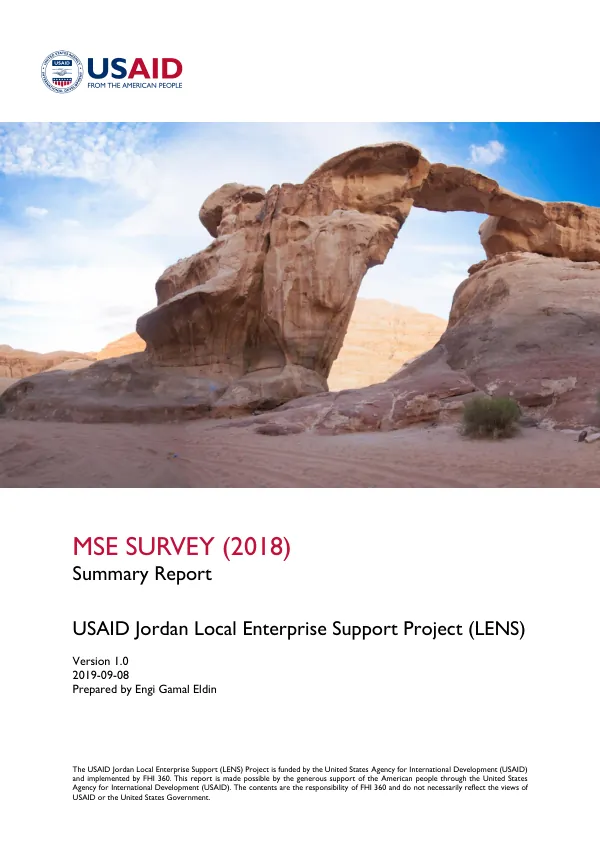
USAID LENS Report of Micro and Small Enterprises Survey
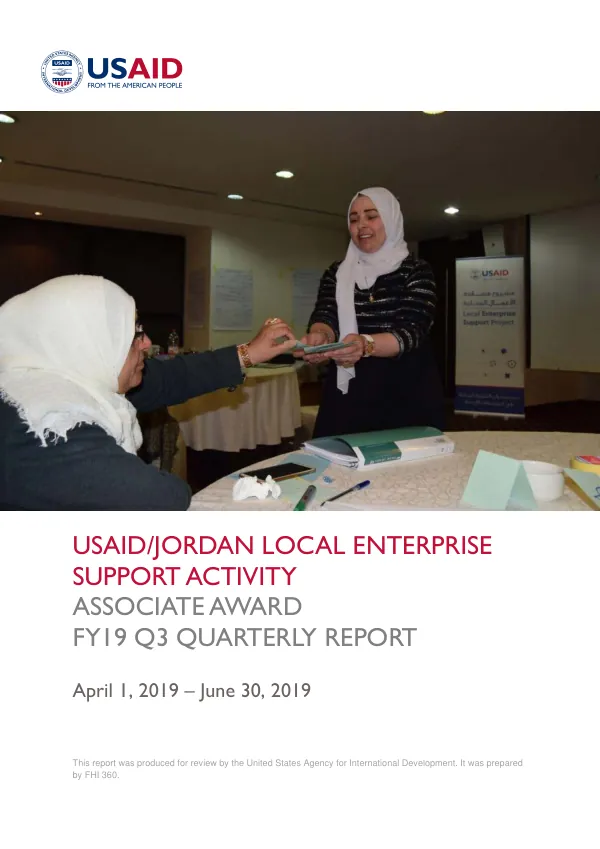
The USAID Jordan Local Enterprise Support (LENS) Project is a program implemented by FHI 360, funded by the United States Agency for International Development (USAID).
2019 · 21 pages
Sign in to readA free account is required to download.
Abstract
The project aims to support the growth of micro and small enterprises (MSEs) in Jordan, which are considered catalysts for economic growth and social progress. MSEs are firms with 1-9 employees (micro) and 10-49 employees (small). Research has shown that MSEs face challenges to growth, including difficulty accessing markets, obtaining finance, and taking risks associated with innovation. As a result, many MSEs operate at a "survivalist" level, often with informal legal status, and do not contribute as significantly to job creation or economic growth as they could. The 2018 MSE survey, conducted by the USAID LENS project, aimed to update the findings of the earlier 2014-2015 survey and gather more granular-level data on lending and employment. The survey resulted in 1,699 interviews with MSEs in six target governorates in Jordan. The majority of MSEs are owned by males (94%), and the average and median age of MSE owners is 45 years. Most MSE owners have at least finished secondary education (70%), and 81% are married and support their families as the primary earners. The survey found that the majority of MSEs operate the whole year round (96%), and most operate from fixed locations outside their homes (92%). When MSE owners were asked about their motivation for starting their own company, the most common response was that they wanted to own their own business (63%). The desire to generate income for their families was the second most common motivation (20%), followed by 7% who stated that they created the business because they wanted to work in the industry. The survey also found that the majority of MSEs are in the retail and trade sector (59%), with the largest sub-sectors being retail sale of food and beverages (18%), trade/repair of motor vehicles (12%), and other service activities (9%). The large majority of MSEs are Jordanian (94%), with a small percentage being Syrian (2%) or of other nationalities (4%). The 2018 MSE survey provides valuable insights into the characteristics of MSEs in Jordan, including their demographics, firm characteristics, and business motivations. The findings of the survey can inform the design of programs and policies aimed at supporting the growth of MSEs in Jordan and promoting economic development in the country. The survey's results on firm characteristics show that the majority of MSEs have been established in the previous six years, with an average age of just over 9 years. Most MSEs operate from fixed locations outside their homes, and the majority operate the whole year round. The survey also found that the majority of MSE owners are married and support their families as the primary earners. The survey's results on business motivations show that the most common reason for starting a business is to own one's own business (63%). The desire to generate income for their families is the second most common motivation (20%), followed by 7% who stated that they created the business because they wanted to work in the industry. The survey's results on demographics show that the majority of MSE owners are male (94%), with an average and median age of 45 years. Most MSE owners have at least finished secondary education (70%), and 81% are married and support their families as the primary earners.