FHI 360
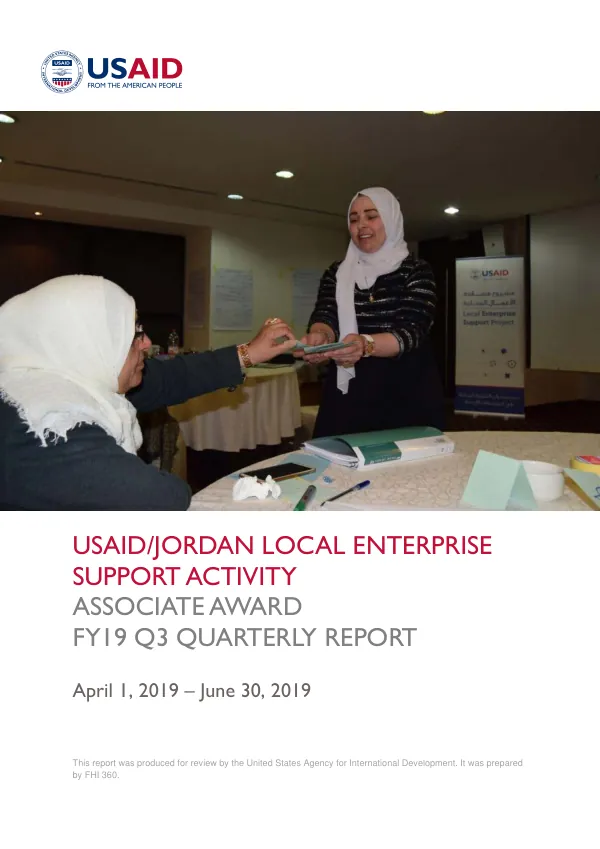
FY19 Q3 QUARTERLY REPORT: USAID/Jordan Local Enterprise Support Activity
The Jordan Local Enterprise Support Activity, also known as LENS, is a USAID-funded program aimed at promoting economic growth and job creation in Jordan.
2019 · 45 pages
Sign in to readA free account is required to download.
Abstract
The program began in 2018 and is implemented by FHI 360. The main objective of LENS is to improve the business enabling environment in Jordan, increase access to finance, and enhance entrepreneurship and innovation. Key activities contributing to the program's indicators include the provision of business development services, training, and grants to small and medium-sized enterprises. The program also focuses on improving the regulatory environment and increasing access to finance for micro, small, and medium-sized enterprises. In the third quarter of fiscal year 2019, LENS implemented several key activities, including the establishment of a business service provider network and the provision of training to entrepreneurs on entrepreneurship and innovation. The program's technical activities are overseen by a team of experts, including a chief of party, deputy chief of party, and technical specialists. The team works closely with local stakeholders, including the government of Jordan, to implement the program's activities. In the third quarter of fiscal year 2019, the program's technical activities focused on improving the business enabling environment, increasing access to finance, and enhancing entrepreneurship and innovation. The program's grants component is designed to support small and medium-sized enterprises in Jordan. In the third quarter of fiscal year 2019, the program awarded several grants to entrepreneurs and small businesses, including a grant to establish a business service provider network. The grants are provided to support the growth and development of small and medium-sized enterprises in Jordan. The program's challenges, lessons learned, and remedial actions are documented in the quarterly report. In the third quarter of fiscal year 2019, the program faced several challenges, including delays in the implementation of some activities and difficulties in accessing some areas in Jordan. The program's team worked to address these challenges and implemented remedial actions to ensure the successful implementation of the program's activities. The program's next quarter events and activities are outlined in the quarterly report. In the fourth quarter of fiscal year 2019, the program plans to implement several key activities, including the establishment of a business service provider network and the provision of training to entrepreneurs on entrepreneurship and innovation. The program also plans to continue its efforts to improve the business enabling environment and increase access to finance for micro, small, and medium-sized enterprises in Jordan. The program's success story is highlighted in the quarterly report. In the third quarter of fiscal year 2019, the program supported the establishment of a business service provider network, which provided training and support to entrepreneurs and small businesses in Jordan. The program also supported the growth and development of several small and medium-sized enterprises in Jordan, including a company that established a new product line and increased its sales by 20%. The program's TRAINET component is designed to provide training and support to entrepreneurs and small businesses in Jordan. In the third quarter of fiscal year 2019, the program provided training to entrepreneurs on entrepreneurship and innovation, and supported the establishment of a business service provider network. The program's GIS data component is designed to provide geographic information system data to support the program's activities. In the third quarter of fiscal year 2019, the program collected and analyzed GIS data to support the implementation of the program's activities. The program's Development Experience Clearinghouse (DEC) submissions are outlined in the quarterly report. In the third quarter of fiscal year 2019, the program submitted several DEC reports, including a report on the program's activities and achievements. The program's budget information is outlined in the quarterly report. In the third quarter of fiscal year 2019, the program's budget was $1.5 million, which was allocated to support the implementation of the program's activities.