DAI
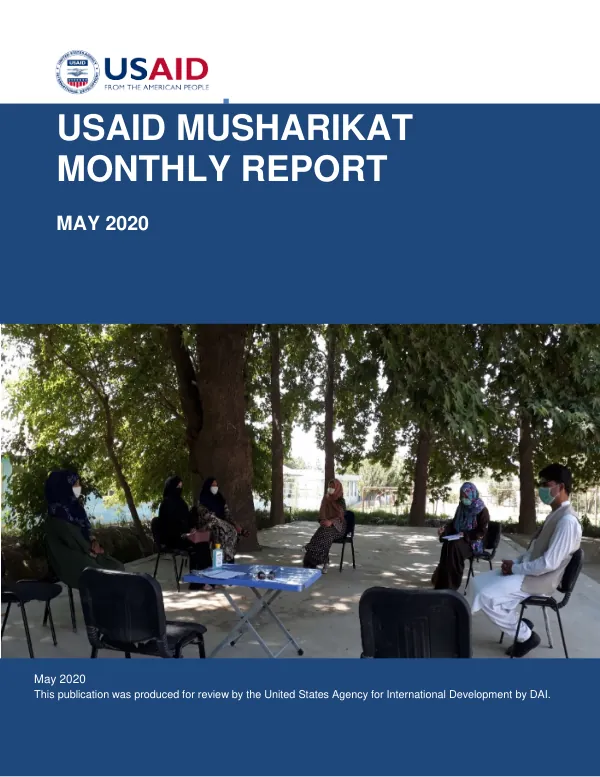
USAID Musharikat Monthly Report (May FY2020)
The USAID Musharikat project is a five-year initiative aimed at promoting women's equality and empowerment in Afghanistan.
2020 · 33 pages
Sign in to readA free account is required to download.
Abstract
Awarded in September 2015, the project has a budget of $29.5 million and is designed to achieve four complementary objectives. The first objective is to build constituencies among national, provincial, and local activists and civil society organizations focused on promoting women's equality and empowerment. This is achieved through the formation of inclusive, broad-based coalitions through transparent and competitive processes, each of which focuses on a single issue. The coalitions, known as Coalitions for Change (C4C), serve as the primary driver in the achievement of project objectives. The project functions as a mentor, advisor, facilitator, and funder to the coalitions and grantee civil society organizations, providing technical advice and resources to conduct outreach and awareness-raising initiatives, build broad-based constituencies, form strategic alliances, plan and execute advocacy campaigns, and establish constructive working relationships with government partners on policy and legislative matters. During the month of May, the project continued its efforts to empower women and promote gender equality across Afghanistan while adapting to the challenges posed by the COVID-19 pandemic. The project carried out over 283 activities supporting all four objectives. For Objective 1, the project formed new coalitions in several provinces, including Kunduz, where a District Policy Advocacy Committee meeting was held in May. The project also provided training to activists and civil society organizations on advocacy and coalition-building skills. For Objective 2, the project strengthened more effective advocacy for women's equality and empowerment through the development of advocacy campaigns and the establishment of strategic alliances with government and private sector partners. The project also provided technical advice and resources to coalitions and grantee civil society organizations to plan and execute advocacy campaigns. For Objective 3, the project increased awareness of, and support for, women's rights in all 34 provinces in Afghanistan through outreach and awareness-raising initiatives, public service announcements, and media engagement. The project also worked with coalitions and grantee civil society organizations to establish constructive working relationships with government partners on policy and legislative matters. For Objective 4, the project increased the effectiveness of civil society and the government of the Islamic Republic of Afghanistan in the development and implementation of gender policies, laws, and regulations. The project provided technical advice and resources to coalitions and grantee civil society organizations to develop and implement gender policies and laws, and to establish constructive working relationships with government partners on policy and legislative matters. The project's efforts were hindered by the COVID-19 pandemic, which contributed to a lack of confidence in the government's response, an increase in violence, and a delay in the Intra-Afghan peace talks. Despite these challenges, the project continued to carry out its activities and made significant progress in achieving its objectives.