CATHOLIC RELIEF SERVICES ORGANIZATION
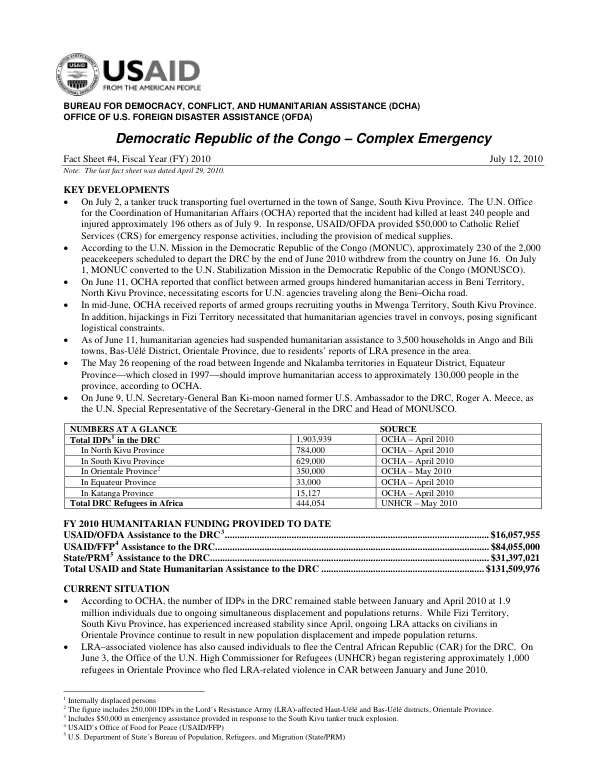
USAID/OFDA Democratic Republic of Congo Complex Emergency Fact Sheet #4 7/12/2010
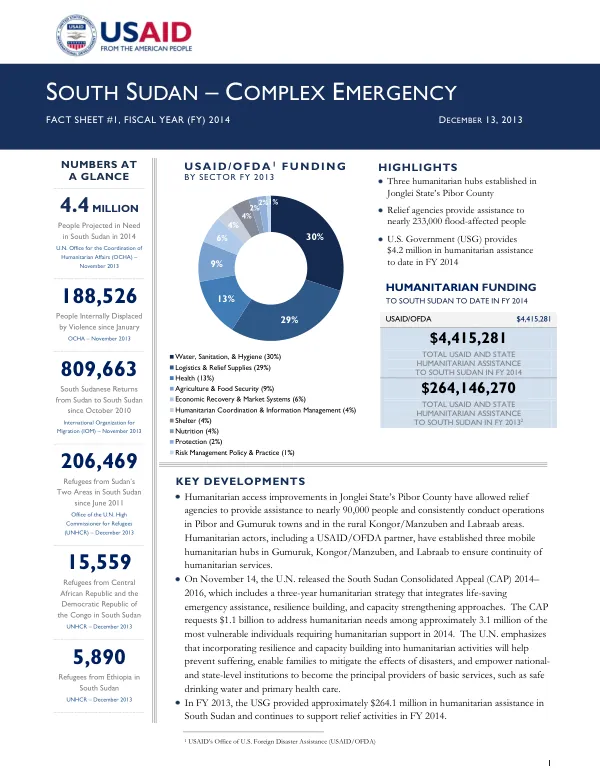
The Democratic Republic of the Congo (DRC) complex emergency has been ongoing, with significant population displacement and insecurity in various provinces.
2010 · 4 pages
Sign in to readA free account is required to download.
Abstract
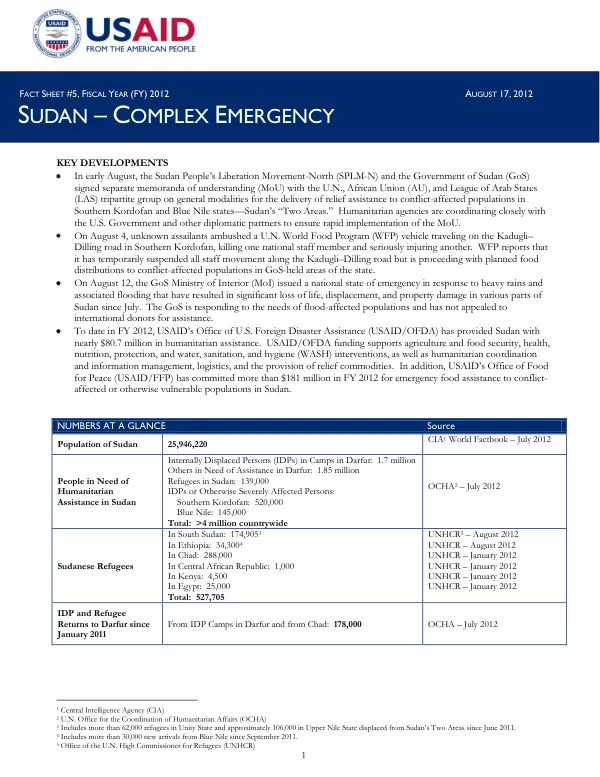
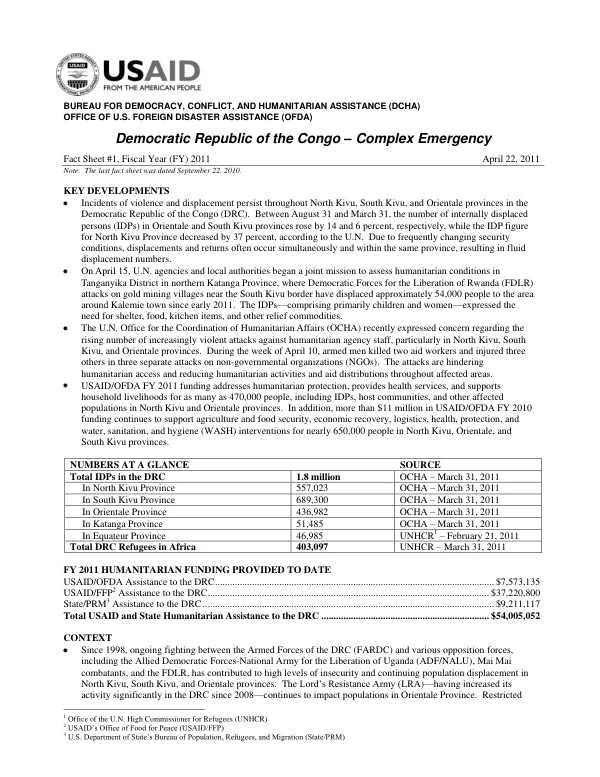
As of July 12, 2010, the number of internally displaced persons (IDPs) in the DRC remained stable at 1.9 million individuals due to ongoing simultaneous displacement and population returns. However, LRA-associated violence has caused individuals to flee the Central African Republic (CAR) for the DRC, with approximately 1,000 refugees registered in Orientale Province. Conflict between the Armed Forces of the DRC (FARDC) and the Democratic Liberation Forces of Rwanda (FDLR) continued to displace populations in Kabare Territory, South Kivu Province as of June 4. Humanitarian agencies have received reports of civilian deaths and looting associated with the conflict. In North Kivu and South Kivu provinces, approximately 18,000 Burundian refugees reside in South Kivu Province, while more than 24,500 Congolese refugees reside in Burundi. Fighting between FARDC and Allied Democratic Forces/National Army for the Liberation of Uganda (ADF/NALU) elements in Beni Territory, North Kivu Province resulted in nine deaths and displaced at least 1,800 individuals to Beni, Nobili, and Bunyaka towns, Beni Territory, as well as across the border to Uganda. In late May, an interagency mission organized by UNHCR reported that nearly 8,000 IDPs continued to reside along the Bendera–Kalemie road in Tanganyika District, Katanga Province, while an estimated 4,400 others previously residing along the road had returned to areas of origin in South Kivu Province since February. In Orientale Province, the LRA continues to attack civilians in Haut-Uélé and Bas-Uélé districts. Conflict in Ituri District continues to cause population displacement. On June 29, OCHA reported increased violence in Irumu Territory, Itrui District, due to FARDC operations against militant groups in Poto-poto and Mokato-Ngazi zones. Between May 4 and 7, USAID/OFDA staff traveled to Dungu town, Haut-Uélé District, to evaluate programs, discuss insecurity and logistical constraints impeding humanitarian assistance, and meet with IDPs who previously fled LRA-related violence. In Equateur Province, clashes between the FARDC and Enyele militants between December 2009 and May 2010 resulted in nearly 115,000 individuals fleeing to the Republic of Congo (RoC). As of June 4, UNHCR had registered nearly 115,000 individuals from Equateur Province who fled to the RoC. From June 3 to 5, the GoDRC, UNHCR, and the Government of RoC met in RoC to discuss voluntary refugee repatriation and plan a joint mission to assess the potential for returns. The 2009–2010 rainy season has impeded humanitarian access and caused property destruction in North Kivu, Equateur, and Orientale provinces. Heavy rains that started in June impeded the delivery of humanitarian assistance in Kagheri-Kasugho area, North Kivu Province, as well as in Kungu Territory, Equateur Province, in June and early July. In late May, floods affecting approximately 5,000 people near Joo and Gbli towns in Djugu Territory, North Kivu Province, caused significant damage to homes and infrastructure. Humanitarian funding provided to date includes $16,057,955 from USAID/OFDA, $84,055,000 from USAID's Office of Food for Peace (USAID/FFP), and $31,397,021 from the U.S. Department of State's Bureau of Population, Refugees, and Migration (State/PRM). Total USAID and State humanitarian assistance to the DRC amounts to $131,509,976.
Related documents