CATHOLIC RELIEF SERVICES ORGANIZATION
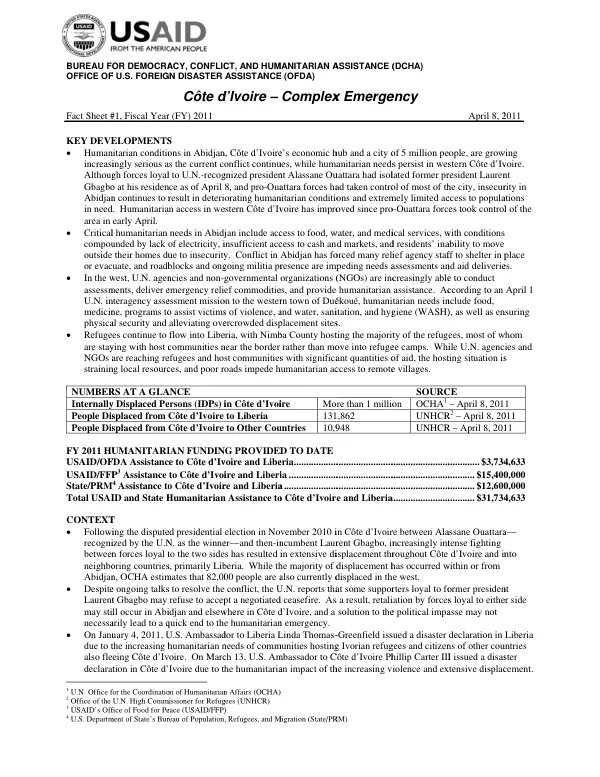
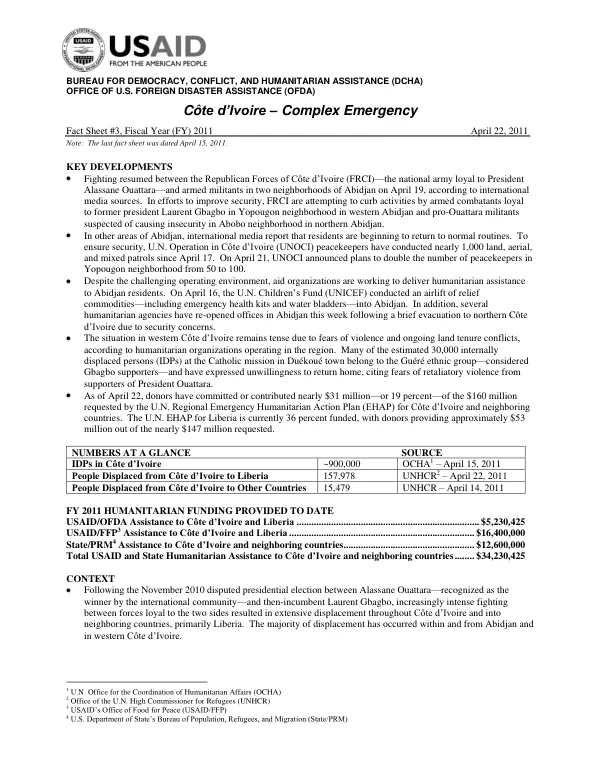
USAID-OFDA Côte d'Ivoire Complex Emergency Fact Sheet #3
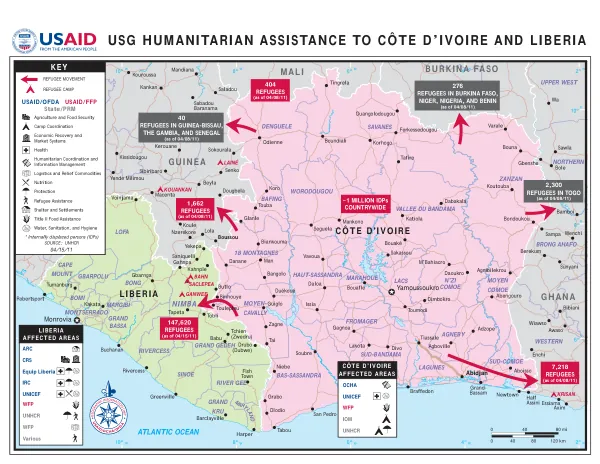
Fighting between the Republican Forces of Côte d'Ivoire (FRCI) and armed militants resumed in two neighborhoods of Abidjan on April 19, according to international media sources.
2011 · 4 pages
Sign in to readA free account is required to download.
Abstract
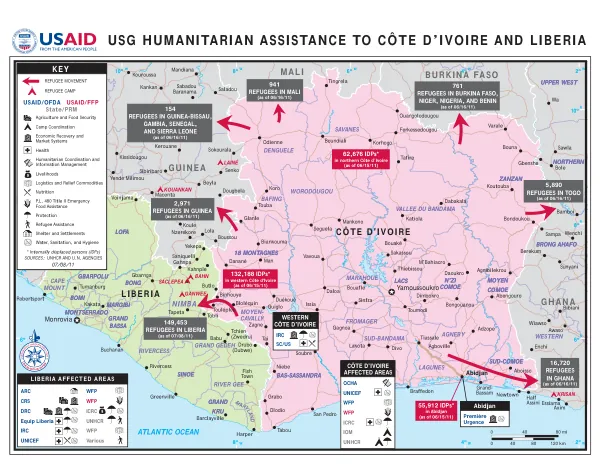
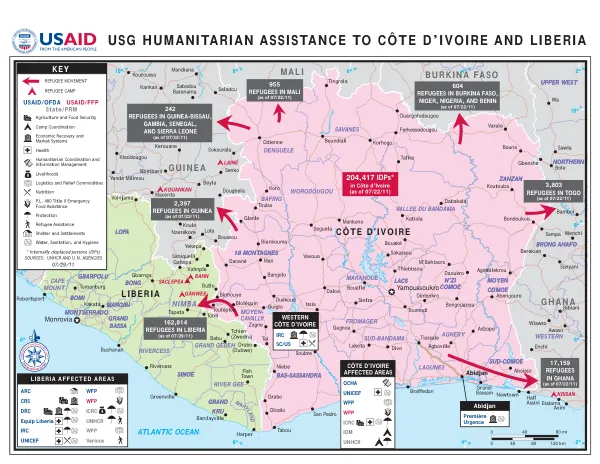
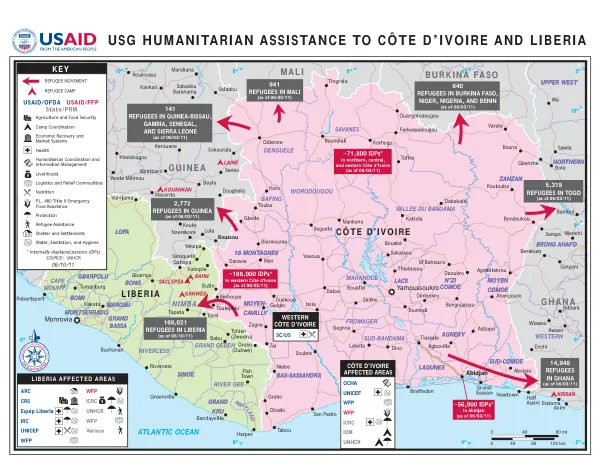
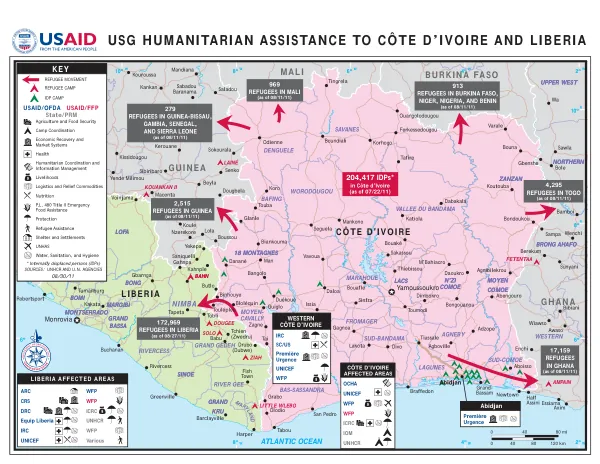
The FRCI are attempting to curb activities by armed combatants loyal to former president Laurent Gbagbo in Yopougon neighborhood in western Abidjan and pro-Ouattara militants suspected of causing insecurity in Abobo neighborhood in northern Abidjan. Despite the challenging operating environment, aid organizations are working to deliver humanitarian assistance to Abidjan residents. The U.N. Children's Fund (UNICEF) conducted an airlift of relief commodities, including emergency health kits and water bladders, into Abidjan on April 16. Several humanitarian agencies have re-opened offices in Abidjan this week following a brief evacuation to northern Côte d'Ivoire due to security concerns. The situation in western Côte d'Ivoire remains tense due to fears of violence and ongoing land tenure conflicts, according to humanitarian organizations operating in the region. Many of the estimated 30,000 internally displaced persons (IDPs) at the Catholic mission in Duékoué town belong to the Guéré ethnic group and have expressed unwillingness to return home, citing fears of retaliatory violence from supporters of President Ouattara. As of April 22, donors have committed or contributed nearly $31 million, or 19 percent, of the $160 million requested by the U.N. Regional Emergency Humanitarian Action Plan (EHAP) for Côte d'Ivoire and neighboring countries. The U.N. EHAP for Liberia is currently 36 percent funded, with donors providing approximately $53 million out of the nearly $147 million requested. Commercial banks in Côte d'Ivoire are expected to re-open on May 2, according to international media sources. The inoperative banking system has severely limited cash liquidity for many Ivorian citizens and businesses, preventing purchases of food and other essential items and services. The U.N. World Food Program (WFP) has delivered approximately 85 metric tons of food to more than 27,000 people in Duékoué and reported plans to provide food to approximately 35,000 people in the area of Danané town, both in western Côte d'Ivoire. The U.N. World Health Organization had confirmed polio cases among three children in southwestern Côte d'Ivoire as of April 21. Violence throughout the country had disrupted polio vaccinations planned for March. The Government of Côte d'Ivoire authorized free access to health care for Abidjan residents from April 16 to May 31 in efforts to improve health conditions for people who had been unable to reach health care during weeks of fighting in the city.
Related documents