DAI
USAID Promote Musharikat Project Quarterly Report FY 2018 Q2
The Promote Musharikat project, sponsored by the USAID Gender Office, aims to support the empowerment of Afghan women through various activities.
2018 · 55 pages
Sign in to readA free account is required to download.
Abstract
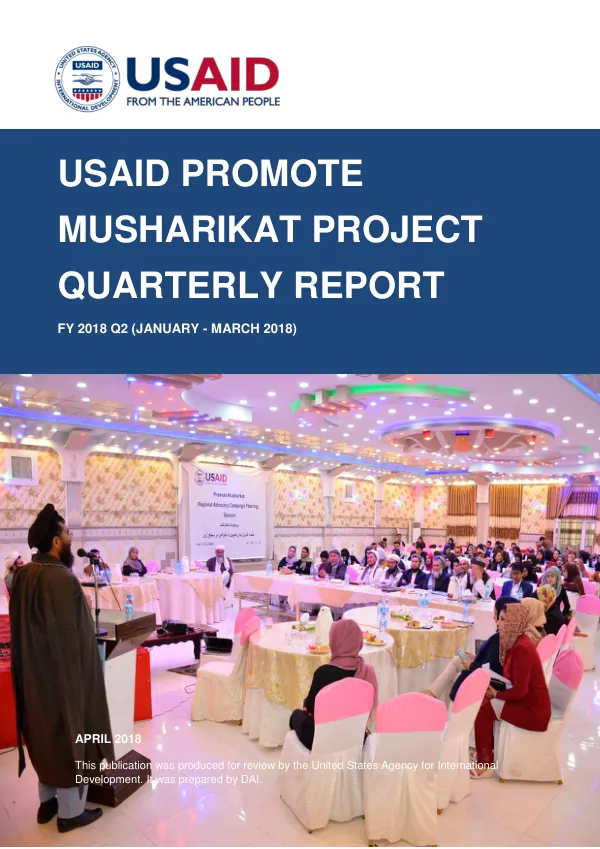
The project has four main objectives: building constituencies among national, provincial, and local activists and groups focused on promoting women's equality and empowerment; strengthening more effective issue-based advocacy for women's equality and empowerment; increasing awareness and support for women's rights in all 34 provinces of Afghanistan; and civil society and GIRoA are more effective partners in strengthening the development and implementation of gender policies. Musharikat works on multiple levels, engaging the government at the national level and training thousands of activists and hundreds of civil society organizations from all over Afghanistan to work together in six coalitions for women's empowerment. The project has demonstrated the power of individual activists and small grantees working to advocate at the local level for issues important to them, and these efforts have the potential to make a long-term impact on the prosperity of the country. The project has made significant progress in building coalitions across the country. In the first quarter of the year, Musharikat began the process of building coalitions 4-6 into effective advocates by holding trainings called Organizational Development Working Sessions for the new coalition members. These trainings on coalition development and beginning advocacy were the foundation for second-quarter Regional Advocacy Planning Sessions in all five regions. The Regional Advocacy Planning Sessions resulted in initial advocacy plans at the region level for coalitions 4-6. Almost all 31 Musharikat grantees completed their activities and submitted final reports in this past quarter. The regional teams and Kabul office have been busy screening proposed coalition members from almost all provinces and entering them into project systems and databases. In addition to completing security screening, Musharikat also ensured that the new members are activists and CSOs with demonstrated relevant experience. The project has seen positive results from grantee and coalition new member work, with 1,642 individuals and 204 CSOs joining coalitions. The number of CSOs and activists that became members of a specific issue-based coalition grew substantially due to the awareness-raising and training efforts of the grantees. This coalition expansion work was accomplished through raising awareness of women's issues during training sessions, and the grantees were engaged in the important work of building Musharikat Coalitions in their respective provinces or districts. Musharikat has supported these grantees with training, technical support, and administrative guidance and monitoring to enable these successes. The project has drawn on lessons learned from this important experience on the management and monitoring of multiple small grants to develop the next round of grant requests for applications (RFAs). The grantees proved to be important in both growing coalition membership and implementing on the ground in their local communities laws, policies, and regulations that are important to women's empowerment. The project has demonstrated the power of individual activists and small grantees working to advocate at the local level for issues important to them, and these efforts have the potential to make a long-term impact on the prosperity of the country. The project has made significant progress in building coalitions across the country, and the number of CSOs and activists that became members of a specific issue-based coalition grew substantially due to the awareness-raising and training efforts of the grantees. The project has seen positive results from grantee and coalition new member work, with 1,642 individuals and 204 CSOs joining coalitions. The grantees were engaged in the important work of building Musharikat Coalitions in their respective provinces or districts, and the project has supported these grantees with training, technical support, and administrative guidance and monitoring to enable these successes. The project has demonstrated the importance of civil society and GIRoA working together to strengthen the development and implementation of gender policies. The project has made significant progress in building coalitions across the country, and the number of CSOs and activists that became members of a specific issue-based coalition grew substantially due to the awareness-raising and training efforts of the grantees.