USAID DEC
USAID's Assistance in Building Afghanistan by Developing Enterprises (ABADE) Program: Expansion on the Menu for Afghan Entrepreneurs
Sign inUSAID
USAID's Assistance in Building Afghanistan by Developing Enterprises (ABADE) Program: Expansion on the Menu for Afghan Entrepreneurs
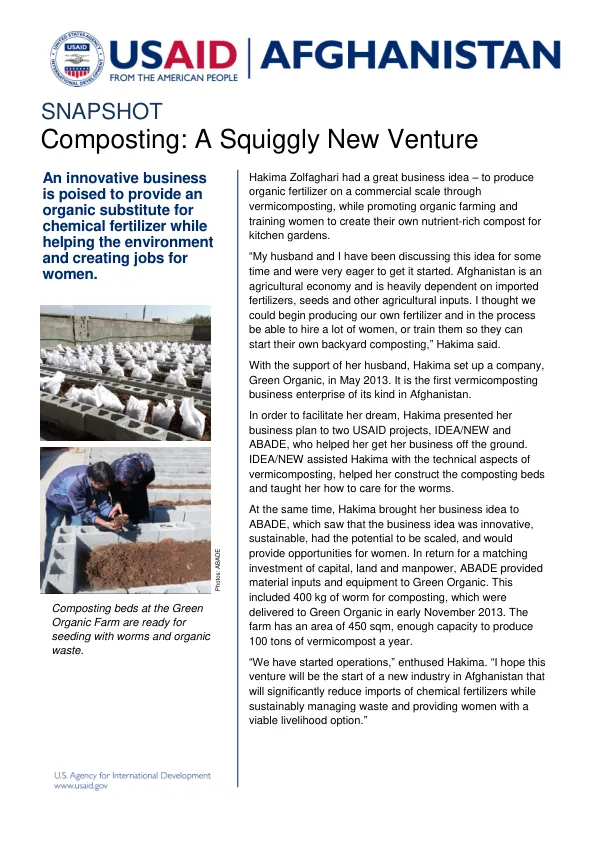
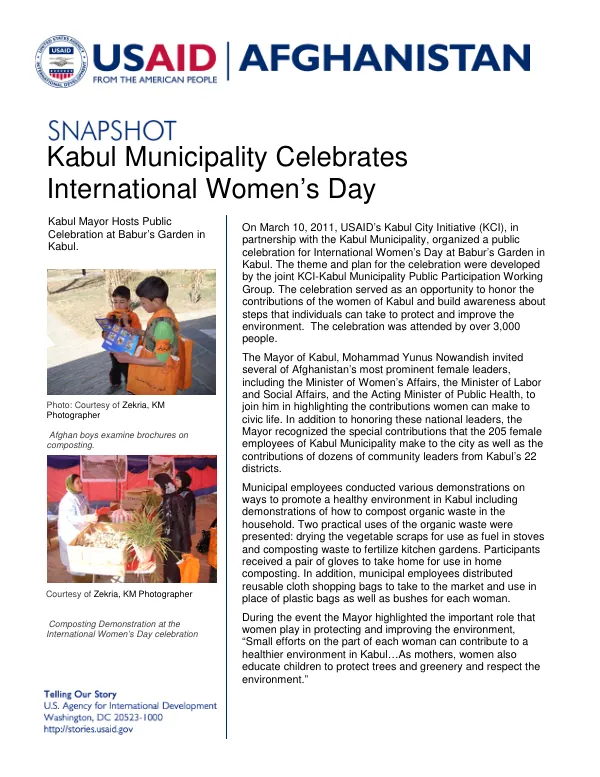
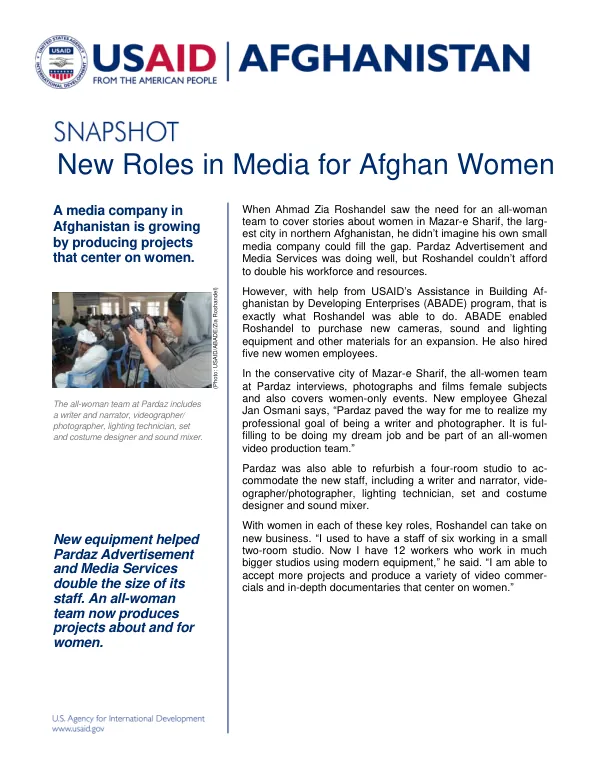
The Assistance in Building Afghanistan by Developing Enterprises (ABADE) Program, a USAID initiative, has supported the expansion of small and medium enterprises in Afghanistan.
2014 · 1 pages
Sign in to readA free account is required to download.
Abstract
One such business is Chipsi, a fast food restaurant chain founded by entrepreneur Naeem Yusofi. With the help of ABADE, Yusofi was able to invest in a second location, which has become an instant hit with customers. The new Chipsi restaurant, located in Herat, was made possible through a USAID investment partnership that allowed Yusofi to access the necessary capital and resources to expand his business. The restaurant's interior was refurbished to match the familiar Chipsi brand, and modern kitchen equipment was purchased to accommodate up to 45 diners at a time. Yusofi's goal is to serve up to 1,000 clients per day at his two locations, and to meet this demand, he hired eight new employees, including three women. The success of Chipsi's second location is a testament to the impact of ABADE's support for small and medium enterprises in Afghanistan. Through the program, USAID has supported 74 businesses like Yusofi's to expand and create new jobs. The popularity of Chipsi's new location has been driven by its convenient location and high-quality food and service, which are the same as the first branch. Young professionals and mothers with children are particularly drawn to the restaurant's quick service model. Yusofi's success has inspired him to aim higher, with plans to expand Chipsi to Kabul and Mazar in the future. The ABADE project, which began in October 2012, primarily works with the private sector to strengthen the productivity of enterprises focused on sustained growth and job creation. By supporting businesses like Chipsi, ABADE aims to contribute to Afghanistan's economic development and improve the livelihoods of its citizens. The expansion of Chipsi is a prime example of the potential for small businesses to drive economic growth and job creation in Afghanistan. With the right support and resources, entrepreneurs like Yusofi can achieve their goals and make a positive impact on their communities. As the demand for fast food continues to rise in Afghanistan, businesses like Chipsi are well-positioned to capitalize on this trend and contribute to the country's economic development.