THE ASIA FOUNDATION
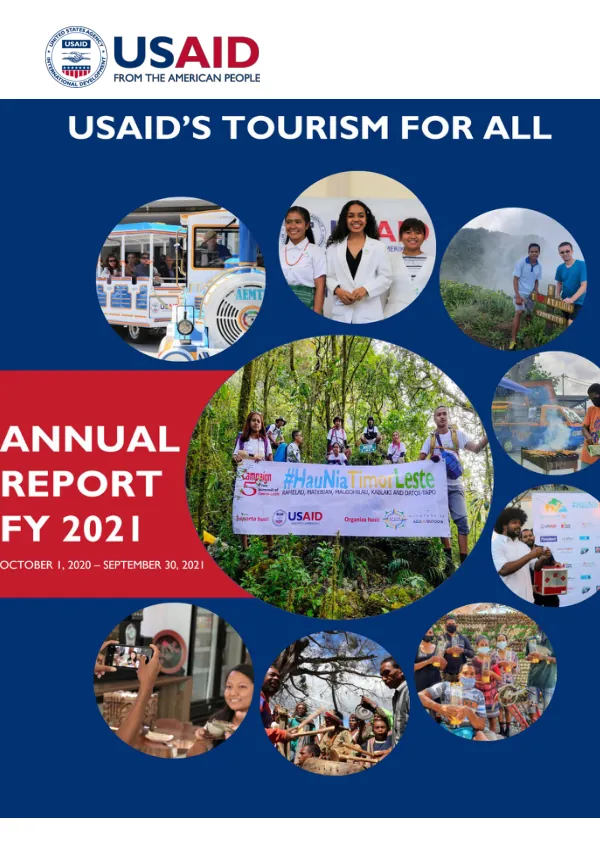
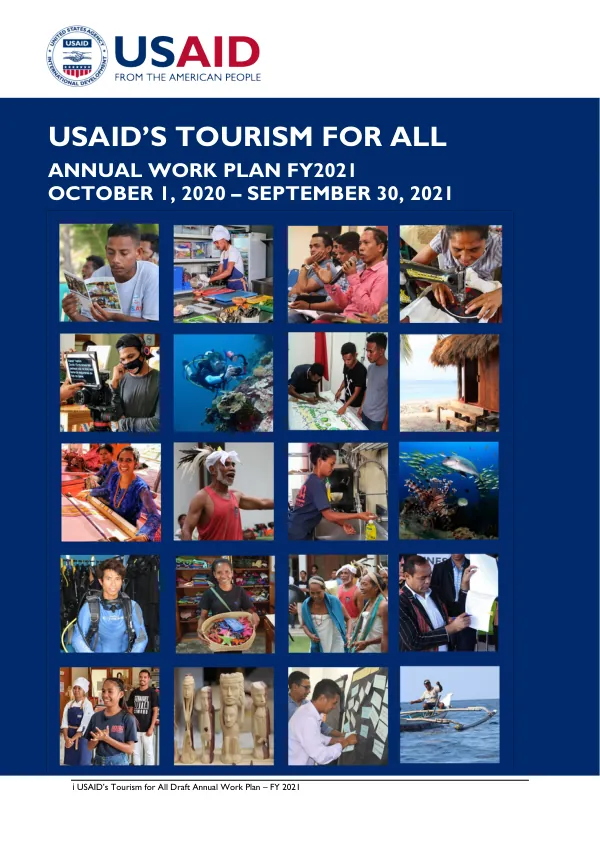
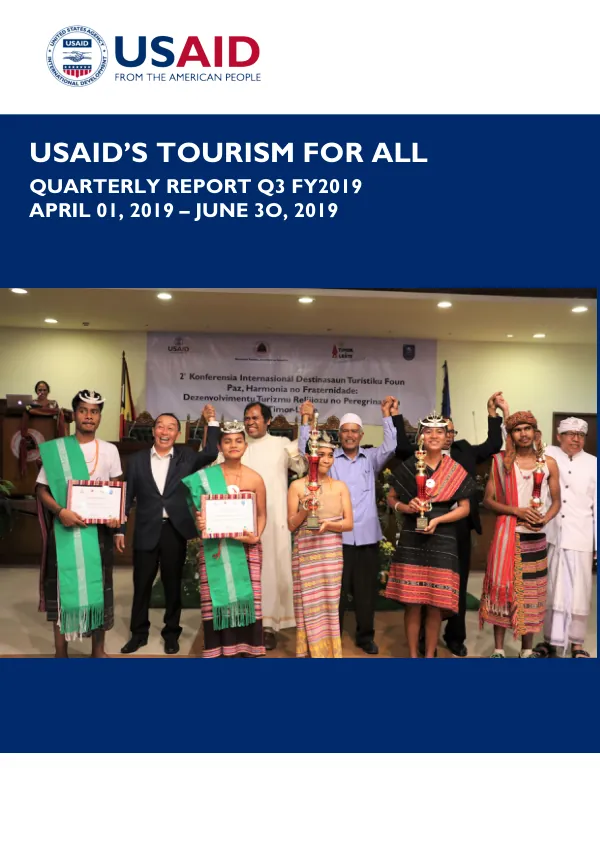
USAID's Tourism For All Project Annual Report - FY 2019
The USAID's Tourism for All Project in Timor-Leste is a comprehensive initiative aimed at promoting the country's tourism industry while preserving its unique environmental and cultural heritage.
2019 · 81 pages
Sign in to readA free account is required to download.

Abstract
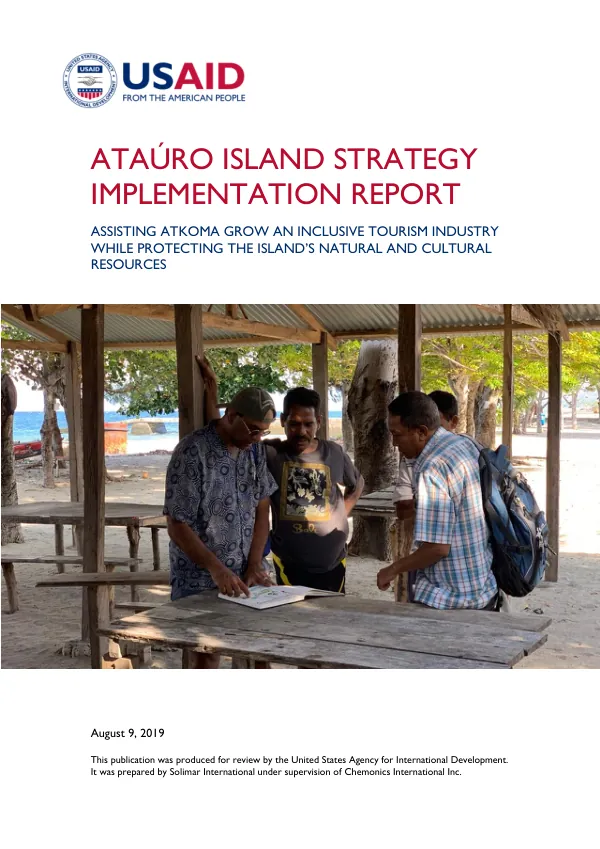
The project is organized around the vision and objectives of the Timor-Leste National Tourism Policy, which was ratified by the Council of Ministers in 2017. The policy posits five overarching themes: Priority, Prosperity, Protection, Partnership, and People, through which government, industry, civil society, academia, and development partners should view tourism and focus their efforts to achieve the goal of tourism sector success and sustainability for the country. The project's primary objective is to promote Timor-Leste's competitiveness as an international tourism destination while preserving its unique environmental and cultural heritage. To achieve this goal, the project is working to establish a network within the Timor-Leste tourism industry across the public and private sector as well as civil society. Through these interchanges, the project has gained an extraordinary understanding of Timor-Leste's socio-economic dynamics, particularly as they relate to tourism. In Fiscal Year 2019, the project made significant progress in implementing its activities, which are organized around the vision and objectives of the National Tourism Policy. The project provided institutional support to help bolster tourism development and facilitate realization of the National Tourism Policy by facilitating the development of strategies and action plans at the national and municipal levels. In addition, the project worked alongside key government agencies to improve their capacity to better perform their duties in the nurturing sector growth. The project also promoted sustainable tourism investments within the geographic focus areas of the Mt. Ramelau Area, Ataúro Island, and Dili Capital. Sustainable tourism development strategies and action plans have been completed for Hatobuilico and Ataúro. Additionally, work on a more detailed sustainable management plan for Ataúro Island has been initiated. The project has also led the charge in working to get Tais recognized by UNESCO for its intangible cultural heritage value. The project's activities are expected to augment Timor-Leste's efforts to boost tourist arrivals to 200,000 annually by 2030, increase employment in tourism to 15,000 jobs, and generate US$150 million in annual tourism revenue. Ultimately, the project aims to verify the theory of change, which states that if institutions, policies, and laws are in place to implement the National Tourism Policy, then Timor-Leste will bolster the confidence of the private sector and improve Timor-Leste's ability to attract the investment necessary to develop its tourism industry. The project's success will be measured by its ability to create socially inclusive partnerships that offer a "win-win" for public, private, and community stakeholders, thereby expanding participation in Timor-Leste's tourism sector and increasing income for a broad range of Timorese. The project's work is expected to support the Mission's Country Development Cooperation Strategy goal of facilitating a more prosperous, healthy, and democratic Timor-Leste.
Related documents