MINISTRY FOR COMMERCE, TOURISM, AND INDUSTRY
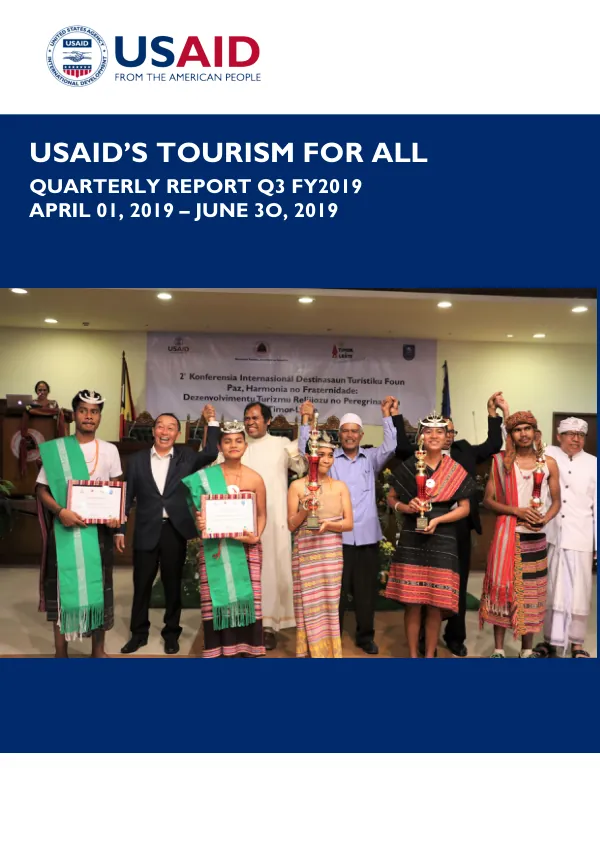
USAID's Tourism for All - Quarterly Report - Q3 FY2019
In Timor-Leste, the tourism industry faces significant challenges, including a lack of infrastructure, limited service capabilities, and a shortage of accommodation options outside of Dili.
2019 · 63 pages
Sign in to readA free account is required to download.
Abstract
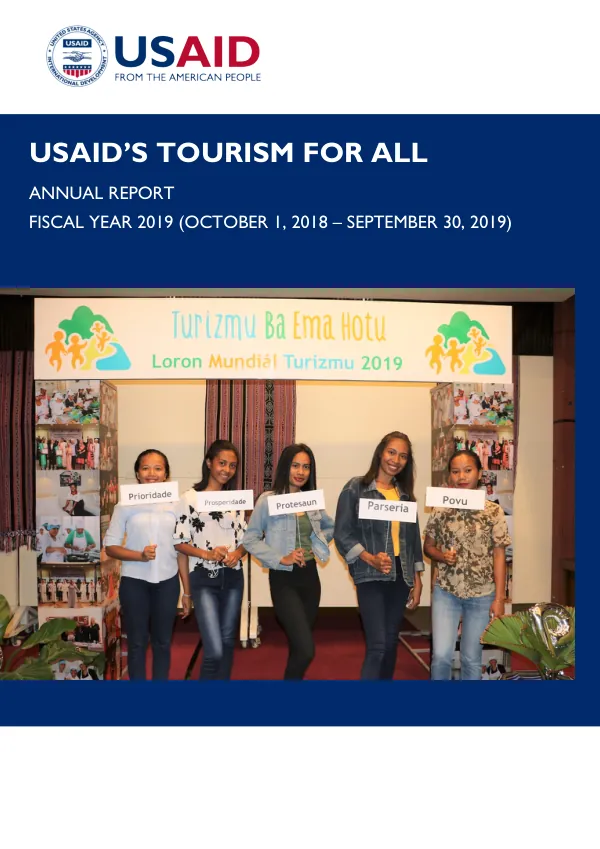
According to the Ministry of Tourism, Commerce and Industry, the country received 62,000, 66,000, and 74,000 international arrivals in 2015, 2016, and 2017, respectively. However, these numbers are in question due to the slowing of commercial activities reported by most businesses in 2018. Research conducted by The Asia Foundation found that less than 10 percent of all arrivals to Timor-Leste constituted bona fide tourists, with the majority visiting for business purposes. The country remains off the radar of most Asian travelers, with expensive airline prices, a dollarized economy, and a lack of positive international press hindering growth. Improvements in price competitiveness will take time, but targeting "off the beaten path" adventure-seeking clientele can help Timor-Leste leverage the success of nearby ASEAN countries and offer distinguishing and complementary attractions. The Government of Timor-Leste recognizes tourism as an important sector for diversifying the non-oil economy and has ratified and approved the Timor-Leste National Tourism Policy in 2017. The policy posits five overarching themes (Priority, Prosperity, Protection, Partnership, and People) through which government, industry, civil society, academia, and development partners should view tourism and focus their efforts to achieve the goal of tourism sector success and sustainability for Timor-Leste. However, Timor-Leste suffers from stakeholder fragmentation and the absence of a universally accepted vision and agreement about how to achieve the ambitious goals set forth in the Tourism Policy. This inconsistency creates a confusing environment for existing businesses and potential investors and is a core inhibitor to tourism sector growth. In recent months, there are positive signs that the GoTL is prioritizing tourism development with the recent establishment of the Inter-Ministerial Commission for Tourism Development. The USAID's Tourism for All project aims to address these challenges and support the development of the tourism sector in Timor-Leste. The project focuses on improving the business enabling environment, enhancing the quality of tourism services, and increasing the competitiveness of the tourism sector. The project also aims to promote sustainable tourism practices and support the development of local tourism products and services. The project has made significant progress in the past quarter, including the establishment of a tourism information center, the development of a tourism investment working group, and the launch of a tourism entrepreneurship grant program. The project has also conducted a series of training and capacity-building activities for tourism stakeholders, including hotel owners, tour operators, and local communities. In addition, the project has made progress in promoting sustainable tourism practices, including the development of a sustainable tourism policy and the establishment of a tourism sustainability working group. The project has also supported the development of local tourism products and services, including the creation of a tourism product development plan and the launch of a tourism product certification program. Overall, the USAID's Tourism for All project is making significant progress in supporting the development of the tourism sector in Timor-Leste. The project's focus on improving the business enabling environment, enhancing the quality of tourism services, and increasing the competitiveness of the tourism sector is critical to achieving the ambitious goals set forth in the Timor-Leste National Tourism Policy.
Related documents