CHEMONICS
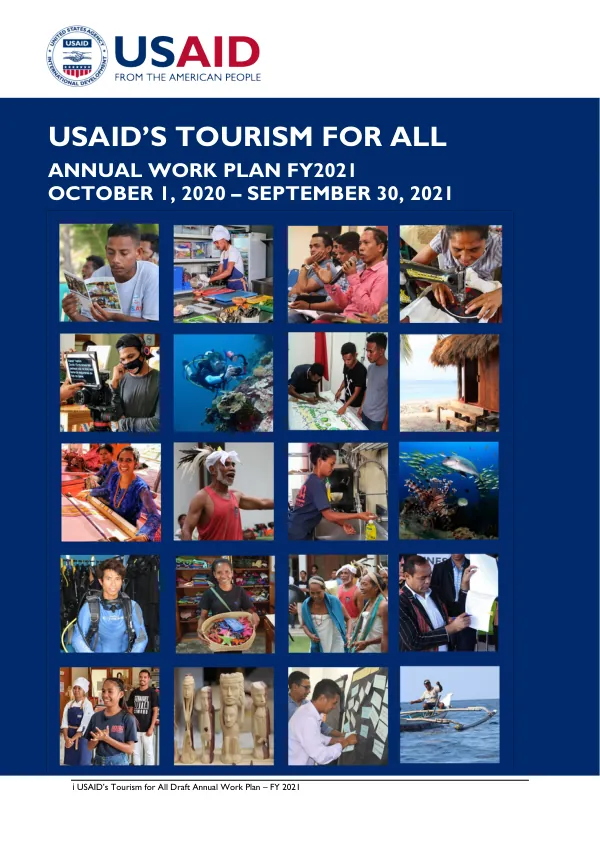
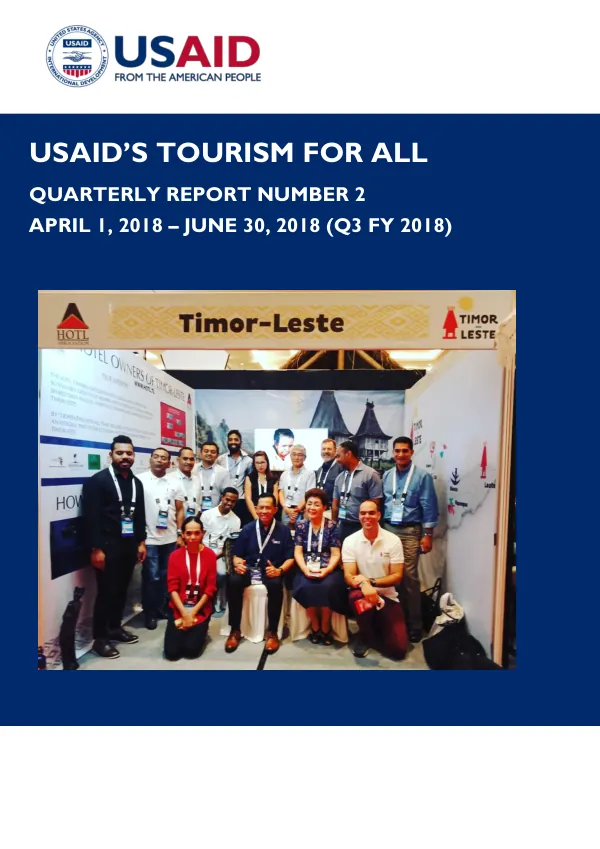
USAID’s Tourism for All – Quarterly Report – Q3 FY 2018
The USAID's Tourism for All project aims to promote Timor-Leste's competitiveness as an international tourism destination while preserving its unique environmental and cultural heritage.
2018 · 28 pages
Sign in to readA free account is required to download.
Abstract
The project's vision is to expand and improve Timor-Leste's tourism offerings using an inclusive and sustainable approach, facilitate private investment, promote steady and sustainable tourism growth, and safeguard the environment and social characteristics of local communities. The project will focus on five different tourism niches identified in the Timor-Leste Strategic Development Plan 2011-2030, including eco and marine, historical and cultural, adventure and sports, religious and pilgrimage, and conference and convention. The project will stimulate public and private cooperation to market Timor-Leste as an "off-the-beaten-path" destination for adventure travelers and eco-tourists. The project's goal is to expand and improve Timor-Leste's tourism offerings using an inclusive and sustainable approach. Achievement of the program goal will be measured by the following results: broad Timorese participation in selected tourist niche and product activities, and increased income for Timor-Leste generated by tourism. The project will work to improve and increase employment in the tourism workforce, which the Government of Timor-Leste estimates is now only about 4,300 people. The project will also create public/private partnerships to boost tourism governance and push deliberate and incremental investment that focuses on bringing more women and youth into the sector. Implementation of the project began in 2018, with a focus on creating inclusive tourism by improving industry governance and promoting sustainable investment. The project will work with the Government of Timor-Leste to establish incentives and obligations that are more private sector-friendly, and to promote steady and sustainable tourism growth. The project's activities will stimulate public and private cooperation to market Timor-Leste as an "off-the-beaten-path" destination for adventure travelers and eco-tourists. The project will also learn from and adapt to changing circumstances, including market forces, throughout implementation, which can result in shifts in selected niches or products when warranted. The project's strategy complements the government of Timor-Leste's current national tourism policy, which seeks to boost tourist arrivals to 200,000 annually by 2030, increase employment in tourism to 15,000 jobs, and generate US$150 million in annual tourism revenue. The project is expected to contribute to measurable improvements in receipts derived from the tourism sector in Timor-Leste. The project will focus on creating favorable conditions for private sector investment in and management of public assets such as protected natural or cultural sites. Through the project, the project staff will implement the solution accepted by USAID that contributes to measurable improvements in receipts derived from the tourism sector in Timor-Leste. The project's quarterly report for Q3 FY 2018 highlights the progress made in implementing the project's activities. The report provides an update on the project's management and implementation, donor and NGO coordination, environmental compliance, communications and media outputs, and key activities planned for the next quarter.
Related documents