CHEMONICS
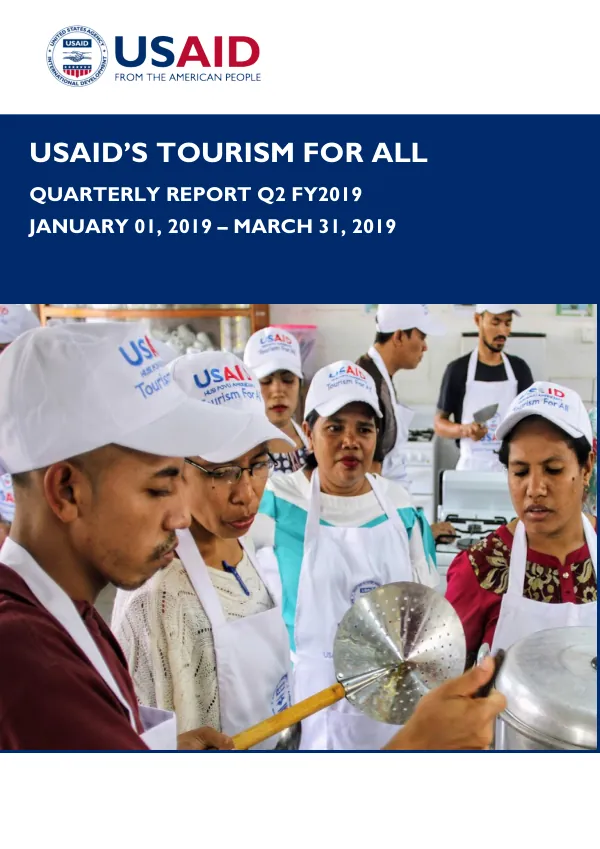
USAID's Tourism for All - Quarterly Report - Q2 FY2019
The tourism sector in Timor-Leste has significant potential for growth, with the country aiming to attract 200,000 tourists by 2030.
2019 · 40 pages
Sign in to readA free account is required to download.
Abstract
However, the current state of the sector is hindered by a lack of infrastructure, limited infrastructure development outside of Dili, and a lack of positive press about the country. The country's tourism industry is also hampered by a lack of investment and development of the hospitality industry outside of Dili. According to the United Nations World Tourism Organization (UNWTO), Timor-Leste received 62,000, 66,000, and 74,000 international arrivals in 2015, 2016, and 2017, respectively. However, research conducted by The Asia Foundation found that less than 10 percent of all arrivals to Timor-Leste constituted bona fide tourists, with the majority of visitors coming for business purposes. The Timor-Leste government has recognized tourism as an important sector for diversifying the non-oil economy and has included it in several key policies. The National Tourism Policy, ratified and approved by the Council of Ministers in 2017, sets out five themes for the tourism sector: Priority, Prosperity, Protection, Partnership, and People. The policy aims to ensure that social, environmental, and environmental sustainability are central to the tourism sector's development. However, the tourism sector in Timor-Leste is hindered by a lack of a universally accepted vision and a clear plan for achieving the goals set out in the National Tourism Policy. This lack of clarity creates a confusing environment for existing businesses and potential investors, and is a core inhibitor to the sector's growth. The USAID's Tourism for All project aims to promote Timor-Leste's competitiveness as an international tourism destination while preserving its unique environmental and cultural heritage. The project's purpose is to expand and improve Timor-Leste's tourism offering using an inclusive and sustainable approach, facilitate private investment and co-creation, promote steady and sustainable tourism growth, and safeguard and conserve the environment and social characteristics of Timor-Leste's local communities. The project will focus on five tourism niches: eco and marine, historical and cultural, adventure and sports, religious and pilgrimage, and conference and convention. The project will stimulate public and private cooperation to market Timor-Leste as an off-the-beaten-path destination for adventure travelers and tourists. The strategy complements the Government of Timor-Leste's National Tourism Policy, which aims to increase tourist arrivals to 200,000 annually by 2030, create 15,000 jobs in the tourism sector, and generate US$150 million in annual tourism revenue. The project will also focus on developing the hospitality industry outside of Dili, improving the quality of tourist services, and increasing the number of tourists visiting the country. The project's activities will be implemented over a period of four years, with the first year focusing on project preparation and the second year focusing on project implementation. The project will be implemented by a consortium of local and international partners, including the Government of Timor-Leste, the private sector, and civil society organizations. The project will also involve the establishment of a project management unit, which will be responsible for overseeing the project's implementation and ensuring its successful completion. The project's budget for the first year is US$1.5 million, which will be used to cover project preparation activities, including the development of a project implementation plan, the establishment of a project management unit, and the recruitment of project staff. The project's budget for the second year is US$3.5 million, which will be used to cover project implementation activities, including the development of tourist infrastructure, the improvement of tourist services, and the promotion of tourism in Timor-Leste. The project's expected outcomes include the development of a comprehensive tourism policy, the improvement of tourist infrastructure, the increase in the number of tourists visiting Timor-Leste, and the creation of jobs in the tourism sector. The project's expected impact includes the increase in tourist arrivals to 200,000 annually by 2030, the creation of 15,000 jobs in the tourism sector, and the generation of US$150 million in annual tourism revenue.
Related documents