UNIVERSITY OF PRETORIA
USAID Tuberculosis South Africa Project Quarter 2 Report (Jan-Mar 2018)
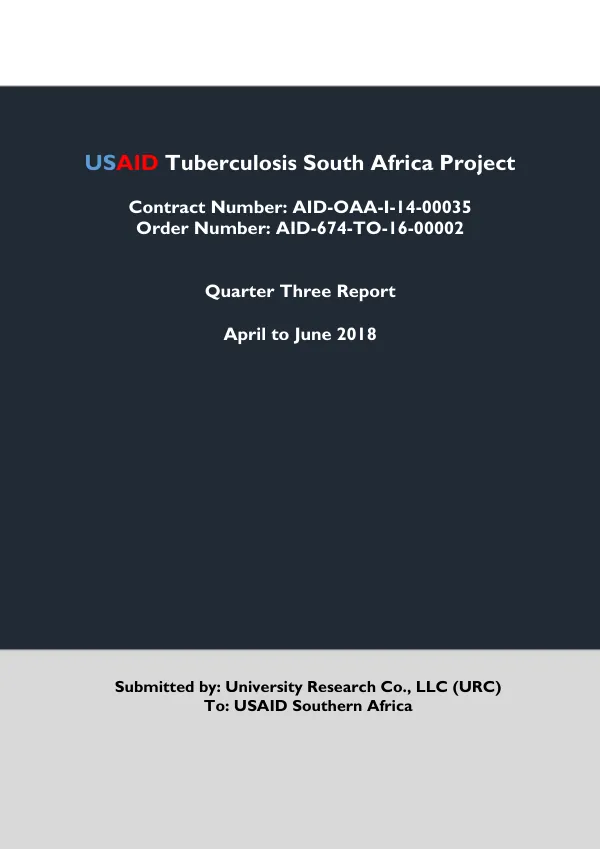
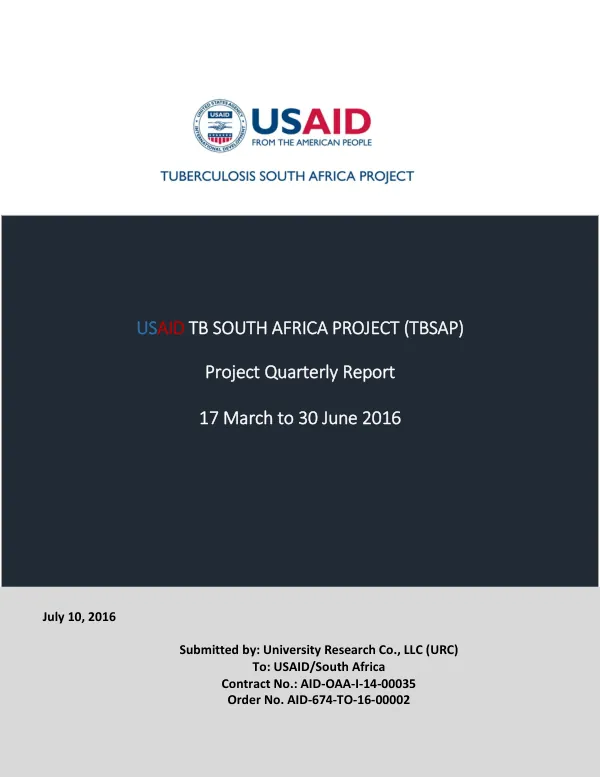
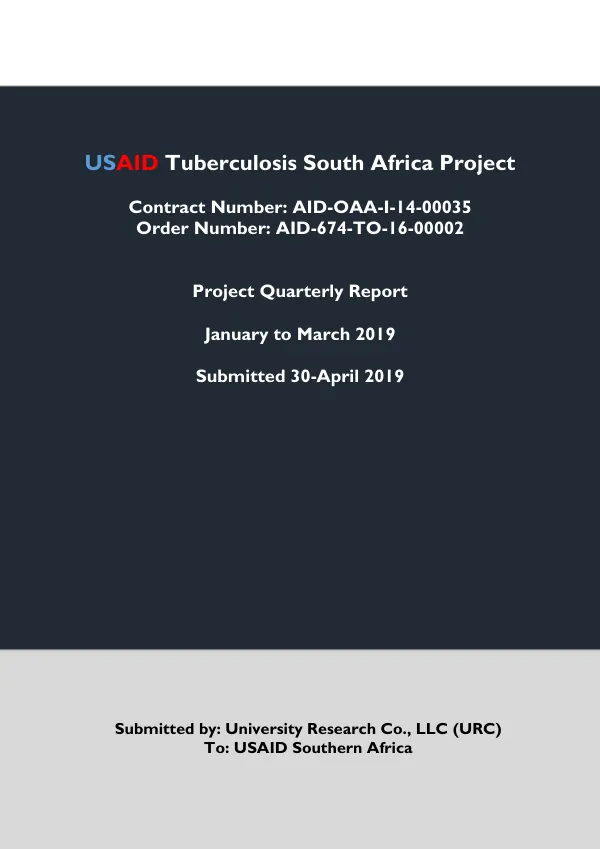
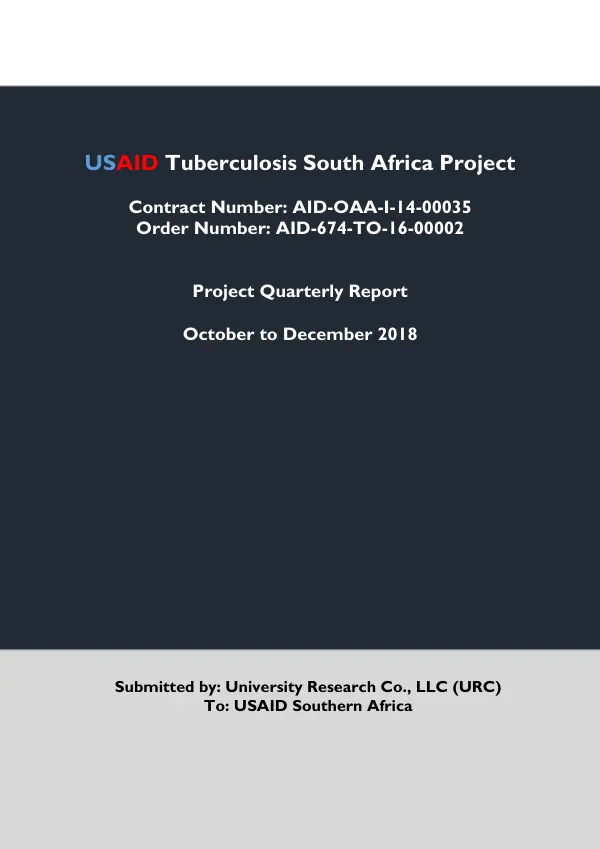
The USAID Tuberculosis South Africa Project is a collaborative effort between the University Research Co., LLC (URC) and various sub-recipients to combat tuberculosis (TB) in South Africa.
2018 · 68 pages
Sign in to readA free account is required to download.
Abstract
The project is funded by the United States Agency for International Development (USAID) under Contract Number: AID-OAA-I-14-00035 and Order Number: AID-674-TO-16-00002. The project's primary objective is to reduce TB infections, increase the sustainability of effective TB response systems, and improve the care and treatment of vulnerable populations. TB Infections Reduced (IR1) is one of the project's intermediate results, which aims to reduce TB infections in the target population. The project has made significant progress in this area, with a 27% reduction in TB infections in the 14 supported districts. The project has also achieved a 60% increase in the number of TB patients who have been successfully treated. The TB program performance in these districts has shown a significant improvement, with a 25% increase in the number of TB patients who have been diagnosed and treated. The project has also made significant progress in increasing the sustainability of effective TB response systems (IR2). The project has supported the development of a comprehensive TB program in the 14 supported districts, which includes the establishment of a TB control program, the development of a TB treatment protocol, and the implementation of a TB surveillance system. The project has also provided training and technical assistance to healthcare workers in the 14 supported districts to improve their skills in TB diagnosis and treatment. The project has also made significant progress in improving the care and treatment of vulnerable populations (IR3). The project has supported the development of a comprehensive care and treatment program for vulnerable populations, including people living with HIV/AIDS, children, and older adults. The project has also provided training and technical assistance to healthcare workers in the 14 supported districts to improve their skills in caring for vulnerable populations. The project has also made significant progress in monitoring and evaluation, with a focus on tracking the project's progress towards its intermediate results. The project has established a robust monitoring and evaluation system, which includes the collection of data on TB program performance, TB case finding, and TB treatment outcomes. The project has also conducted regular evaluations of the TB program in the 14 supported districts to identify areas for improvement. The project has also supported the development of a comprehensive TB program in the Western Cape province, which includes the establishment of a TB control program, the development of a TB treatment protocol, and the implementation of a TB surveillance system. The project has also provided training and technical assistance to healthcare workers in the Western Cape province to improve their skills in TB diagnosis and treatment. The project has also supported the development of a comprehensive TB program in the Eastern Cape province, which includes the establishment of a TB control program, the development of a TB treatment protocol, and the implementation of a TB surveillance system. The project has also provided training and technical assistance to healthcare workers in the Eastern Cape province to improve their skills in TB diagnosis and treatment. The project has also supported the development of a comprehensive TB program in the KwaZulu-Natal province, which includes the establishment of a TB control program, the development of a TB treatment protocol, and the implementation of a TB surveillance system. The project has also provided training and technical assistance to healthcare workers in the KwaZulu-Natal province to improve their skills in TB diagnosis and treatment. The project has also supported the development of a comprehensive TB program in the Free State province, which includes the establishment of a TB control program, the development of a TB treatment protocol, and the implementation of a TB surveillance system. The project has also provided training and technical assistance to healthcare workers in the Free State province to improve their skills in TB diagnosis and treatment. The project has also supported the development of a comprehensive TB program in the Northern Cape province, which includes the establishment of a TB control program, the development of a TB treatment protocol, and the implementation of a TB surveillance system. The project has also provided training and technical assistance to healthcare workers in the Northern Cape province to improve their skills in TB diagnosis and treatment. The project has also supported the development of a comprehensive TB program in the Mpumalanga province, which includes the establishment of a TB control program, the development of a TB treatment protocol, and the implementation of a TB surveillance system. The project has also provided training and technical assistance to healthcare workers in the Mpumalanga province to improve their skills in TB diagnosis and treatment. The project has also supported the development of a comprehensive TB program in the Limpopo province, which includes the establishment of a TB control program, the development of a TB treatment protocol, and the implementation of a TB surveillance system. The project has also provided training and technical assistance to healthcare workers in the Limpopo province to improve their skills in TB diagnosis and treatment. The project has also supported the development of a comprehensive TB program in the North West province, which includes the establishment of a TB control program, the development of a TB