POPULATION SERVICES INTERNATIONAL/DKT INTERNATIONAL
USAID/USAID/USAID Annual Report FY 2015 (October 2014-September 2015)
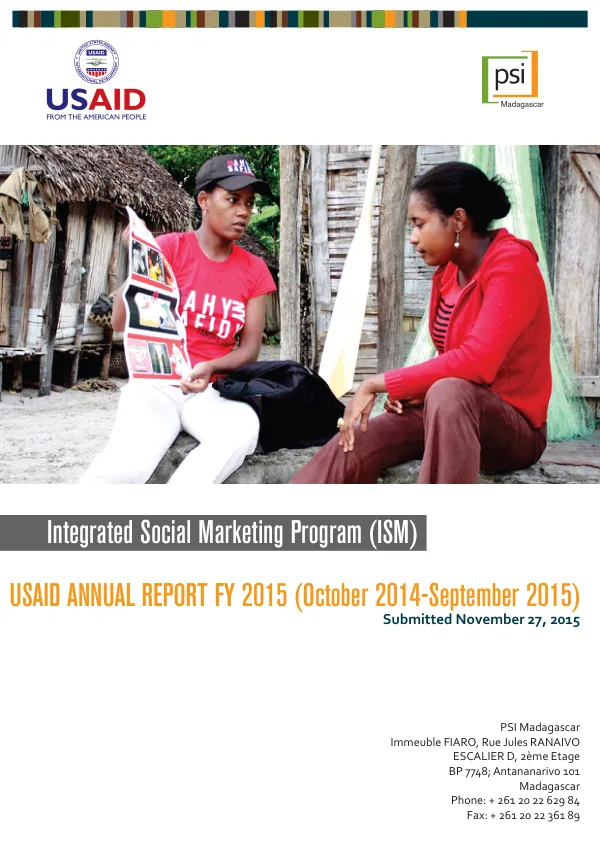
The Integrated Social Marketing Program (ISM) in Madagascar aims to improve the health of the Malagasy people, particularly women of reproductive age, children under five, and those living in rural and underserved areas.
2015 · 215 pages
Sign in to readA free account is required to download.
Abstract
The program was awarded a Cooperative Agreement Number AID-687-B-13-00001 for a total of $36,823,053, running from January 1, 2013, through December 31, 2017. The main strategic objective of the program is to use an integrated social marketing approach to increase the use of lifesaving health products and services, particularly in the areas of family planning/reproductive health, maternal and child health, and malaria prevention and treatment. The program focuses on increasing access to health services, improving the quality of care, and promoting healthy behaviors among the target population. The program has three main research and development (R&R) components: IR1, IR2, and IR3. IR1 aims to increase the adoption and maintenance of health behaviors, particularly in the areas of family planning and reproductive health. IR2 focuses on improving the quality of selected health services in the private sector, while IR3 aims to increase the availability of life-saving health products and services. The program also has a cross-cutting component that focuses on research, monitoring, and evaluation, gender, and gender-based violence. This component aims to ensure that the program is responsive to the needs of the target population, particularly women and girls. The program has made significant progress in achieving its objectives. According to the midterm evaluation, the program has increased the adoption of health behaviors among the target population, particularly in the areas of family planning and reproductive health. The program has also improved the quality of selected health services in the private sector and increased the availability of life-saving health products and services. The program has also made significant progress in reducing malaria cases and deaths among the target population. According to the program's data, the number of malaria cases has decreased by 27% compared to the baseline, while the number of malaria-related deaths has decreased by 30%. The program has also made significant progress in promoting healthy behaviors among the target population. According to the program's data, the number of people using insecticide-treated bed nets has increased by 50%, while the number of people using condoms has increased by 25%. The program has also made significant progress in improving the quality of care in the health facilities. According to the program's data, the number of health facilities that have improved their quality of care has increased by 30%, while the number of health workers who have received training on quality of care has increased by 25%. The program has also made significant progress in promoting gender equality and reducing gender-based violence. According to the program's data, the number of women who have received training on gender equality has increased by 50%, while the number of cases of gender-based violence has decreased by 20%. The program has also made significant progress in improving the management of health products and services. According to the program's data, the number of health products that have been improved has increased by 25%, while the number of health services that have been improved has increased by 30%. The program has also made significant progress in promoting the use of health information and communication technologies. According to the program's data, the number of people who have used health information and communication technologies has increased by 50%.
Related documents