USAID
USAID YouthPower Stakeholder Survey FY2021
The USAID YouthPower Stakeholder Survey FY2021 aimed to measure the exposure and awareness level of the USAID YouthPower program among youth-led organizations and institutions.
2021 · 5 pages
Sign in to readA free account is required to download.
Abstract
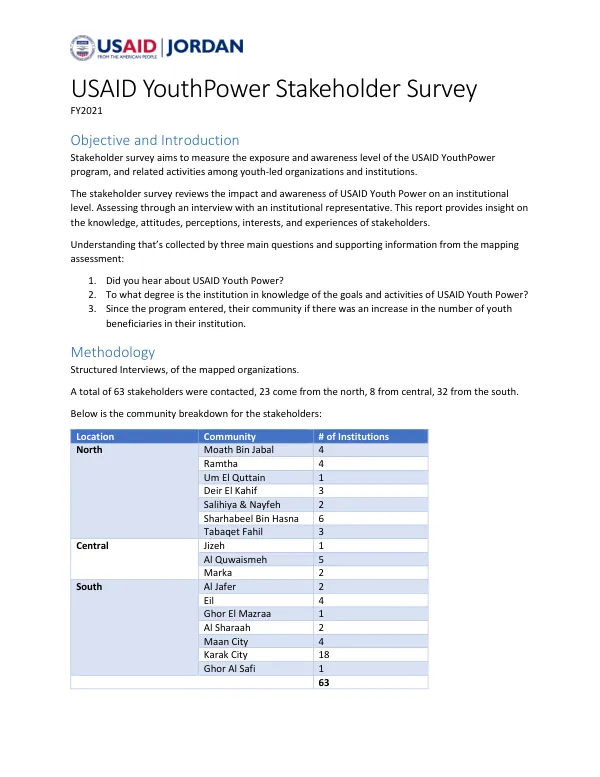
The survey assessed the impact and awareness of USAID Youth Power on an institutional level through structured interviews with institutional representatives. A total of 63 stakeholders were contacted, with 23 from the north, 8 from central, and 32 from the south. The majority of the sample stakeholders were governmental institutions, primarily due to many institutions being closed due to COVID-19. The survey found that the vast majority of institutions in the north responded that they were aware of USAID Youth Power, while central institutions were split 50/50, and the south primarily did not know of the program. During the mapping component phase, 100% of these organizations were surveyed and introduced to the work of USAID Youth Power. The survey collected data from 356 community-based organizations (CBOs) and found that 43% of the stakeholders were governmental institutions, 19% were non-profit organizations, and 13% were private institutions. The stakeholders who stated they knew about USAID Youth Power were asked to rate their degree of knowledge, with the majority rating it at 4 out of 5. The average degree of knowledge was about 3.5. The stakeholders' understanding of the goals and activities of the program was assessed through cluster analysis, which identified several domains of knowledge. The most common domains included community mapping, positivity, employment support, supporting persons with disabilities, and renovating schools. The stakeholders also expressed interests in providing various services to youth, including mentorship and guidance, employment support, practical trainings, life and communication skills, and financial support. The survey found that 30% of the stakeholders who participated in the survey had a stated increase in the number of youth beneficiaries since the program's intervention. The majority of stakeholders did not have the information required to determine an increase in youth. The survey concluded that the program had a clear awareness and impact, with an assumed snowballing effect, and that further efforts should be made to increase awareness and understanding of the program's goals and activities.
Related documents