MICROSOFT CORPORATION
Most Significant Change Report: USAID Youth Power
The USAID Youth Power program aimed to empower youth in Jordan through various interventions.
2021 · 7 pages
Sign in to readA free account is required to download.
Abstract
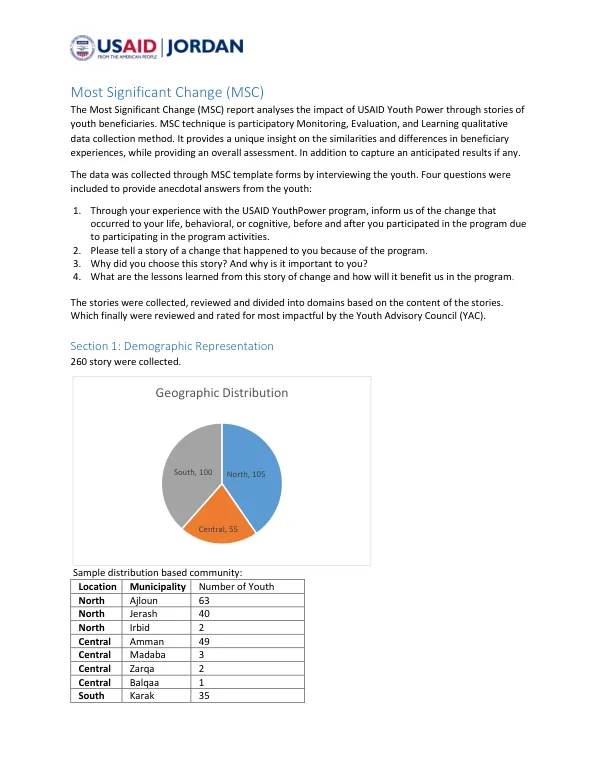
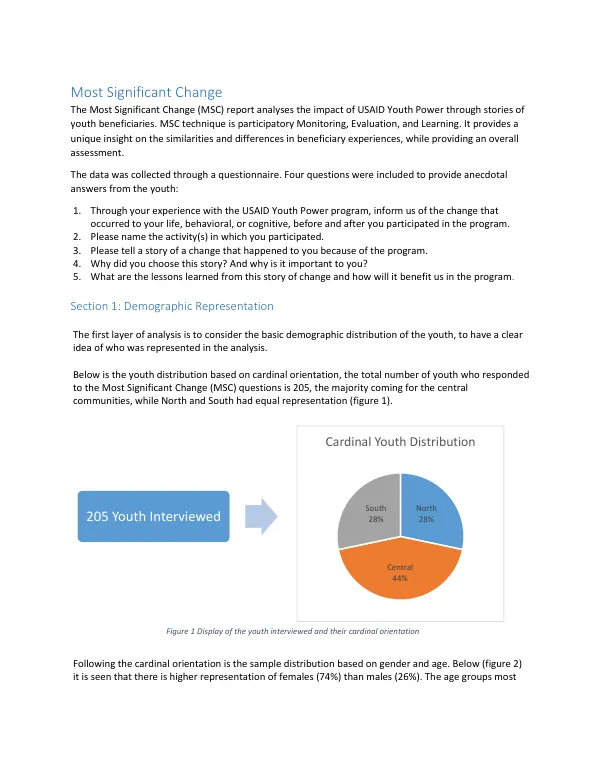
The program's impact was analyzed using the Most Significant Change (MSC) technique, which involves collecting stories from beneficiaries to assess the program's effectiveness. A total of 205 youth participated in the MSC exercise, with the majority coming from central communities. The demographic representation of the youth sample showed a higher representation of females (74%) than males (26%). The age groups most represented were those between 18-24 years old (54.5%) and 25-29 years old (44.5%). The sample was comprised of all 12 municipalities, with the highest expression being from the Balqa municipality (44 youth), followed by Amman (29 youth), and Karak (28 youth). The thematic cluster analysis revealed that the majority of the youth (43%) expressed a lack of self-confidence prior to participating in the program. Other common themes included social anxiety, negative behavior, and poor communication skills. In contrast, after participating in the program, the youth reported significant positive changes, with 47.5% expressing having stronger character, 37.5% improved communication, and 25.5% becoming more socially active. The components of the program in which the youth participated included transformational learning training, facilitator/coach training, community mapping, and initiative design. The majority of the youth (51%) became facilitators or coaches, while 20% took the community mapping component, and 13% reached initiative design. The secondary analysis of the data collection process revealed three top stories from the youth. One of the stories highlighted the impact of the program on a youth with a disability, who spoke of how the program provided a platform for him to be seen and heard, addressing topics such as social awareness, abuse, and inclusion. He credited the transformational learning training and communication sessions for helping him develop the skills and confidence to overcome his challenges. The analysis of the youth's experiences before and after participating in the program suggests that the USAID Youth Power program had a significant impact on their lives, particularly in terms of building their confidence, communication skills, and social awareness. The program's focus on transformational learning, facilitator/coach training, and community mapping appears to have been effective in empowering the youth to take charge of their lives and become more active in their communities.