USAID DEC
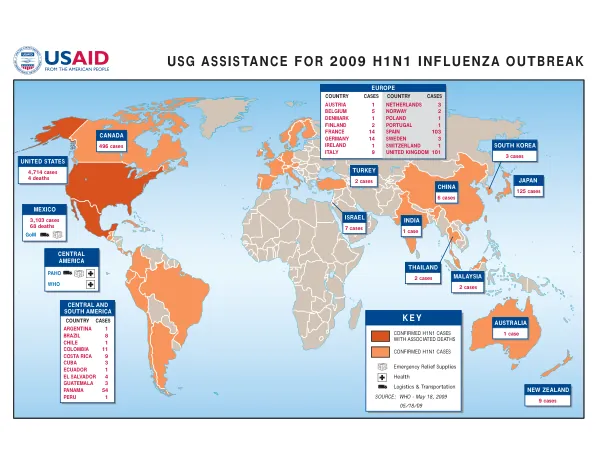
USG Assistance for 2009 H1N1 Influenza Outbreak
The 2009 H1N1 influenza outbreak prompted a global response from various countries and international organizations.
2009 · 1 pages
Sign in to readA free account is required to download.
Abstract
The World Health Organization (WHO) reported 3,103 confirmed cases of H1N1 in Mexico as of May 18, 2009, with 68 associated deaths. In Central America, 4,714 cases were confirmed, resulting in four deaths. The United States reported 496 cases, while Canada had a total of confirmed cases. Other countries with reported cases included Israel, South Korea, New Zealand, Australia, Malaysia, Thailand, India, China, Japan, Turkey, Austria, Belgium, Denmark, Finland, France, Germany, Ireland, Italy, and the Netherlands. The number of cases in each country varied, with the highest number reported in the United States. The WHO reported a total of 7,800 confirmed cases of H1N1 worldwide as of May 18, 2009. The organization emphasized the need for continued surveillance and monitoring of the outbreak. The Pan American Health Organization (PAHO) and the WHO worked together to coordinate the global response to the outbreak. The emergency relief supplies provided by the US government included logistical and transportation support to affected countries. The US government's assistance aimed to help contain the spread of the virus and provide medical care to those affected. The global response to the outbreak involved collaboration between governments, international organizations, and healthcare professionals to mitigate the impact of the virus. The outbreak highlighted the need for improved preparedness and response mechanisms to address public health emergencies. The global community came together to share information, coordinate efforts, and provide support to affected countries. The response to the 2009 H1N1 influenza outbreak served as a model for future public health emergencies, emphasizing the importance of international cooperation and preparedness.