INTERNATIONAL RESCUE COMMITTEE
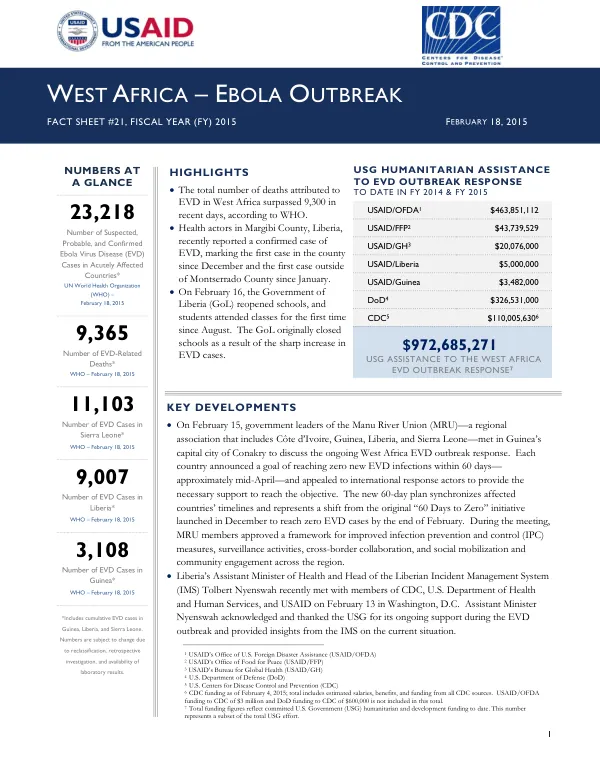
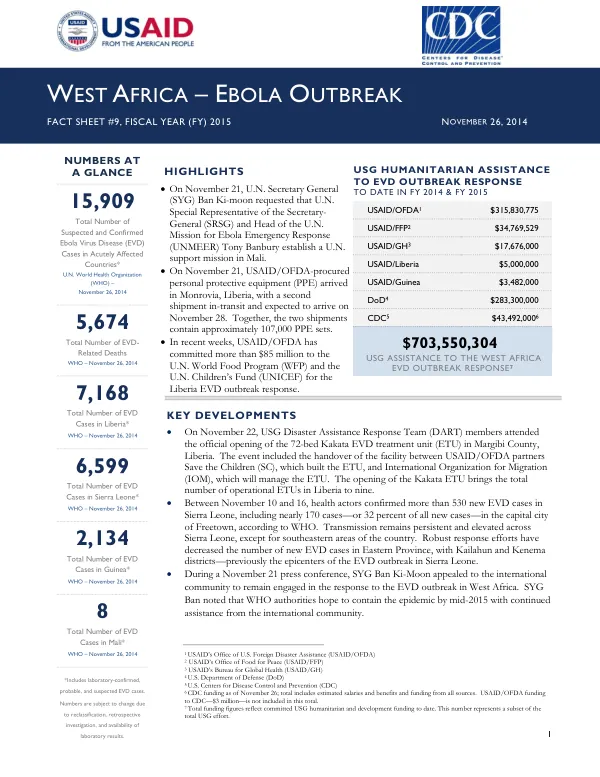
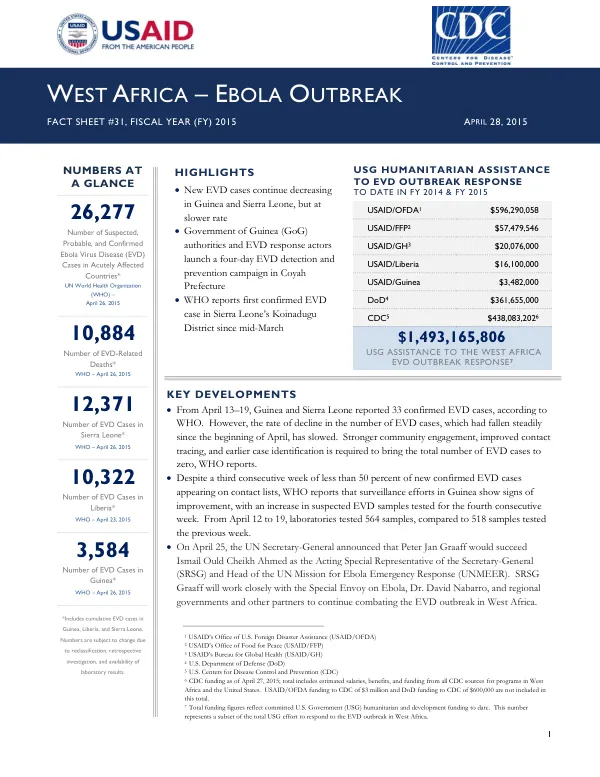
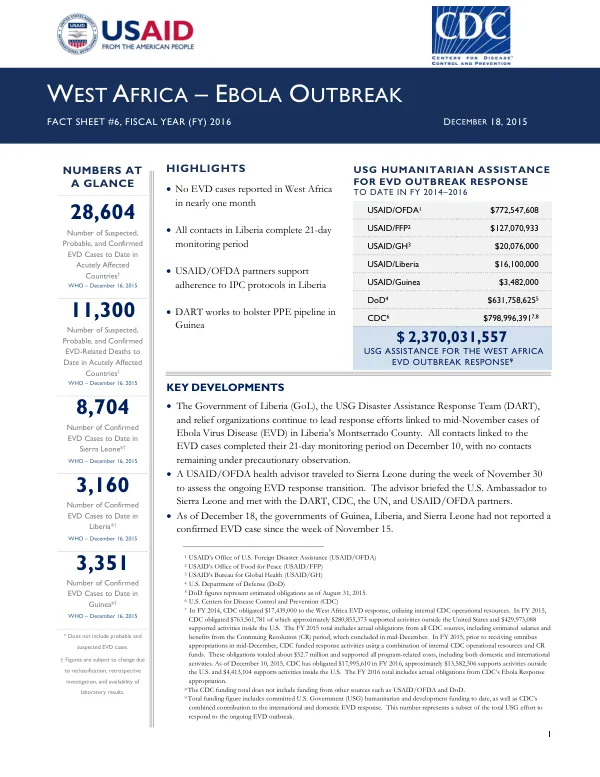
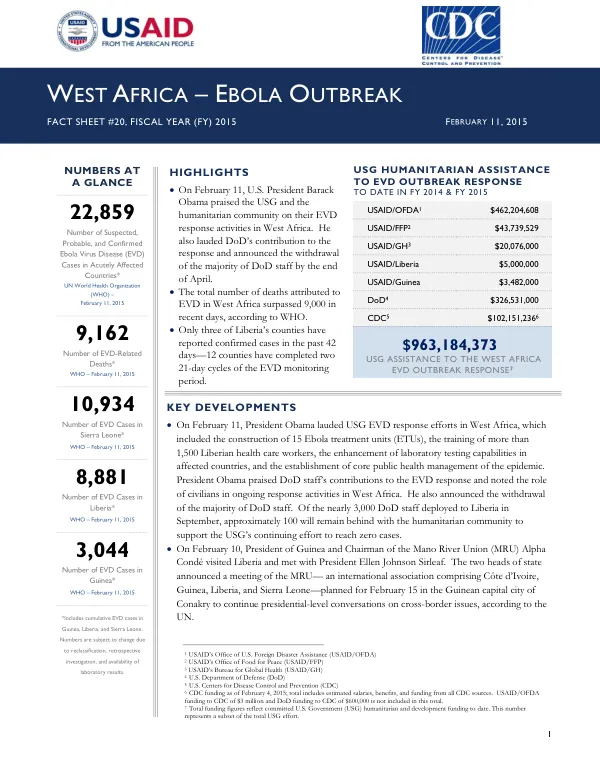
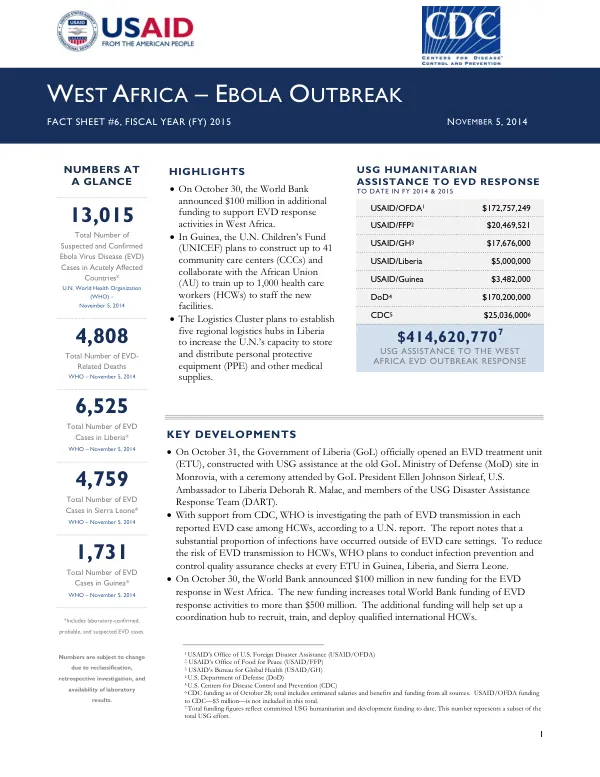
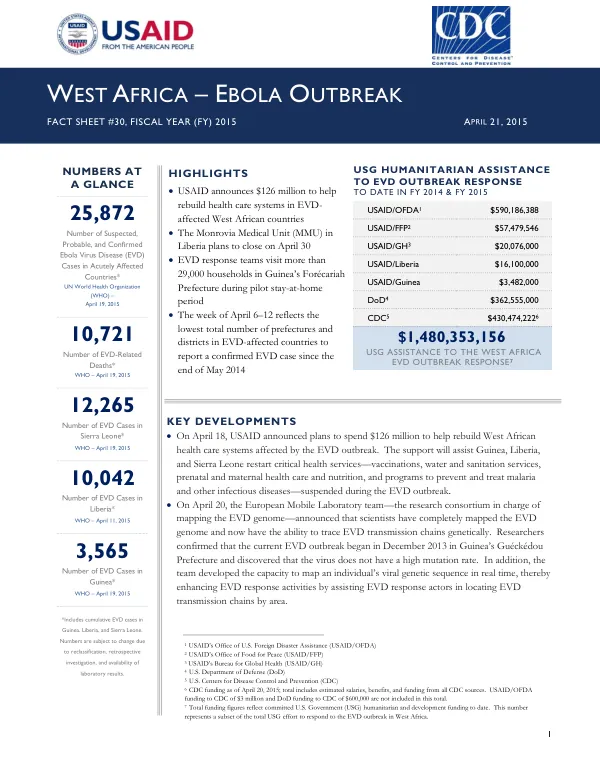
USG Humanitarian Assistance to EVD Outbreak Response to Date in FY 2014 & FY 2015
The United States Agency for International Development (USAID) has announced plans to spend $126 million to help rebuild West African healthcare systems affected by the Ebola virus disease (EVD) outbreak.
2015 · 8 pages
Sign in to readA free account is required to download.
Abstract
The support will assist Guinea, Liberia, and Sierra Leone in restarting critical health services, including vaccinations, water and sanitation services, prenatal and maternal healthcare, and programs to prevent and treat malaria and other infectious diseases. Scientists from the European Mobile Laboratory team have completely mapped the EVD genome, allowing for the tracing of EVD transmission chains genetically. Researchers have confirmed that the current EVD outbreak began in December 2013 in Guinea's Guéckédou Prefecture and discovered that the virus does not have a high mutation rate. The team has also developed the capacity to map an individual's viral genetic sequence in real-time, enhancing EVD response activities by assisting EVD response actors in locating EVD transmission chains by area. The U.S. government has committed a total of $1.48 billion in humanitarian assistance to the EVD outbreak response in West Africa. USAID's Office of U.S. Foreign Disaster Assistance (USAID/OFDA) has provided $590 million, while USAID's Office of Food for Peace (USAID/FFP) has provided $57 million. The U.S. Department of Defense (DoD) has provided $362 million, and the U.S. Centers for Disease Control and Prevention (CDC) has received $430 million in funding. In Liberia, the Monrovia Medical Unit (MMU) plans to close on April 30. The MMU had admitted 42 patients, tested 18 positive for EVD, and discharged nine survivors as of April 15. The Government of Liberia (GoL) Incident Management System (IMS) has requested assistance decommissioning the Island Clinic, Old Ministry of Defense, and Unity Conference Center EVD treatment units (ETUs) in Montserrado County. The World Health Organization (WHO) has agreed to provide financial and technical assistance to decommission the three facilities. The Ebola Survivor Network, managed by the GoL Ministry of Health (MoH), has mapped available survivor services in Liberia to improve coordination among EVD response actors and identify unmet needs. The network has identified eight organizations providing EVD survivor services, including medical care, psychosocial support, and cash and food assistance. However, the network has noted the need for support services that promote reintegration of survivors into their communities and foster independence and resilience rather than one-time assistance packages. In Sierra Leone, WHO reported nine new confirmed EVD cases during the week of April 6-12, identified in the three western districts of Kambia, Port Loko, and Western Area Urban. The low proportion of laboratory samples that tested EVD-positive and the increasing proportion of cases arising among registered contacts are encouraging signs of the ongoing downward trend in EVD case incidence in Sierra Leone. The International Rescue Committee (IRC) leads the Ebola Response Consortium (ERC) in Sierra Leone, which is bolstering IPC capacity in peripheral health units throughout the country by training community health care workers and traditional birth attendants to serve as designated EVD screeners at their local PHUs.